2026 elections: Electorate is moving on; Opposition is trapped in a losing loop
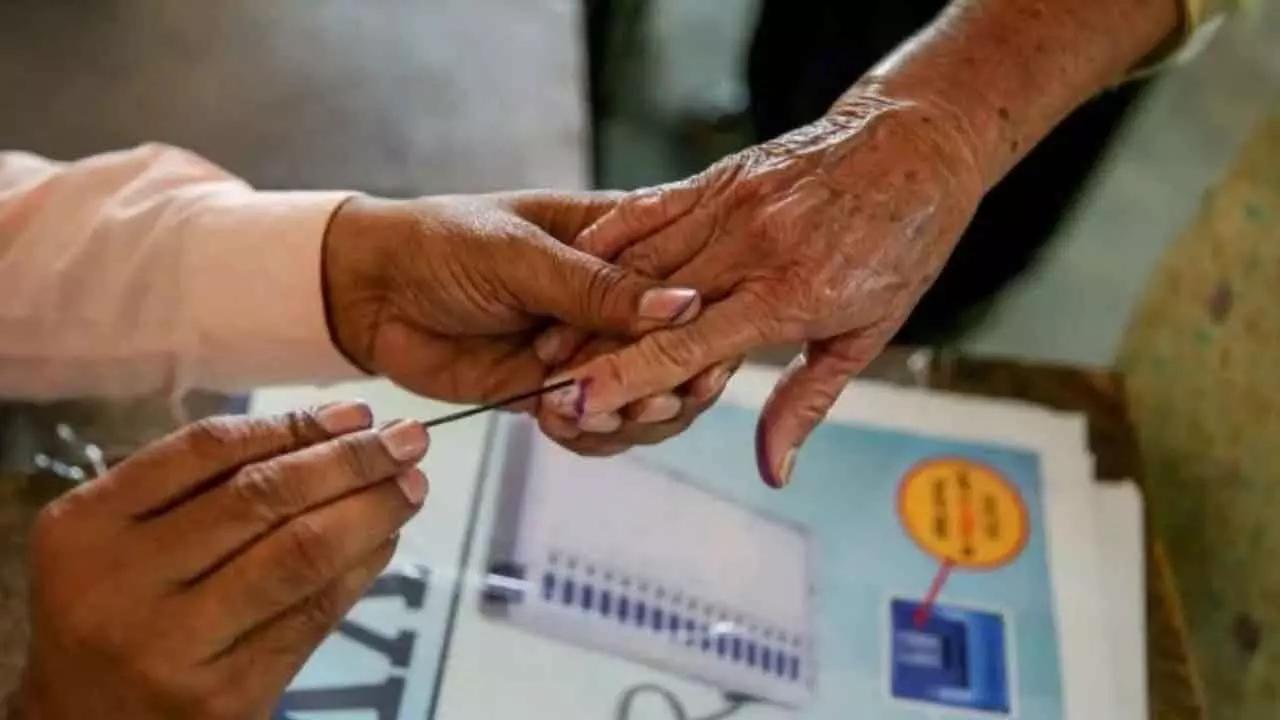
The country is set to witness 12 Assembly elections over the next 24 months. This near-continuous electoral cycle ensures that India’s political ecosystem—ruling BJP, opposition parties, ideological fellow travellers, NGOs, social media influencers and large sections of the commentariat—will remain locked in campaign mode. Unfortunately, it also means being trapped in a narrow rhetorical groove, where narratives matter more than governance and posturing replaces introspection.
If recent trends are any indication, the opposition ecosystem shows little inclination to course-correct despite repeated electoral defeats. Its playbook remains unchanged: selective outrage, ideological rigidity, and a reflexive reliance on constructed binaries—secular versus communal, progressive versus regressive, liberal versus majoritarian. The most visible manifestation of this stagnation is its silence—or worse, active defence—when Sanātana Dharma is attacked.
Those who describe Sanātana Dharma as “dengue” or “malaria” and openly call for its “eradication” are not only shielded but valorised. When courts intervene, as the Madras High Court did in the case of Udhayanidhi Stalin’s controversial remarks, the response is not introspection but defiance. The judgment is dismissed as erroneous, inconvenient, or ideologically motivated. What emerges is not dissent but disdain for constitutional restraint.
DMK’s refusal to accept judicial scrutiny exposes a deeper ideological rigidity that goes beyond a legal disagreement. The High Court, while examining petitions seeking action, reaffirmed a foundational constitutional principle: free speech is not absolute, and inflammatory calls targeting belief systems followed by millions carry consequences. Instead of engaging with the legal and ethical implications, the DMK framed the verdict as an attack on Dravidian ideology and rationalism.
This is a dangerous distortion. Rationalism does not grant a license to demonise faith. Constitutional democracy does not permit calls for eradication of belief systems, irrespective of which religion is targeted. By rejecting the verdict, the DMK signalled to its cadre that ideology trumps constitutional balance—a message that weakens the rule of law itself.
At the heart of the opposition’s favourite charge—Islamophobia—lies a deliberate conflation. Criticism of Islamist extremism, scrutiny of minority appeasement, or debate over religious practices is routinely equated with hatred of Muslims as a community. This is not accidental; it is strategic. By collapsing nuance into outrage, the opposition ecosystem constructs a moral shield that forecloses debate.
Anyone who questioned triple talaq before it was outlawed, raised concerns over Waqf Board overreach, radical sermons, or even demographic anxieties has been swiftly branded bigoted. Fear of being cancelled replaces reasoned argument. Public discourse is impoverished, not enriched.
This strategy serves two immediate political purposes. First, it consolidates minority vote banks by projecting the opposition as the sole bulwark against an allegedly majoritarian state. Second, it delegitimises political opponents without engaging them on governance or policy.
But the long-term cost is severe. It freezes Muslims into a perpetual victimhood narrative, denying them agency, self-critique and reform. This asymmetry is not accidental. It is electoral calculus masquerading as moral virtue.
The hypocrisy is glaring. The same voices that demand zero tolerance for “hate speech” when minorities are concerned suddenly discover free speech absolutism when Hindu beliefs are targeted. This selective morality erodes credibility and fuels public cynicism.
The organisational decay of the opposition only compounds this problem. Family-run parties like the Congress and the Samajwadi Party have steadily lost credibility. The Samajwadi Party does not even have a president outside the family. The Congress, despite having an octogenarian president, still looks to an undefined “high command” for all major decisions.
After covering Congress politics since 1980, one thing is clear: the Congress Working Committee is not the high command. It routinely passes one-line resolutions authorising the high command to decide. The identity of this high command is no mystery—it was Indira Gandhi earlier and is now the Gandhi family, led by Sonia Gandhi. This opacity weakens institutional legitimacy and leadership credibility.
In contrast, the BJP—despite being criticised for centralisation—follows a more transparent decision-making structure. Major decisions are debated among senior leaders like Prime Minister Narendra Modi, Amit Shah, Rajnath Singh and J.P. Nadda, but the final announcement is made by the party president from the party office. The absence of a mystical “high command” lends institutional weight to party positions. Even symbolic gestures—such as Modi stating that the party president is his “boss” in organisational matters—help project the party as larger than individuals. Congress and the likes would do well to take note.
As Assembly elections approach, the opposition appears determined to cling to familiar tropes while ignoring ground realities.
Take Tamil Nadu, which goes to polls later this year. The situation is complex and fluid, marked by silent voter churn, generational shifts, alliance anxieties and fatigue with predictable politics. The DMK’s welfare-heavy governance model—free travel for women, health insurance expansion, school infrastructure and urban development—has created tangible grassroots touchpoints.
Yet beneath this apparent solidity lies unmistakable anti-incumbency. It is not a revolt but a quiet questioning. Rising prices, youth unemployment, law-and-order perceptions and excessive centralisation of power within a small leadership circle are part of everyday conversations. Tamil Nadu’s electorate is no longer monolithic. Urban middle classes, first-time voters and aspirational youth are weary of the DMK-versus-AIADMK binary.
The AIADMK, under Edappadi K Palaniswami, has stabilised after years of internal chaos, but stability is not momentum. Its criticism of the DMK often sounds reactive rather than visionary. The BJP, meanwhile, remains a polarising presence—making incremental gains but still seen as culturally distant from Tamil political ethos. Actor Vijay’s Tamilaga Vettri Kazhagam adds an unpredictable layer, reflecting a deeper yearning for alternatives.
West Bengal mirrors a similar unease. The high-voltage TMC–BJP confrontation dominates public space, but voter fatigue is growing. Mamata Banerjee remains the state’s most formidable mass leader, with welfare schemes like Kanyashree and Lakshmir Bhandar securing loyalty. Yet prolonged dominance has normalised allegations of corruption, syndicate culture and political intimidation.
Urban middle classes and youth increasingly speak of stagnation—limited economic opportunities and politicisation of everyday life. The BJP has pockets of strength in North Bengal and Junglemahal but has failed to convert discontent into trust. The Left and Congress survive largely on nostalgia, unable to convert intellectual sympathy into electoral traction.
What makes the 2026 election cycle significant is not the promise of transformation but the risk of entrenchment. Voters are not choosing who inspires hope; they are choosing who provokes less fear.
Democracies are not sustained by narratives alone. They endure through institutions, laws and a shared commitment to fairness. Until the opposition internalises this truth—moves beyond selective outrage, respects judicial authority, and engages honestly with social complexity—it will remain trapped in rhetoric: loud, moralistic and increasingly disconnected from the lived reality of the Indian voter.
(The author is
former Chief Editor of
The Hans India)