Founded 90 years back, Monopoly remains a popular boardgame

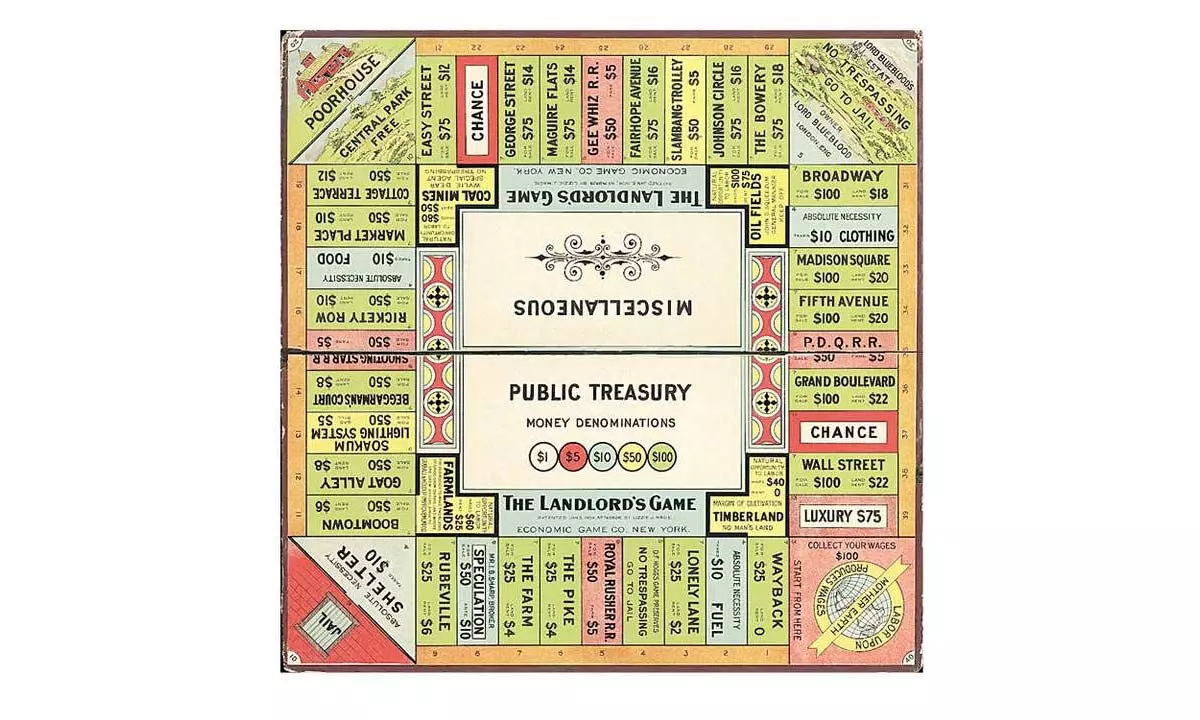
Monopolyis the best-selling licensed board game of all time; a popular pastime since its 1935 release when “the new craze” swept the world. It has remained a staple, with over 390,000 copies sold in Australia to date. Its transformation from an economic critique to a capitalist icon highlights its historical evolution and adaptability.
Game with a message:
Monopoly's roots trace back to The Landlord's Game (1903), created by Elizabeth Magie to critique monopolistic land ownership. It featured two sets of rules – one emphasising wealth accumulation, the other wealth distribution. The aim was to demonstrate how different policy levers, taxing income versus taxing land, affect economic outcomes of players. It was based on economist Henry George's proposition for a “land value tax” or “single tax”. Under this regime, people would keep all they earned, with public funds raised from land ownership instead. The two sets of rules in the Landlord's Game demonstrate how wealth is either concentrated in the hands of landlords (taxing income) or is more fairly distributed across society (taxing land).
In 1935, one Charles Darrow removed the game's socialist critique (the version that taxed land), and renamed it Monopoly and sold it to Parker Brothers. The game was now focused on the accumulation of real estate until one player remained, having bankrupted their fellows.
It thrived during the Great Depression, offering an escapist fantasy of financial success. In 1935, Parker Brothers paid Magie $500for the rights to her game, ensuring their ownership of Monopoly was unchallenged. As part of the deal, they released her original game, but it failed to gain traction with players.
Not everyone welcomed its capitalist themes; Fidel Castro famously ordered in 1959 that all Monopoly sets in Cuba be destroyed.
Playability and house rules:
Philip Orbanes, former vice-president of research at Parker Brothers, argued that a good board game must have clear rules, social interaction and an element of luck. Monopoly is notorious for causing arguments.
Hasbro (who bought out Parker Brothers in 1991) found that nearly half of the games end in disputes, often due to varying rule interpretations. The rules have been adjusted and manipulated as players have sought to overcome the inequities in the game.
Monopoly's use of real-world locations makes it adaptable to local markets. The original version reflected Atlantic City's socio-economic hierarchy. The game can also serve as a bridge to former geographies. The 1980s Yugoslav edition remains a link to the past for those who lived through that era, recording changing political geographies and cultural shifts. Monopoly is a flagship brand for Hasbro, worth an estimated $272m in 2018. Part of its success lies in its licensing strategy.
It is estimated that there are over 3,400 different versions of Monopoly, ranging from classic city street layouts to popular culture imaginings. World record holder Neil Scanlon owns 4,379 sets of Monopoly but he is still searching for the Cronulla Sharks set.
Monopoly reflects the world's economic systems, embodying both the dream of wealth and the realities of financial inequality. It has been studied by economists and educators as a tool for understanding capitalism, wealth accumulation and market control.
Magie's message was leveraged by Federal MP Andrew Leigh in his 2023 critique of the growing concentration of business monopolies in Australia.
Enduring popularity:
In 2025, Hasbro introduced digital banking versions – though many players lament the feel of physical wads of cash. The game continues to be a favourite, ranking as the top childhood game among Baby Boomers, Gen X and Millennials – and fourth for Gen Z. The sense of nostalgia was strong among all groups, not surprising as board games were found to be an integral part of family bonding. Monopoly has evolved from an anti-capitalist critique into a commercial juggernaut. Monopoly remains firmly embedded in the board game culture.
(The writer is associated with the University of New England Armidale, Australia)