Going easy on disposing cases; no strict deadlines for delivering justice

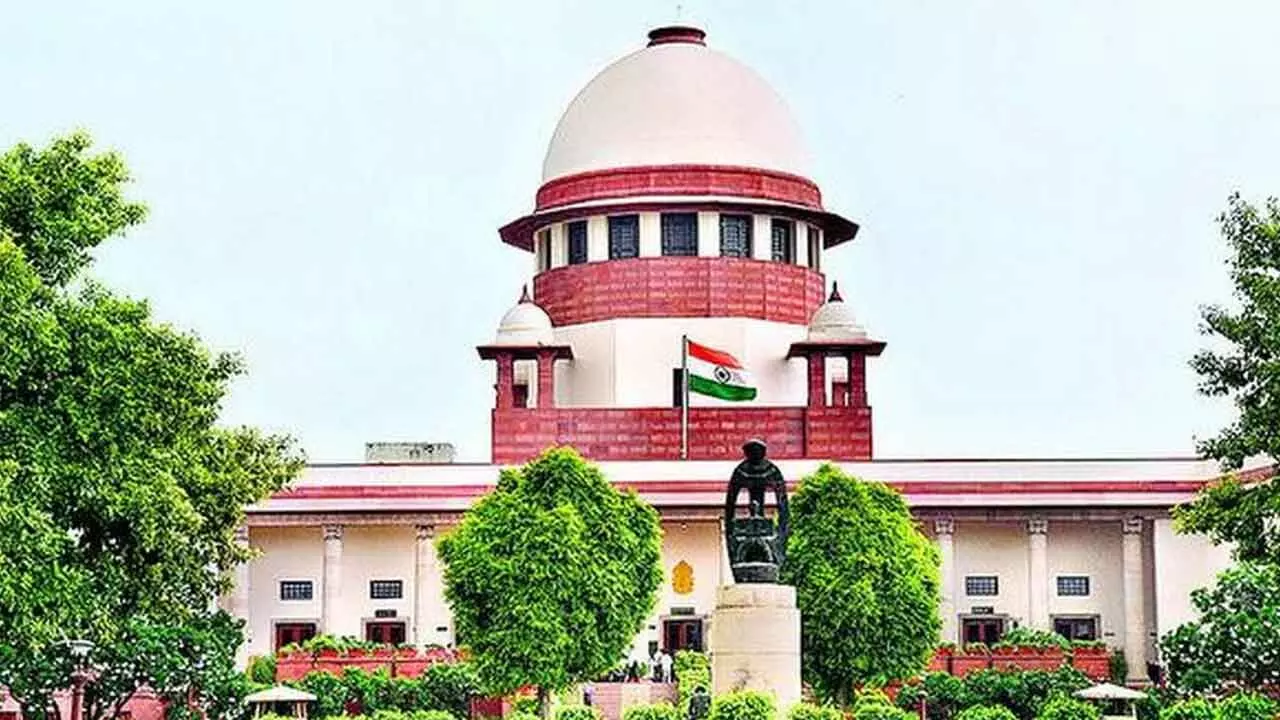
TheSupreme Court has handled several notable cases in 2025 and delivered landmark judgements in some of them.
This is in line with its responsibilities as a judicial body to deliver opinions and judgments through official rulings, not by “preaching speeches”. Its role is to interpret the Constitution and laws to ensure the government operates within its defined limits, not to offer general advice or sermons on governance.
However, the court’s formal opinions and judges’ public addresses often contain profound insights into the principles of good governance, the balance of power, and fundamental rights.
It reinforces the principle of checks and balances. While Parliament has the plenary power to legislate, the judiciary has the power of judicial review to ensure laws are constitutional and that no organ of the state oversteps its bounds.
In the year gone by, the apex court gave its advisory opinion on the Presidential Reference regarding the powers of the Governor/President concerning state bills on November 20, holding that courts cannot impose fixed timelines or ‘deemed assent’ on them, overruling its April 8, 2025, ruling that had suggested timelines.
Article 200 contemplates action in a reasonable time-silence or indefinite delay contradicts the democratic and legislative process. Hard timelines aren’t in the Constitution, but constitutional duty does imply promptness, enforceable through judicial review.
The court has strengthened the role of elected state legislatures against arbitrary gubernatorial actions and reinforced that governors cannot be de facto agents of the Centre in opposition-ruled states. It ensured that elected laws are not stalled arbitrarily, preserving parliamentary governance at the state level. That apart it urged governors to act as constitutional facilitators and not as obstacles, while renewing demands for constitutional amendment to explicitly fix timelines for assent. Political parties, especially in opposition-ruled states, view this as a broader battle for state autonomy. If not followed, the advice or sermons cannot improve the governance. But what will happen to governance under the rule of law?
Not just mis-governance, but non-governance:
April 8: The dispute arose from a prolonged constitutional conflict between the government of Tamil Nadu (led by Chief Minister M K Stalin) and its Governor (R N Ravi) over the assent to state legislation. It began when the Tamil Nadu Legislature passed several Bills between 2020 and 2023. Instead of assenting, the Governor sat on them for months/years, or reserved them for the President’s consideration, without clear constitutional justification. The Union Government was not ready to decide on the issue. It was the Constitutional duty of the Governor to act as per the law. In this helpless situation, the State government challenged this in the Supreme Court, alleging illegal delay and misuse of discretionary powers in violation of Articles 163 and 200 of the Constitution. This is one of the serious reasons for the pendency of thousands of constitutional cases in both High Courts and the Supreme Court. The entire system suffered from ‘not just mis-governance, but non-governance’ totally. Instead, the state government is before the Supreme Court, as the Centre did not respond to the situation. And that leads to unnecessary litigation, expenditure, and delay while ceasing to govern, as the Governor does not govern, probably by the instruction of the bosses in Delhi.
Constitutional questions:
The litigation and subsequent presidential reference raised critical constitutional issues, but the problem has not been solved. Justices J.B. Pardiwala and R. Mahadevan delivered a landmark ruling (8 April 2025) affirming the constitutional role of Governors and state legislatures. Analysis of the Supreme Court’s judgments by several experts pointed out:
1 The Governor cannot sit on bills indefinitely — prolonged inaction violates the constitutional duty under Article 200.
2. The Constitution does not allow Governors to exercise an absolute veto or pocket veto by simply withholding assent without making any decision.
3. The Governor must act in aid and advice of the Council of Ministers and not become a political roadblock to an elected government’s legislation.
4. While Article 200 doesn’t specify time limits, the Court laid down reasonable timelines (interpreted by the Court under Article 142 for practical implementation):
a. Assent or reservation: within 1 month
b. Withholding or returning a bill for reconsideration: within 3 months
c. Post-reconsideration assent: within 1 month.
5. Using its plenary powers, the Court deemed 10 previously withheld bills as having received assent retroactively (to when they were first presented), effectively making them law.
6. Governors’ actions (including delays) are subject to judicial scrutiny — they cannot hide behind immunity clauses like Article 361 to avoid review of delay.
Suggestions of two Constitutional Commissions:
The Sarkaria Commission (1987) cautioned that the reservation of Bills for the President should be an exceptional measure, invoked only in cases of evident constitutional infirmity. Earlier decisions of the Supreme Court had consistently underscored that Governors are ordinarily bound to act on the aid and advice of the Council of Ministers, and not on any independent discretion.
Reinforcing this approach, the Punchhi Commission (2010) recommended the prescription of a six-month outer limit for gubernatorial action on Bills. The Supreme Court itself has, in appropriate contexts, laid down non-textual timelines to ensure constitutional functionality—most notably in K M Singh, where a three-month period was fixed for Speakers to decide disqualification petitions. These developments collectively affirm that Governors are expected to exercise their constitutional powers with a sense of responsible urgency.
Correspondingly, the Union must ensure that the office of the Governor is not deployed as an instrument to obstruct or destabilise elected State governments. At the same time, judicial review must remain available as a constitutional safeguard against paralysis, while maintaining due respect for the doctrine of separation of powers.
Crimes against children and delays:
April 15: While addressing judicial delays in Pinki v. State of Uttar Pradesh (2025 INSC 482), the Supreme Court directed 15 April 2025 High Courts and trial courts to accelerate child trafficking trials, collecting data and enforcing timelines for completion within six months. The Court issued guidelines to tackle pendency and enhance accountability in the prosecution and adjudication of serious offences against children. A major procedural reform judgment addressing judicial delays that contribute to systemic impunity in crimes affecting vulnerable children.
Thus, the Supreme Court directed all High Courts to collect data on and monitor pending trials related to child trafficking. The Allahabad High Court had granted bail to 13 persons involved in interstate child trafficking. The High Court considered various factors, such as the initial exclusion of some names from the FIR, the lack of a criminal record, and the lack of proof that the accused would tamper with evidence or intimidate witnesses. Several accused persons absconded after receiving bail.
Callous approach:
The Supreme Court criticised the High Court’s “callous approach” and for ignoring the severity of the accusations. It held that the personal liberty of the accused must be balanced with the larger social interest as per the rule of law. The Court gave directions to frame charges, find the absconding persons within two months, prosecute them separately, and for the trial court to expeditiously complete hearings. It also issued guidelines directing all state governments to study and implement a report published by Bharatiya Institute of Research and Development (BIRD) in 2023. The report deals with child trafficking data and suggests recommendations. The Court warned that non-compliance with these guidelines would attract contempt proceedings.
(The writer is Advisor, School of Law, Mahindra University, Hyderabad)