Aim to advance AI, ML, and cybersecurity skills in higher education

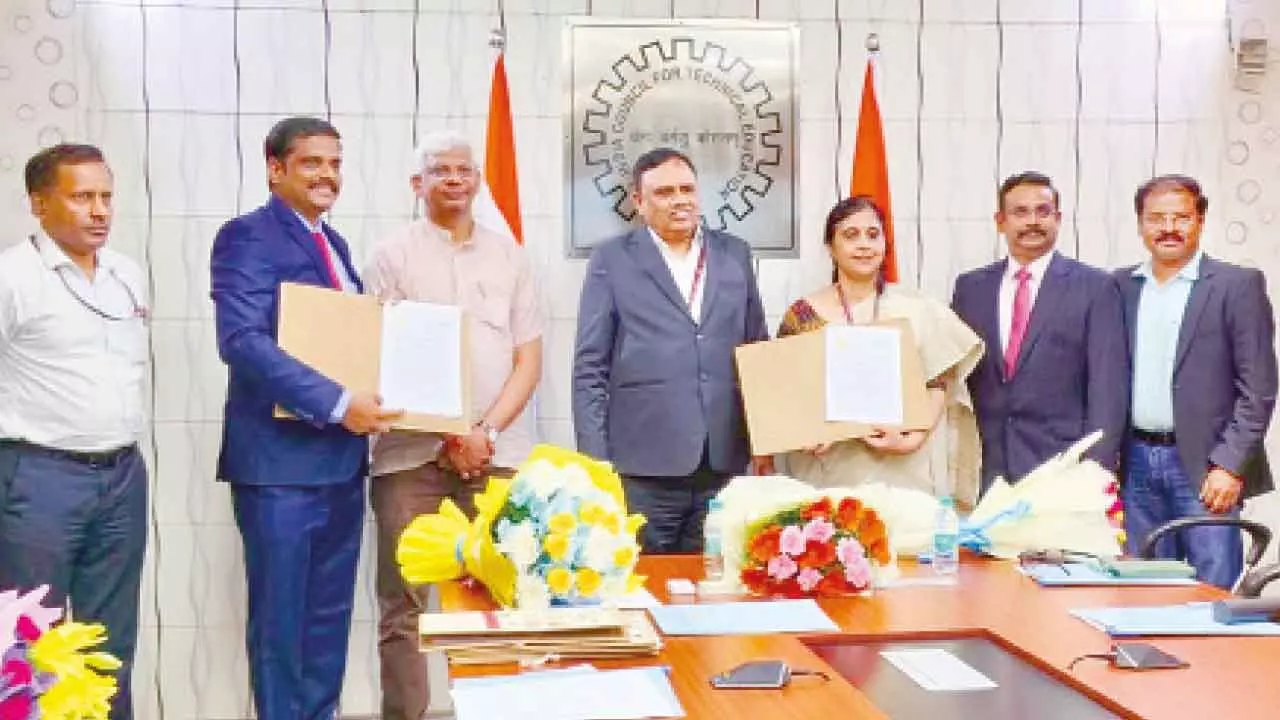
The All India Council for Technical Education (AICTE) and the Consortium for Technical Education (CTE) have entered into a partnership aimed at strengthening India’s preparedness for Industry 4.0. The collaboration focuses on advancing education and skill development in Artificial Intelligence (AI), Machine Learning (ML), and Cybersecurity—areas that are becoming increasingly essential across sectors. The initiative aligns with national efforts to promote digital readiness and innovation in higher education.
A central feature of this partnership is the creation of TECHNOVATE Hubs, which will be integrated within AICTE’s Indovation Centres. These hubs are planned to operate through a hub-and-spoke model, connecting Centers of Excellence (CoEs) across higher education institutions.
The structure is designed to extend access to advanced technical resources and expertise beyond major cities, reaching institutions in rural and semi-urban areas as well. By doing so, it aims to create a wider base of students and faculty equipped with emerging technology skills.
The first TECHNOVATE Hub will be established at AICTE’s Indovation Centre in Jaipur, serving as a pilot before the network is expanded to other regions. Through these hubs, participating institutions will have opportunities for capacity building and professional development in areas related to Industry 4.0. Training programs will include practical workshops, advanced courses, and sessions designed to familiarize educators and students with global industry standards.
In addition to training, the initiative emphasizes mentorship, collaboration, and innovation. With guidance from both national and international experts, higher education institutions, faculty, and student innovators will be supported in areas such as prototype development, incubation, and intellectual property management. The model also seeks to encourage entrepreneurship, linking technical knowledge with start-up ecosystems in different parts of the country.
For students, the program is expected to provide exposure to cutting-edge tools and learning environments, helping them to build skills relevant to the future workforce. For faculty and institutions, it represents an opportunity to strengthen teaching resources, research activities, and community engagement around digital technologies.
Leaders from both AICTE and CTE have expressed that the collaboration is intended to bridge gaps between academia and industry, creating a foundation for applied research and innovation. By connecting institutions through shared infrastructure and mentorship, the initiative seeks to build a more inclusive and distributed network of technology education in India.