From classrooms to creation: The power of student-led innovation

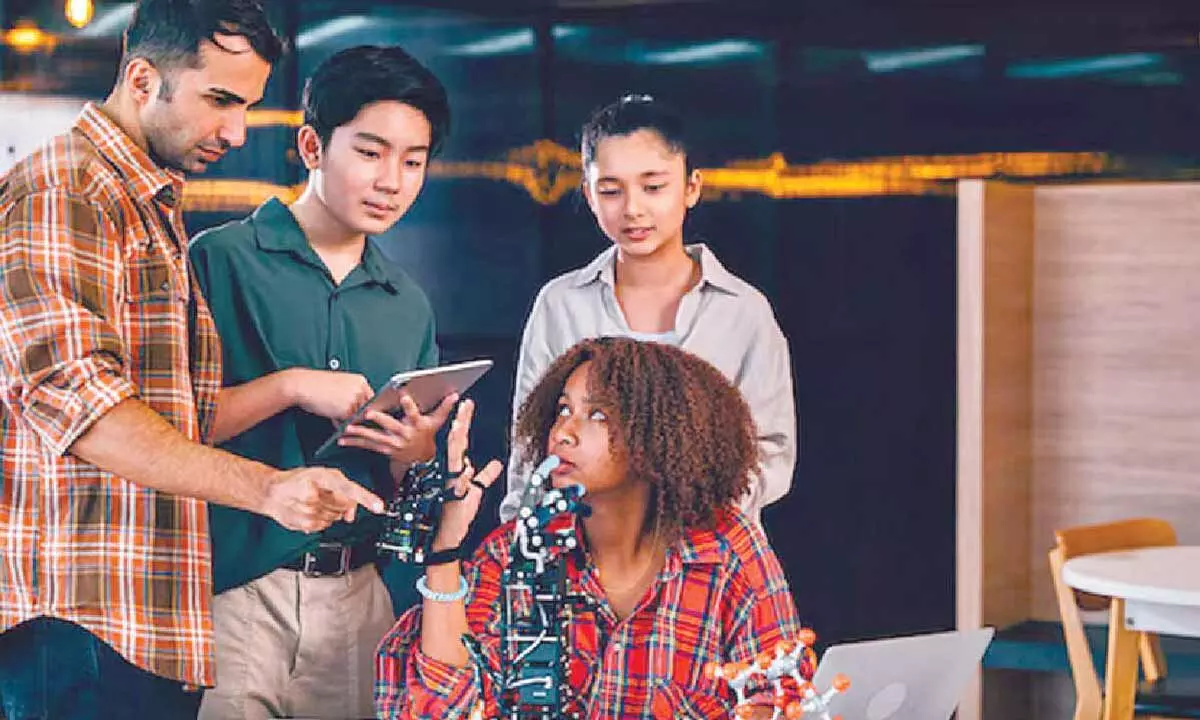
Since the advent of the Industrial Revolution,formal work has meant many people working together to solve different facets of a problem. This meant domain knowledge in the key tasks one undertakes was very critical.
Today, those norms are changing. The rise of automation, easy-to-use AI/ML tools, and the use of digital platforms to perform multiple functions have changed what it means to be work-ready. Traits such as adaptability, creativity, problem-solving, fluency with digital tools, and collaboration are as important as domain knowledge. For youngsters, participating in innovation projects led by students, in campus incubators, hackathons, community challenges, and interdisciplinary projects is critical to improving these capabilities. They do help one academically, but also offer micro-simulations of the real-world workplace, which make students more confident and agile.
At the fundamental level, the ability to take ownership is at the beating heart of these innovations. Students can take charge, identify an issue, develop solutions and execute. This approach makes students active creators. They no longer have to rely on rote learning and verbal instructions; instead, they learn via actions, making decisions, solving challenges, and making tweaks based on outcomes.
Real-time learning helps young students take initiative and emerge more resilient. Students who can find solutions to a prototype that is stuck at the execution level or work out a crisis in their teams are better prepared to deal with the pressures of a high-intensity workplace than someone who has only tackled structured assignments.
They can also sharpen students’ broader analytical skills and problem-solving abilities. They require students to break down ambiguous, messy problems, from designing low-cost medical devices to an app that streamlines logistics. Students learn the basics of user research, test hypotheses, assess feasibility, and offer sharp risk advice. Problem-solving is a skill set that companies across sectors aspire to have in their employees. Translating challenges into actionable solutions is a foundational skill set, aided by innovative projects. It also helps improve cross-functional collaborative skills. Traditionally, student interaction across streams is minimal.
Moreover, even for non-technical students, tech-focused innovations can make them more adept with tech, and they could, in due course, build IoT solutions, design UI/UX workflows and other tech hacks to automate tasks.
Meanwhile, as AI models become more popular, digital-first innovations help improve tech capabilities, whether by building IoT solutions, designing UI/UX workflows, or using low-code tools to automate tasks. Students can use these lessons to acclimate to new tech tools. This is a win-win, even for those not keen on technology learning. Employers are keen on professionals who are not afraid of tech tools, can learn to use them quickly, and can combine the efficiency of digital systems with a human touch. In a nutshell, the projects help build entrepreneurial thinking. Entrepreneurship is much more than getting the much vaunted unicorn tag; it involves baking in competencies such as recognising good opportunities, being financially literate and offering sharp risk assessment. They are confident and stand out in strategic thought. Corporations also look for employees who think like entrepreneurs, can identify inefficiencies, propose solutions and drive change.
While we have discussed the need for tech grounding and collaboration, one can say that skills such as communication and storytelling also improve in innovation projects, by crafting a solid pitch deck, presenting it to a panel of industry experts or breaking down a complex idea and explaining it to a non-technical audience. This skill is now a necessity in large teams and workplaces where one has to constantly toggle between technical teams, management, customers, regulators, and cross-border collaborators. The best communicators are often good leaders who can solve problems and take ownership.
These benefits aside, student innovators can also instil a sense of purpose and social awareness. For instance, the problem statement for most successful college campaigns is to frame a social issue impacting students, such as waste management, accessibility, mental health care, or civic issues like water scarcity. It helps students become more empathetic and responsible. As new workplaces focus on ESG norms, ethical AI use, and sustainability, impact-oriented innovation will be helpful.
It also helps students choose their career path. Many young students are usually confused about the roles that suit their strengths. They offer a bird’s-eye view of multiple real-world tasks, allowing them to discover what works best for them.
In the new normal, organisations will be keen on employees who are adaptable, digitally skilled, and purpose-driven. The projects are powerful mechanisms that bridge theoretical learning and real-world execution, equipping students with usable skills and providing the upskilling that new joiners need.
(The author is Principal, Phoenix Greens School of Learning)