Integrating Indian culture into modern education to nurture ethical, mindful citizens

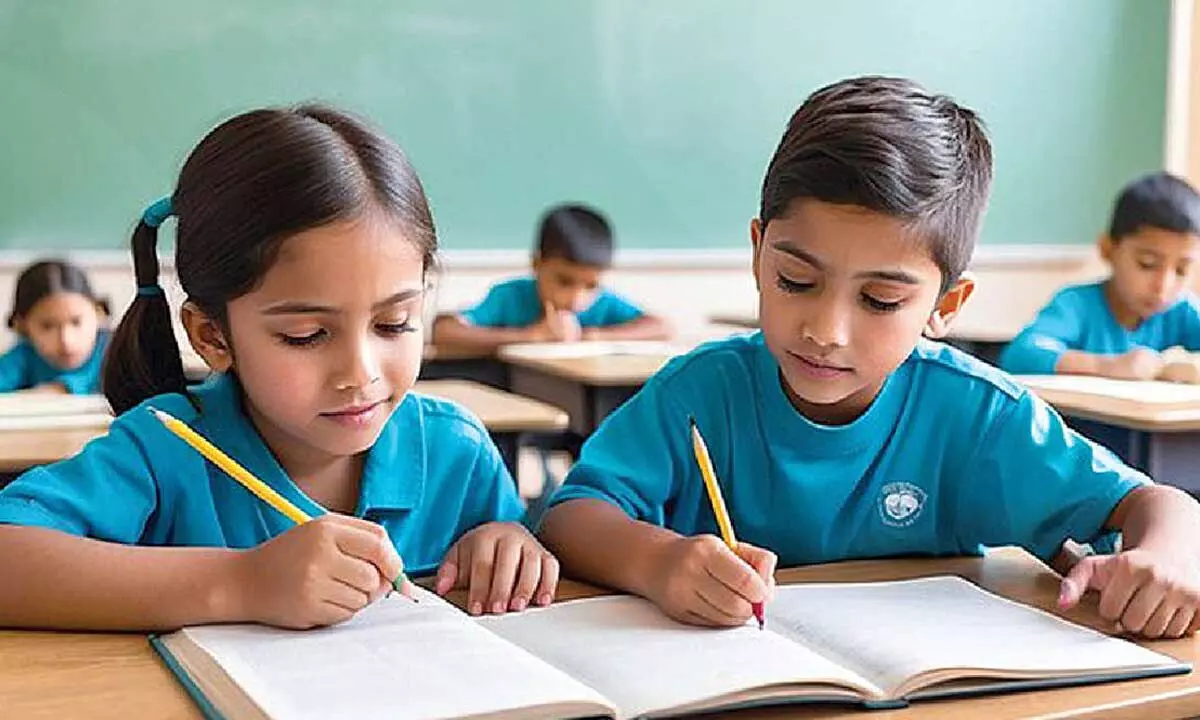
In an era shaped by climate uncertainty, AI disruption, and social fragmentation, education must go beyond academic achievement to cultivate character, empathy, and ethical judgment. For India’s Gen Z and Gen Alpha, Indian culture offers a living curriculum—one that embeds values through stories, rituals, art, and reflection. When thoughtfully integrated into schooling, cultural practices move from symbolism to relevance, fostering mindfulness, resilience, and moral clarity. This approach is not about rejecting modernity, but about anchoring innovation in timeless wisdom—preparing students not just for careers, but for conscious, meaningful lives
In today’s fast-changing world—defined by climate crises, AI disruption, widening inequities, and social upheavals—the task of education extends far beyond academics. While technical skills and subject mastery remain important, they are no longer sufficient. For India’s Gen Z and Gen Alpha, long-term success will depend as much on emotional intelligence, ethical grounding, and adaptability as on cognitive ability. It is here that Indian culture, when engaged with deeply and thoughtfully, becomes a transformative medium for values education and character development.
Rediscovering culture as curriculum
Indian culture is not an artifact of the past, preserved only in textbooks or ceremonial practices. It is a living, evolving philosophy that continues to offer guidance for everyday life. Whether through the epics, the Upanishads, Bhakti poetry, folk traditions, or the lives of social reformers, Indian culture presents timeless insights into empathy, truth, courage, restraint, service, and humility—values that remain urgently relevant today.
To unlock this potential, schools must go beyond the superficial celebration of festivals and symbolic observances. Cultural engagement must be woven into the fabric of everyday learning.
From ritual to relevance: Living values
Values education often falters when reduced to moral lectures, rulebooks, or abstract ideals disconnected from lived experience. Culture, however, offers an experiential and embodied alternative. A shloka recited during the morning assembly can become a starting point for a discussion on attention, inner silence, or gratitude. A reflective dialogue on Gandhi Jayanti can evolve into a workshop on nonviolence in digital spaces—examining online speech, disagreement, and empathy. A Rangoli-making session during Diwali can highlight the aesthetics of collaboration, patience, and mindfulness rather than mere decoration.
These are not just activities; they are rituals that, when designed with intention, spark inner reflection and embed values into emotional and behavioural memory. Such experiences allow students to feel values, not just understand them intellectually. Schools must therefore move from symbolic practices to purposeful programming, where cultural exposure leads to emotional resonance, self-awareness, and sustained behavioural change.
Preparing for the unpredictable
The world our students will inherit is complex, uncertain, and constantly shifting. The most essential skills they will need—emotional regulation, ethical decision-making, critical thinking, and resilience—cannot be taught through instruction alone. They must be cultivated through repeated practice, reflection, and lived experience. Schools must evolve into ecosystems of holistic learning where culture anchors character and values foster inner strength.
This can be achieved through intentional practices such as:
• Mindfulness and reflection:Daily rituals of silence, gratitude journaling, guided storytelling, or reflective circles help children become aware of their inner lives and emotional patterns.
• Contextual debates:Discussions around contemporary ethical issues—technology use, environmental responsibility, social justice—using cultural philosophies as reference points foster discernment, dialogue, and empathy.
• Community engagement:Service-learning projects connected to local traditions, such as cleaning a river before a festival or supporting community kitchens, allow students to connect with their roots while contributing meaningfully to society.
This approach is not about turning schools into gurukuls or resisting modernity. It is about fusing tradition with innovation—drawing from cultural wisdom to navigate contemporary realities. In doing so, education prepares children not just for jobs, but for life itself.
Teachers as cultural mentors
Within this paradigm, teachers are more than instructors or content deliverers—they are cultural mentors and wisdom carriers. Their stories, interpretations, and lived values shape the hidden curriculum as much as formal lesson plans do. A teacher who explains the symbolism of Holi as renewal and forgiveness, or who shares how her grandmother used stories to resolve conflict, becomes a vessel for transmitting not just knowledge, but ethos.
To enable this, professional development must invest in cultural literacy and reflective pedagogy. When teachers are confident interpreters of culture, they can guide students with authenticity and depth. In doing so, schools become spaces where ancient wisdom and modern learning meet—nurturing ethical, mindful, and resilient citizens for an unpredictable world. The author is Co-Founder Equanimity Learning Chief Learner nd Director, Delhi Public School.