The real outcome of education is adaptability, not just employability

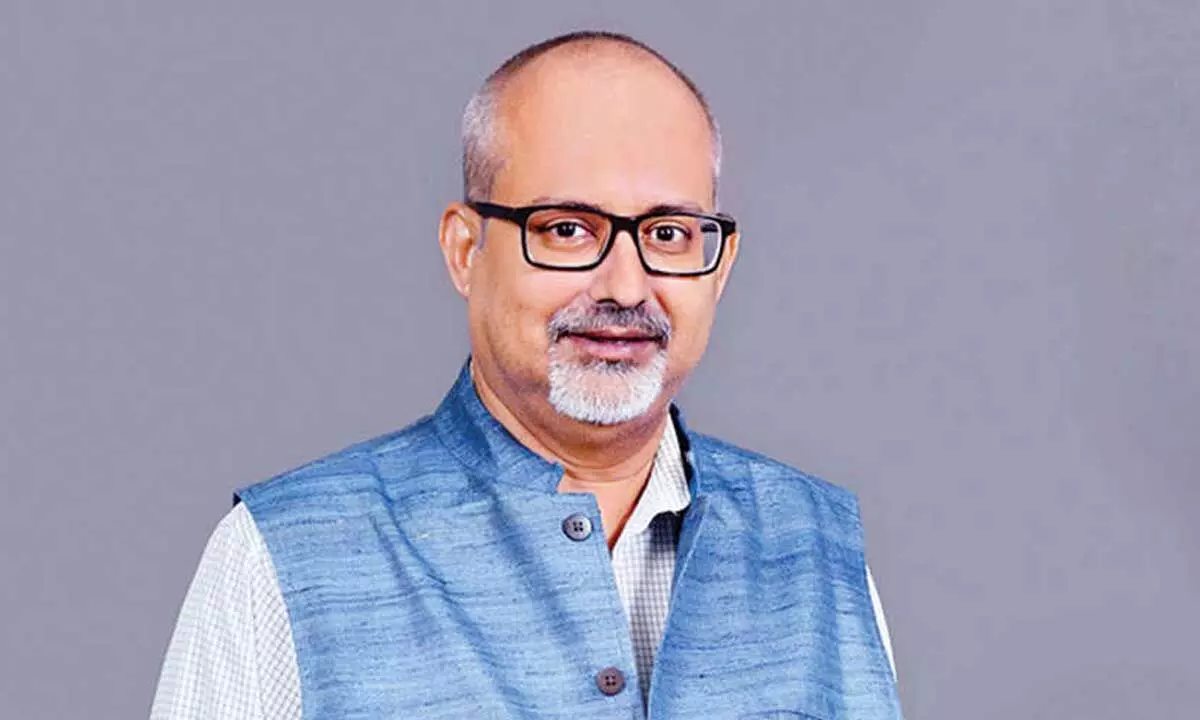
As technology continues to reshape industries at an unprecedented pace, the role of engineering education is undergoing a fundamental redefinition. No longer is it sufficient to train students for specific tools or immediate job roles; institutions must now prepare graduates for careers that will evolve multiple times over their working lives. Prof. Sandeep Shukla, Director of the International Institute of Information Technology (IIIT) Hyderabad, believes that the key lies in strong fundamentals, research-driven learning, ethical system design, and a deep focus on student well-being. In this wide-ranging conversation, he outlines IIIT Hyderabad’s vision for future-ready education, the importance of cybersecurity and emerging technologies, why placements should be viewed beyond salary figures, and how interdisciplinary learning can help students build resilient, purpose-driven careers.
Excerpts:
As Director of IIIT Hyderabad, what is your vision for preparing students for a rapidly evolving technology landscape, especially in areas like cybersecurity and emerging technologies?
Our vision is to prepare students not just for today’s technologies, but for a future that will be defined by constant and often unpredictable change. To remain relevant in such an environment, students must be grounded in strong fundamentals—systems thinking, algorithmic problem-solving, information and systems security–centric design, and ethical system development. At IIIT Hyderabad, we combine this foundation with early exposure to research and real-world challenges through our research-centre–driven academic structure.
In areas such as cybersecurity and emerging technologies, we emphasise security-by-design, hands-on learning, and close engagement with industry and government. Students must understand not only technical depth but also societal impact. Equally important is moving away from rote learning and narrow placement metrics. What truly endures is the ability to learn continuously, collaborate effectively, communicate clearly, and reskill proactively. These are precisely the human-centric skills that global studies, including those by the World Economic Forum, increasingly highlight as critical for the future workforce.
IIIT Hyderabad is widely recognised for its research-driven education. How do you balance deep academic research with industry-ready skills?
Strong industry input is essential, especially in engineering education, when designing or revising curricula. Students may need to retrain several times during their careers, but they must first graduate with skills that are relevant today. Being attuned to industry trends and emerging requirements ensures that graduates are employable while also adaptable.
The same balance applies to research. Alongside foundational and exploratory research, a significant portion of academic work should address real challenges faced by industry and government—across short-, medium-, and long-term horizons. Industry engagement helps surface meaningful problems that can drive impactful research. At IIIT Hyderabad, this integration of academic rigour with real-world relevance strengthens student outcomes, enhances placements, and ensures that research translates into tangible value for society.
From your experience in cybersecurity, embedded systems, and blockchain, which skills should engineering students prioritise to stay future-relevant?
The most critical priority is a strong grounding in fundamentals—computer systems, algorithms, networking, operating systems, and cryptography. Tools and platforms will change, sometimes very rapidly, but a deep understanding of how systems work end to end enables students to adapt, reskill, and innovate throughout their careers.
Equally vital is adopting a security-by-design mindset. Security, privacy, and reliability can no longer be treated as afterthoughts. Skills such as threat modelling, secure coding, formal reasoning, and understanding adversarial behaviour are essential whether one is working on IoT devices, blockchain protocols, or large-scale digital infrastructure. Students must also learn to balance abstractions with real-world constraints like scalability, latency, energy efficiency, and regulation. Alongside this, ethical judgment and the ability to collaborate across disciplines are becoming indispensable.
Placements often dominate public perceptions of student success. How should institutions and students view placements beyond salary figures?
Salary is a very limited—and sometimes misleading—indicator of success. A first job is only the starting point of a much longer professional journey. What matters far more is the nature of the role: the learning opportunities it offers, exposure to real problem-solving, alignment with personal interests, and the chance to build strong foundational skills.
From an institutional perspective, success should be evaluated through the diversity of career pathways graduates pursue—industry, research, higher studies, entrepreneurship, and public service. In challenging global hiring environments, students who have engaged deeply with research, interdisciplinary projects, or industry-relevant work are often better positioned to pivot across domains. Excessive focus on salary can increase stress and unhealthy competition. A fulfilling career balances financial security with purpose, integrity, and continuous growth. Placements should be seen as milestones, not endpoints.
What role does interdisciplinary learning play at IIIT Hyderabad, and how can students leverage it to build innovative careers?
Interdisciplinary learning is central to IIIT Hyderabad’s academic model. The institute is organised around research centres rather than traditional departments, which naturally brings together expertise from computer science, electronics, AI, humanities, design, and application domains such as healthcare, cybersecurity, and smart cities.
Students engage with these centres early in their academic journey, allowing them to see how ideas from multiple disciplines converge to solve real-world problems. This exposure helps students move beyond siloed thinking and build innovative, non-linear careers—whether in research, entrepreneurship, public policy, or deep-tech innovation. By combining technical depth with domain understanding and societal awareness, students develop skills that remain valuable even as specific technologies evolve.
What advice would you give students aspiring to higher studies, research, or entrepreneurship alongside traditional careers?
My primary advice is to focus on fundamentals, curiosity, and the ability to learn continuously. Students should actively seek opportunities to engage in research, hands-on projects, and real-world problem-solving early in their careers. These experiences build depth of understanding and confidence in tackling open-ended challenges.
It is also important to use emerging technologies, including AI, as collaborators rather than substitutes for thinking. Long-term success depends on judgment, creativity, and ethical responsibility. Students must prioritise resilience, mental well-being, and balance, especially in high-pressure environments. Careers today are increasingly non-linear, and success should not be defined narrowly by titles or salaries. Staying open to interdisciplinary learning and aligning work with societal needs allows students not just to succeed, but to lead with purpose.
How do you plan to strengthen IIIT Hyderabad’s ecosystem while keeping ethics and student well-being at the core?
At IIIT Hyderabad, we integrate academics, research, and industry collaboration rather than treating them as separate pillars. Our research-centre–driven structure ensures that teaching is informed by cutting-edge work and real-world challenges. At the same time, student well-being and ethical responsibility are non-negotiable foundations.
We consciously move away from excessive competition and placement-centric definitions of success, emphasising human values, balance, and social responsibility. In an AI-driven future, these human qualities—along with integrity and empathy—will be as critical as technical excellence. They will continue to define how we shape IIIT Hyderabad’s growth and the kind of graduates we aspire to nurture.