Bengaluru traffic congestion reflects growth, not failure: Police commissioner

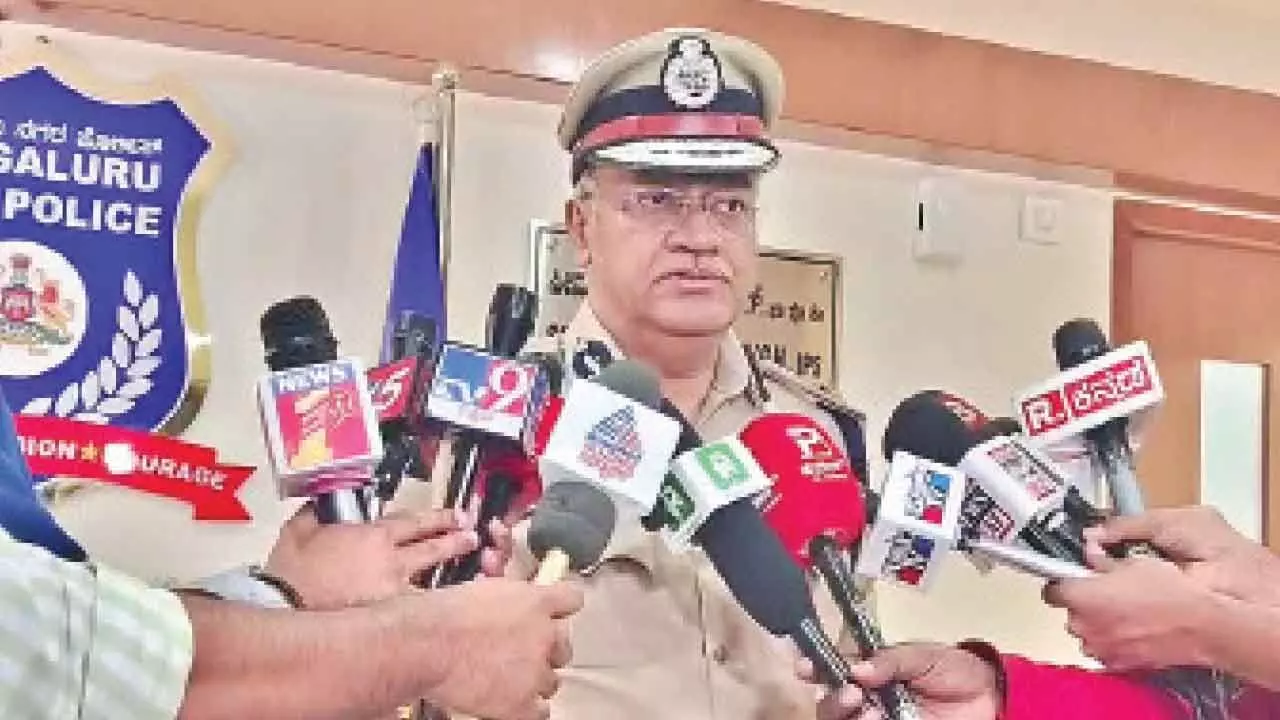
The Commissioner expressed optimism that congestion levels would ease further as public transport systems expand, including metro rail connectivity and enhanced bus services
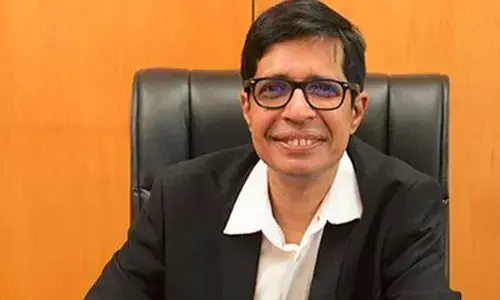
Bengaluru: Bengaluru’s rising traffic congestion is largely a consequence of rapid urban growth, increasing population, and a sharp rise in vehicle numbers, City Police Commissioner Seemanth Kumar Singh said on Thursday, asserting that congestion should also be seen as a sign of development rather than decline.
Responding to the TomTom Traffic Index 2025, which ranked Bengaluru as the second most congested city in the world, the commissioner said the city police were fully aware of the ground realities and were taking sustained steps to manage traffic using available resources, manpower, and technology.
“As cities grow and economic activity expands, traffic density naturally increases. Bengaluru is no exception. However, we are continuously working to reduce congestion by using modern technology, better coordination, and efficient deployment of traffic personnel,” Singh said.
He noted that special focus is being placed on peak hours in the morning and evening to ensure smooth vehicular movement without bottlenecks forming at a single location. “Our objective is uninterrupted flow. Traffic police teams are stationed dynamically to prevent jams from building up,” he explained.
The commissioner expressed optimism that congestion levels would ease further as public transport systems expand, including metro rail connectivity and enhanced bus services. “As mass transport improves, dependence on private vehicles will gradually reduce, which will have a direct impact on congestion,” he said.
Singh also pointed to a common urban challenge where single occupants often use private vehicles. “In many cases, one person travels in one vehicle.
During high traffic density, this significantly increases travel time for everyone. Greater use of public transport is the most effective solution,” he said, adding that the police department is actively encouraging commuters to shift to buses, metro, and shared mobility options.
While stating that he had not yet studied the TomTom report in detail, Singh said the findings would be taken positively.
“Our traffic management center already uses advanced surveillance systems, real-time monitoring, and adaptive signal technology. We will study the report and incorporate learnings wherever possible,” he said.
According to the TomTom index, Bengaluru’s congestion ranking has steadily worsened — moving from sixth place in 2023 to third in 2024, and now second in 2025 — primarily due to reduced travel speeds and longer commute times during peak hours.