KMCRI pioneers new scientific method to treat snakebite victims

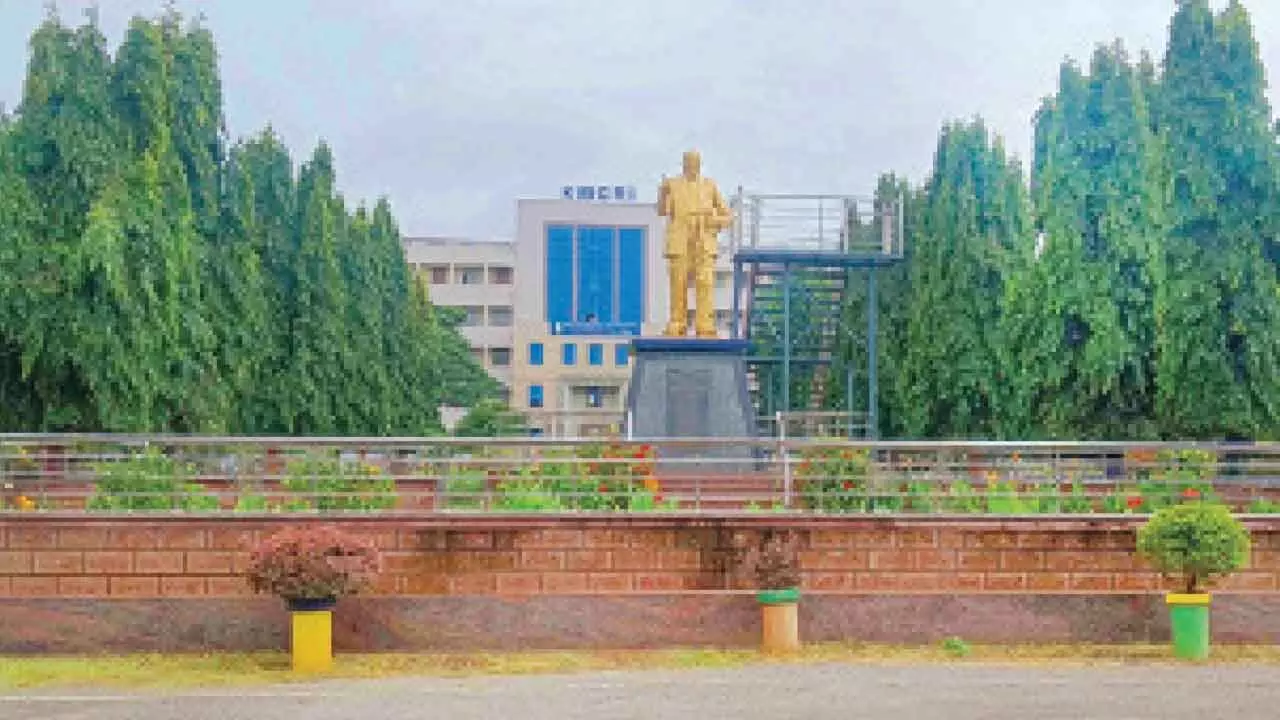
Hubballi: In what could become a pathbreaking protocol for treating snakebite victims in India, Karnataka Medical College and Research Institute (KMCRI) has successfully developed a new evidence-based treatment approach that determines the severity of venom in a patient’s body before administering anti-snake venom injections (ASV).
Traditionally, snakebite patients admitted to hospitals were given ASV injections immediately. However, the new method introduced at KMCRI’s Multidisciplinary Research Unit (MRU) involves first collecting a blood sample from the victim and analysing it for specific enzymes present in snake venom. Based on these findings, doctors decide the exact dosage of ASV — or whether it is needed at all.
Speaking to The Hans India , Dr. Ram Kaulugudda, the nodal officer of the MRU, explained that until now, hospitals would administer ASV indiscriminately. “ASV is expensive and unnecessary doses create both financial and health burdens. Our study has proven that identifying the venom levels through blood tests allows us to treat only those who genuinely need ASV,” he said.
Under the new protocol, patients who come to KMCRI after a snakebite undergo a quick blood test. Doctors check for symptoms such as swelling, breathing difficulties, blood pressure fluctuations, nervous system impact and blood clotting disorders. The venom enzymes are measured using advanced ELISA machines. If venom levels are high, the patient receives the required ASV dosage. If the venom level is minimal, supportive treatment without ASV is administered. “This is the first research of its kind in India,” Dr. Kaulugudda said proudly. “It offers a clear guideline on who needs ASV and who does not. This will help rural hospitals too, where the misuse of ASV is common due to lack of testing facilities.”
KMCRI researchers revealed that 82 snakebite victims were tested as part of this study. Blood was collected immediately, then again at 24 and 72 hours to monitor changes in venom enzyme levels. Doctors then adjusted treatment accordingly. “The severity of venom decides survival chances. Knowing the enzyme level early gives us a head start on treatment and prevents premature discharge when venom might still be present,” Dr. Kaulugudda added. The study found significant differences in venom levels between species. For example, bites by cobras, vipers, kraits and Russell’s vipers showed varied venom enzyme patterns in the blood. Depending on the species and severity, patients either received ASV or continued on supportive therapy.
“In the past, many patients insisted they were fine and asked to be discharged, unaware of hidden venom levels. This study gives us a scientific basis to decide whether a patient is genuinely ready to go home or needs further observation,” Dr. Kaulugudda said. The research began with a pilot project in 2020, studying 20 snakebite patients in Dharwad district — 16 men and four women aged between 18 and 65, mostly farmers. Of these, 12 had bites below the knee. Depending on venom levels, some were given ASV within three hours, while others received it between three to eight hours after admission.
KMCRI now plans to share its findings with the state government. The team believes that deploying similar testing units in rural hospitals will help identify venom severity and decide whether to treat locally or refer the patient to a higher centre for advanced care. “This research is not just about saving lives — it’s about rationalising the use of life-saving drugs, saving money and ensuring patients get the right treatment at the right time,” Dr. Kaulugudda concluded. If scaled up, KMCRI’s innovative protocol could become a national model, offering India’s rural snakebite victims a better chance at survival while using resources wisely.