Silk growers abandoning cultivation due to adverse weather, diseases

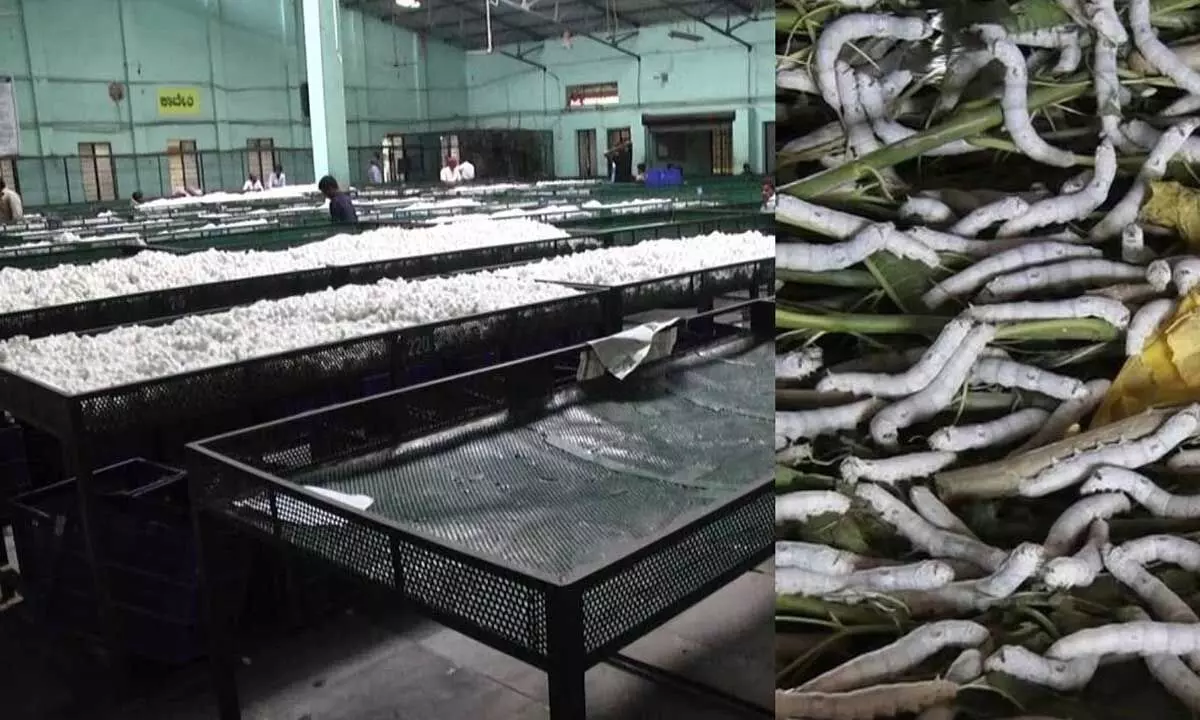
For many years, silk has been a celebrated product in Kolar district. However, in the current scenario, farmers are increasingly abandoning silk cultivation, which was once the pride of the district.
Kolar: For many years, silk has been a celebrated product in Kolar district. However, in the current scenario, farmers are increasingly abandoning silk cultivation, which was once the pride of the district. This shift is primarily due to recent climatic changes, coupled with pests and diseases afflicting the crops. Consequently, farmers are reluctantly turning to alternative crops.
Kolar district is renowned for both silk and milk, boasting a centuries-old tradition of silk cultivation. Since the time of Tipu Sultan, farmers in this region have engaged in rearing silkworms, spinning yarn, and weaving silk fabrics.
If the farmers had constructed silkworm houses using mulberry leaves and brought quality silkworm cocoons to the market, there would have been significant demand for the district’s silk in the international market, with the potential for top-quality production. However, over the years, changes in the international market and the lack of government incentives for silk farmers in our country have weakened the silk industry.
The number of silk farmers in Kolar has been declining steadily over the past five years. The main factors contributing to this decline include diseases affecting the silk crop, negligence from the Silk Department, a lack of emphasis on scientific research in silk production, indifference from scientists towards developing new varieties, insufficient efforts to find remedies for diseases, and the lack of knowledge and support provided to farmers by the Silk Department regarding silk cultivation.
Farmers who have sustained themselves by growing silk for the last thirty to forty years are now facing sudden challenges, even in the face of favourable silk prices in the market. The poor yield of the mulberry crop has led to financial losses, pushing many farmers into poverty. With expectations of assistance from the Silk Department and the government unmet, many are deciding to halt silk production altogether.
In Kolar district alone, mulberry is cultivated over approximately 19,910 hectares, with about 1,477 villages heavily reliant on this crop.
For the past four to five decades, more than 20,000 families in the district have depended on silk for their livelihoods. Despite this, the Silk Department remains largely inactive, and there have been frequent discussions about merging it with the Agriculture Department, which has further decreased governmental interest in silk farming. This neglect has left silk growers in a precarious situation.
Traditionally, farmers in the district refrained from using pesticides on mulberry crops.
However, over the past five years, it has become necessary to apply pesticides and fertilizers to successfully cultivate the crop. This has led to significant financial investments, but the quality of mulberry produce is declining. Crops are increasingly affected by leaf curl disease and viruses, resulting in reduced yields. Consequently, farmers are struggling to produce high-quality silk and are not receiving fair prices in the market, prompting the decision to forego silk cultivation.
The government must act swiftly to revive the Silk Department in the district. Additionally, scientists need to conduct targeted research to address the challenges faced by silk growers. If these actions are not taken, there is little doubt that silk production will vanish from Kolar, the cradle of silk.