Bhujia vs Sev: The Subtle Yet Crunchy Divide in India’s Favourite Besan Snacks

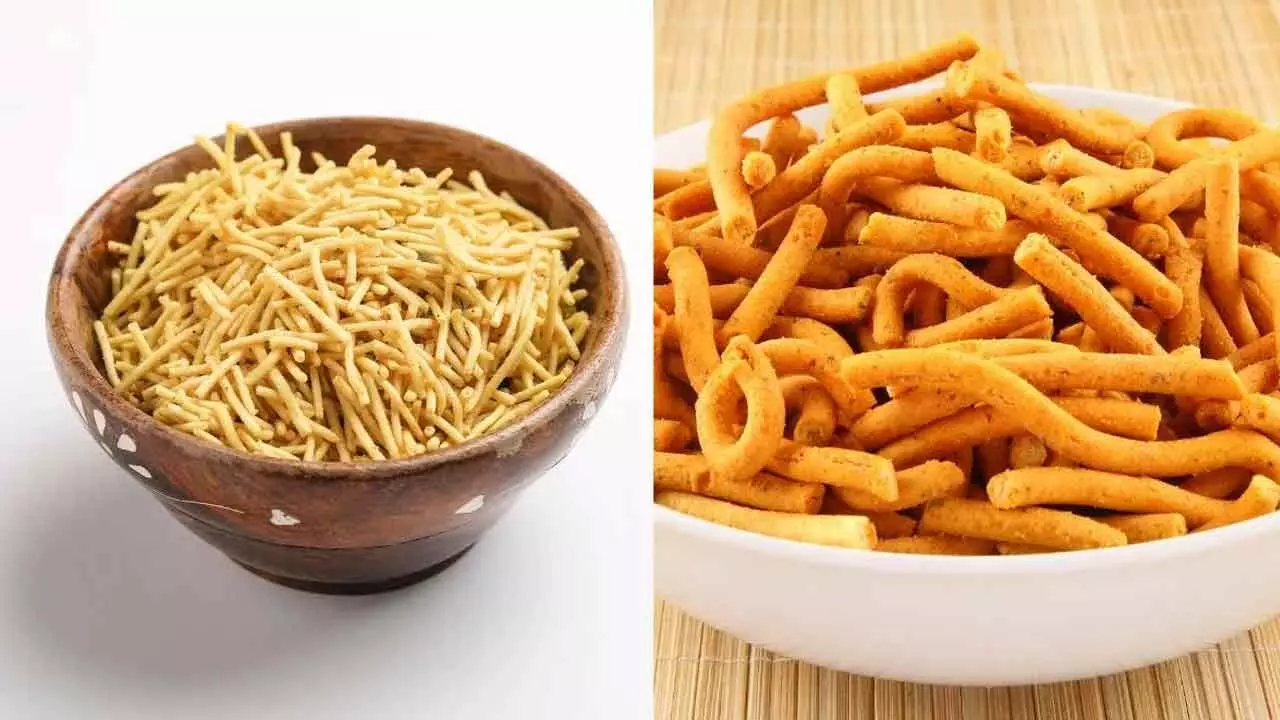
Though similar in appearance, bhujia and sev differ in taste, texture, origin, and use, making each unique in Indian snacking culture.
For generations, Indian households have been bound together by food traditions, and few things capture the country’s snacking culture better than a bowl of crunchy namkeen. Among the endless varieties, bhujia and sev are two names that instantly stir nostalgia. Their crisp golden strands look almost identical, yet the story they tell is very different. At first glance, they may seem interchangeable, but a closer exploration reveals that each holds its own personality—shaped by origin, ingredients, flavour, and usage.
Roots in Regional Kitchens
The story of these snacks begins in two distinct culinary landscapes. Bhujia proudly represents Rajasthan, with Bikaner being its undisputed capital. In fact, “Bikaneri Bhujia” enjoys a Geographical Indication (GI) tag, reflecting its authenticity and cultural pride. Sev, on the other hand, belongs more to the kitchens of Madhya Pradesh and Gujarat, where it has long served as the crunchy partner to local favourites like poha and chaats. Their regional roots continue to influence how these snacks are enjoyed even today.
Ingredients Make the Difference
Though both belong to the broader category of besan (gram flour) snacks, their recipes are far from identical. Sev uses only gram flour as its base, keeping it simple and mild. Bhujia, however, takes a different approach by blending gram flour with moth dal flour. This extra ingredient creates a unique taste profile and a crisper texture, setting bhujia apart in both flavour and mouthfeel.
Flavour: Subtle vs Bold
Spices play a central role in defining the character of these crunchy bites. Sev is known for its mild seasoning—usually salt and a few basic spices—that makes it versatile and easy to pair with various dishes. Its subtlety allows it to enhance food without overwhelming it. Bhujia, in contrast, is all about boldness. Its seasoning often includes ajwain, pepper, cloves, and even a touch of cinnamon. The result is an aromatic, spicy punch that satisfies those who crave intensity with every bite.
The Crunch Factor
Another major difference lies in their texture. Sev tends to be thicker with a soft yet satisfying crunch. This makes it an excellent garnish for chaats, dahi puri, or poha, where it adds body without dominating the dish. Bhujia, on the other hand, is finer, crispier, and more delicate. Its sharp crunch makes it irresistible as a standalone snack, often enjoyed straight from the packet or mixed with other namkeens for a flavour-packed experience.
Everyday Usage
When it comes to usage, sev and bhujia serve very different purposes. Sev is primarily used as a topping, the finishing touch that elevates dishes with texture and mild flavour. Bhujia is mostly enjoyed on its own or as part of snack mixes, its spiced-up profile delivering enough punch to be the star attraction.
Can They Replace Each Other?
Despite their similarities, bhujia and sev are not interchangeable. Replacing one with the other can alter a dish’s flavour and overall feel. Sev’s understated taste blends seamlessly with other ingredients, while bhujia’s strong spices demand the spotlight. Both have earned their place in India’s culinary heart, but each shines best in its own role.
Together, these snacks remind us that even within something as simple as besan and spices, India’s diversity and creativity are limitless.