Closing the Climate Risk Protection Gap: Lahari Pandiri Advocates Parametric Insurance Models for Equitable Coverage
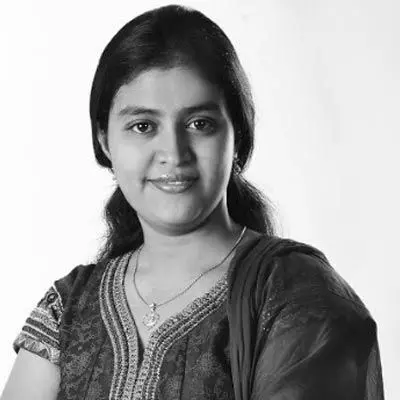

Lahari Pandiri shared her vision for transforming disaster recovery and climate risk financing through AI-driven parametric insurance models that prioritise speed, equity, and accessibility. She emphasised the urgent need to move beyond traditional indemnity systems to address the growing climate protection gap
As climate-related disasters grow in both frequency and intensity, the traditional insurance models are proving inadequate—plagued by sluggish claims processes and exclusionary practices that often leave the most vulnerable behind. In response, Lahari Pandiri, an expert in AI-driven insurance innovation, offers a transformative blueprint in her recent paper, “AI-Driven Parametric Insurance Models: The Future of Automated Payouts for Natural Disaster and Climate Risk Management.”
Pandiri argues for a fundamental shift from reactive, indemnity-based insurance to a proactive, trigger-based model powered by artificial intelligence. “The economic losses from natural disasters now exceed $250 billion annually,” she notes. “Yet, in developing economies, up to 99% of those losses are uninsured. This isn't just a financial crisis—it's a humanitarian one.”
At the heart of Pandiri’s proposal is parametric insurance, which departs from the traditional model by basing payouts on predefined parameters—such as rainfall levels, wind speeds, or seismic readings—rather than actual damage assessments. “It’s about delivering timely, automated support when it’s needed most,” Pandiri explains. “Once a trigger threshold is met, the payout is initiated instantly, bypassing the delays of manual claims processing.”
Her innovation lies in layering artificial intelligence into this framework. By using machine learning, IoT sensors, and real-time satellite data, Pandiri’s model dynamically evaluates risk, calibrates thresholds, and refines conditions for payouts. “The AI-driven approach enhances transparency, accuracy, and inclusivity,” she says. “It also reduces basis risk and administrative overhead, making the model viable for microinsurance and hard-to-reach populations.”
Pandiri emphasises that this approach is especially suited to previously uninsurable regions. “In rural, disaster-prone areas where deploying loss adjusters is impractical, parametric insurance offers a repeatable, scalable alternative,” she explains. “It’s a lifeline for communities often left out of traditional safety nets.”
Yet, she acknowledges there are hurdles to overcome. Data availability and quality in some regions remain challenges, and stakeholder awareness around AI and parametric mechanisms must be strengthened. To address this, she advocates for the development of regional AI-insurance sandboxes—spaces to pilot and refine solutions under diverse conditions.
Ultimately, Pandiri sees parametric insurance not just as a technical fix, but as a social imperative. “Equity must be built into every layer of our response infrastructure,” she says. “AI-powered parametric insurance is not only about faster payouts—it’s about dignity, autonomy, and trust. It’s a system that responds to people, not just processes.”
As the climate protection gap widens, Pandiri’s vision offers a forward-looking, just, and technologically advanced path toward resilience.