MyVoice: Views of our readers 26th October 2025


MyVoice: Views of our readers 19th January 2026
Building AI skills for India’s youth
Indiatook a significant step in July towards preparing its youth for a rapidly evolving, technology-driven world by launching the Skilling for AI Readiness (SOAR) program. Designed to equip both students and educators with foundational knowledge and practical skills in Artificial Intelligence (AI), SOAR emphasises hands-on learning, ethical technology use, and curiosity-driven problem-solving. By introducing young learners to AI and Machine Learning (ML) concepts early, the program encourages innovation and ensures that students are ready to apply technology effectively in real-world scenarios.
Educators are at the heart of SOAR’s vision. Through a comprehensive training module, teachers learn to integrate AI into their existing curricula, aligning classroom instruction with emerging industry needs. This approach not only empowers teachers to guide students effectively but also creates a learning environment where AI literacy is practical, engaging, and relevant to current technological trends.
The readiness programme aligns seamlessly with the country’s Atmanirbhar Bharat vision, promoting self-reliance by equipping the youth with skills crucial for high-demand sectors such as IT and AI-driven industries.
Complementing initiatives like the Pradhan Mantri Kaushal Vikas Yojana (PMKVY) 4.0, it enhances employability besides fostering entrepreneurial spirit. Students thus trained can contribute meaningfully to India’s digital economy, while educators help build a skilled workforce capable of driving innovation that can effectively drive India into the future.
In accordance with the National Education Policy (NEP) 2020, AI has been introduced as a subject in CBSE-affiliated schools, focusing on practical applications, personalized learning, and skill development. Complementary initiatives, including the Centre for AI Excellence, AI electives at AICTE-approved institutions, and advanced courses at IITs, ensure that students gain both foundational and specialized expertise, thereby preparing them for technology-driven careers.
SOAR also addresses digital inclusion and a responsible use of AI. By bridging the urban-rural divide through platforms like the Skill India Digital Hub, the program provides equitable access to AI education. Students learn to apply AI responsibly, and teachers are trained to enhance learning methodologies.
Together, these efforts aim to nurture a generation of AI-aware learners who can innovate, solve problems, and contribute to India’s global competitiveness, paving the way for a technologically empowered society by 2047.
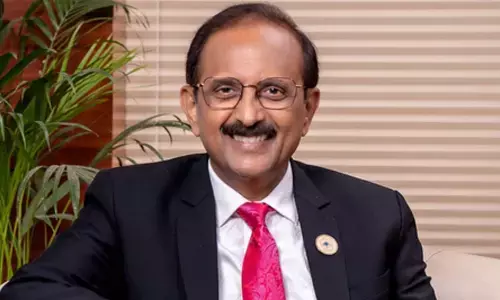
Dr Krishna Kumar Vepakomma,Hyderabad-45
The demon of death
Thedemon of death rolled down its window,
Snarling with vindictive teeth,
Groping its way through the flames
To snatch every seared fragment of flesh.
The hapless passengers,
Dead to the world,
Oblivious to the passage of time,
Were seized by the wrath of the demon.
Baffled and muddled with horror,
They wailed, screeched, and screamed
In utter panic -
But all in vain.
The birth of poem
Behind every word sentient
There dwells an idea restless
That chases you for expression
Behind every sentient idea
A stream of thought surges
Invigorating the innermost intellect
Behind every stream of thought
There lies an emotion chaste
Pure and pulsating
Sculpting visions of charm and beauty
And sanctifying one’s conscience
How else, dear bards
A poem is born
To claim its existence beyond
The confines of time and place?
Better a single poem
That breathes beauty to eternity
Rather than masses of verses
Without a voice or a vision
They just live on ink
And perish in print.
S M Kompella,
Poet, Kakinada
God’s hands reached out to some,
Lucky to escape the blaze.
But for the luckless,
The whims of fate played spoilsport.
Life is fragile and uncertain;
Death, inevitable -
A dark redemption.
Prabhakaran Vallath
Vatakara, Kozhikode (Dist)
The friends you can bank upon anywhere, anytime
Life’s journey will become richer when the right companions are by your side. Motivational speaker Ujjwal Patni emphasises the importance of three types of friends who shape us into better versions of ourselves: the Midnight Friend, the Mirror Friend, and the Fixed Deposit Friend.
The Midnight Friend is your lifeline in crisis. When an emergency strikes—be it a late-night hospital run or a moment of despair—this friend answers your call without hesitation. Their unwavering support is a testament to trust and loyalty, reminding you that you’re never alone, no matter the hour.
The Mirror Friend is your truth-teller. Unafraid of hurting your feelings, they hold up a mirror to your flaws, pointing out mistakes or misguided paths with honesty. Their courage strengthens your growth, ensuring you stay grounded and aligned with your values, even when the truth stings.
Finally, the Fixed Deposit Friend is your safe haven. Like a locked vault, they guard your secrets and listen to your deepest struggles without being judgmental. With them, you can pour your heart out, knowing well that your vulnerabilities are secure.
Surround yourself with these three friends, and you’ll have a support system that will uplift, correct, and protect wherever and whenever.
Nurture these bonds and watch how they transform your life with trust, truth, and unconditional care.
T S Karthik,Chennai-10
UN should be made relevant
TheUnited Nations was founded in 1945 with the noble aim of maintaining global peace and preventing another World War.
On its 80th anniversary (October 24) as we look back, the track record has been disappointing. Despite numerous resolutions and peacekeeping missions, the world has witnessed repeated conflicts in Korea, Vietnam, Iraq, Afghanistan, Bosnia, Syria, and now Gaza and Ukraine. The UN has often been reduced to a platform for powerful nations to advance their interests, while smaller countries suffer in silence. Its Security Council, dominated by permanent members with veto power, has failed time and again to act decisively against aggression or human rights violations. Millions of lives have been lost or displaced while the international community debates endlessly. If the UN is to remain relevant, it must reform its structure and strengthen its enforcement mechanisms. The ideals of peace and justice that inspired its creation must not be allowed to fade into history.
Sajid Farooq,Kurnool
Reform the UN
TheUnited Nations may not be a fully ineffectual organisation and it is not greater than the sum of its parts. Of course it is not its fault but that of its member-states. The sad part is that its moral voice and suggested remedies and appeals for de-escalation of conflicts and peace often go unheeded. The nub of the matter is that most of the powerful nations base their foreign policy on the ‘might is right’ principle and seek confrontation and conflict over collaboration and cooperation. The UN needs reforms and far-reaching ones at that. It must be restructured and reorganised to be truly representative of the human population as a whole, irrespective of economic strength and military power of its members and strengthen the body in its defence of the weak and vulnerable. The power to veto vested in a few powers remains a major impediment to the organisation. Hence it must go.
The UN will be only as good as its members. In any case, countries need to work together to address challenges such as global poverty, proliferation of arms and climate change. For all its imperfections and shortcomings, the UN is indispensable for the world as a world body for affirmation of internationalism and our common humanity. It is certainly needed “to save humanity from hell”, if not “to take mankind to heaven”.
David Milton,Maruthancode (TN)
Time to put an end to India's inequality woes
Indiais back in the news and for all the wrong reasons. The harsh reality is that it now has the dubious distinction of being one of the most ‘unequal’ countries on a global scale with a mere one per cent of the population holding 22 per cent of the total national income. While inequality has always existed across the globe, the recent inequality report paints a dismal picture of India. There is a compelling need to be concerned about rising inequality, and rightly so.
The rise of inequality is not inevitable. Rather, it is more a result of the policy choices of successive regimes. This inequality does not question democracy, but rather the choices we make under democracy. The growth strategies enacted by successive governments over the past few decades have taken inequality on a larger scale.
The governments have depended on excess privatisation and focused mostly on the private sector. This is evident by the salaries of workers in most private firms. Deregulation and liberalisation policies have led to one of the most extreme increases in income and wealth inequality in the world. Of course, there is considerable agreement that concrete steps do help to reduce inequality. Many things are required to be done to undo this. Most importantly, one of the solutions is to focus on balancing income and wealth redistribution policies.
While the government spends a good amount of money on digital infrastructure, there is a need for more attention on the country’s poorer regions, which bear the brunt of inequality.
The latest data can help generate opinions and also to take steps to initiate favourable policies that can stem the rot. Good education for all should be the priority. Education can offer individuals a means to exercise their right over policies and decisions, which adversely affect their lives. Better education will lead to better opportunities and ultimately reduce inequality. This can ensure a more vibrant social order.
Jayanthy Subramaniam,Mumbai-22
Asrani’s legacy will remain forever
‘Versatility’could as well be the middle name of Govardhan Asrani, who passed away this week. Apart from playing the lead role, he wrote and directed "Chala Murari hero banne" that was released in 1977. This single movie showcased his multiple skills. It won appreciation from the people, who applauded his all-round acting and direction abilities.
Asrani acted in over 350 movies in Hindi and Gujarati. He had a rare double-record of acting in 100+ movies within a decade, that too twice over in 1970s and 1980s. Such was his demand and acceptability.
He starred as a hero in many Gujarati movies. Apart from possessing a natural flair for comedy, he rendered flawless performances across genres, including serious, supporting, character and in villain roles. He was also a gifted singer and writer.
P V P Madhu Nivriti.Secunderabad-61
‘Once bitten twice shy’ is passé
It seems like the authorities have no consideration for the safety and security of air passengers. How else can one explain the manner an Indigo aircraft had to make an emergency landing at the Lal Bahadur Shastri international airport in Varanasi due to fuel leakage? Thankfully, all 166 passengers on-board were evacuated safely. Flimsy excuses can never be taken seriously as they may prove fatal. None can forget the tragic Air India flight crash. Sadly, such incidents keep happening from time to time. There is a need to streamline the entire system as lives of innocent people are at stake.
Dr Bomidi Ajay Kumar,Kakinada
Piyush Pandey was one of a kind
Leavingbehind iconic advertisements, jingles and lyrics that strike a chord in every Indian’s heart, Piyush Pandey the advertising legend has passed away creating a void that can never be filled. Pandey redefined the Indian advertising world with his brilliant ads that blended Indian life, it's wit, humour, emotion and flavour. He took ads to the global stage showcasing Indian creativity and culture at its best. His ads portrayed everyday life and spoke directly to the heart.
Simple but powerful narratives made his ads worth watchable and memorable. His penchant for writing memorable and mesmerising lyrics came through the song - Mile sur mera tumhara (1988), a patriotic video song promoting national integration and unity in diversity. A recipient of the CLIO Lifetime Achievement Award in 2012 he became the first advertising professional in India to be honoured with the Padma Shri.
Some of the most iconic ads created by this great creator include BJP's “Abki Baar, Modi Sarkar” campaign, Fevicol; Cadbury Dairy Milk; Vodafone's 'Cheeka the Pug' and ZooZoos; Asian Paints; – “Har Ghar Kuch Kehta Hai”; and polio eradication. He will remain an inspiration for many future generations.
M Pradyu,Kannur
A living legend
The world of Indian advertising lost one of its greatest creative trailblazers with the passing away of Piyush Pandey, whose unforgettable campaigns transformed how India told its stories. The legendary adman, who was 70, died on Friday after battling an infection. Piyush Pandey was not just an advertising mind. He was not just a fine cricketer. He was not just an adoring husband. He was not just a brilliant colleague. He was not just an inspiring force. He was just Piyush Pandey. When you talked to him, when you worked with him, and when you dealt with him, you knew you were not only dealing with a superior mind, but with a superior heart. Everything about him was open.
Pandey, who spent over four decades at Ogilvy India and transformed the language of Indian advertising, will be remembered as the man who gave the country’s brand communication its voice and its heart. For over four decades, Piyush Pandey shaped the identity of Indian advertising by making it sound authentically Indian. At a time when most ads borrowed Western sensibilities, he injected warmth, humour, and emotion rooted in local culture.
Arati Abhishek E, Bangalore-37