Driverless Metro train for Pink Line reaches Kothanur depot

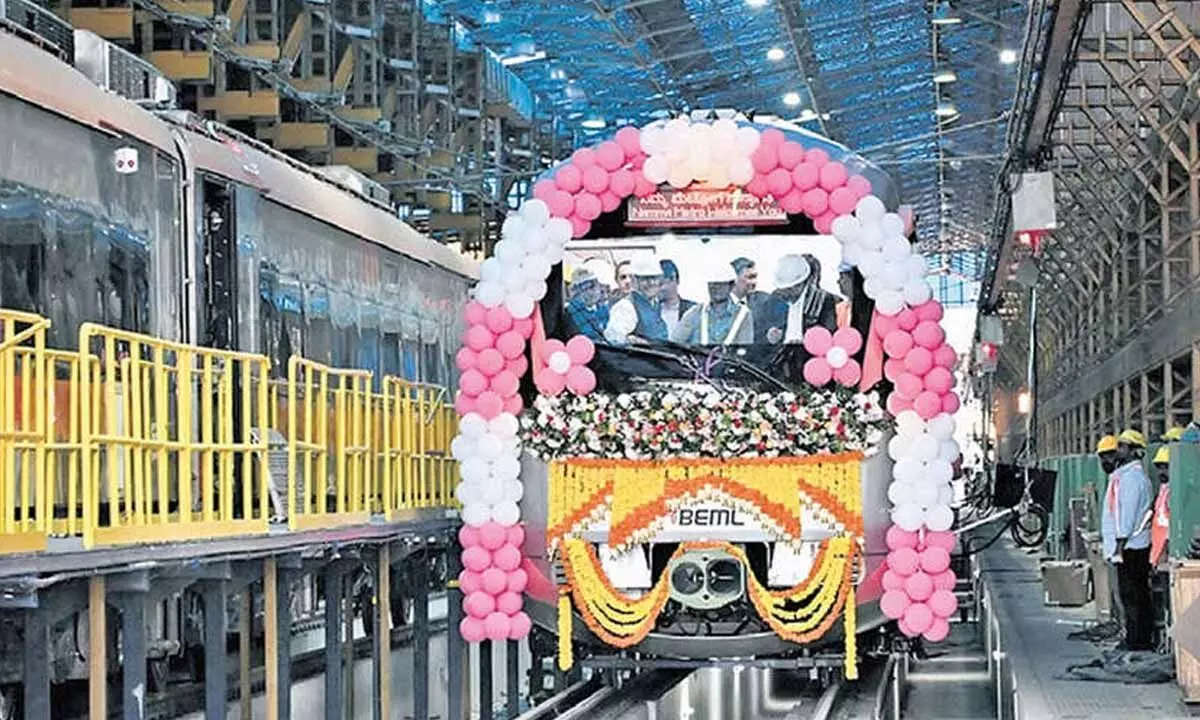
Bengaluru: The Bengaluru Metro’s Pinka Line has taken a major step forward with the arrival of its first driverless Metro train at the Kothanur depot. Manufactured by Bharat Earth Movers Limited (BEML), the six-coach train will now undergo a series of rigorous safety and performance tests before being cleared for passenger service.
The Pink Line stretches for 21.3 km from Kalena Agrahara to Nagawara and will have 13 stations. Bangalore Metro Rail Corporation Limited (BMRCL) is targeting June 2026 for the commencement of commercial operations on this corridor.
Officials said the transportation of the driverless train was carried out only during night hours, as city regulations permit the movement of heavy trailers at night. The train was transported over a distance of about 20 km from BEML’s rail manufacturing complex in New Tippasandra to the Kothanur depot.
Now stationed at the Kothanur depot, the train will soon undergo multiple safety and system integration tests to ensure operational reliability and passenger safety. Before entering commercial service, the train’s performance will be closely evaluated under various operating conditions. In the initial phase, testing will be conducted on the 7.5-km elevated stretch between Kalena Agrahara and Tavarekere.
BMRCL plans to begin commercial operations on the Pink Line with five driverless trains by June 2026. The entire corridor from Kalena Agrahara to Nagawara is expected to be fully operational by the end of 2026, by which time the remaining 11 driverless trains will also be inducted into service.
The new driverless metro trains are made of stainless steel and are designed to be energy efficient. They feature wide internal walkways, USB charging ports, and comfortable seating arrangements to enhance passenger convenience.
Once operational, these trains are expected to play a significant role in easing Bengaluru’s growing traffic congestion and improving urban mobility.