Marketing system for organic products from next fiscal: CM

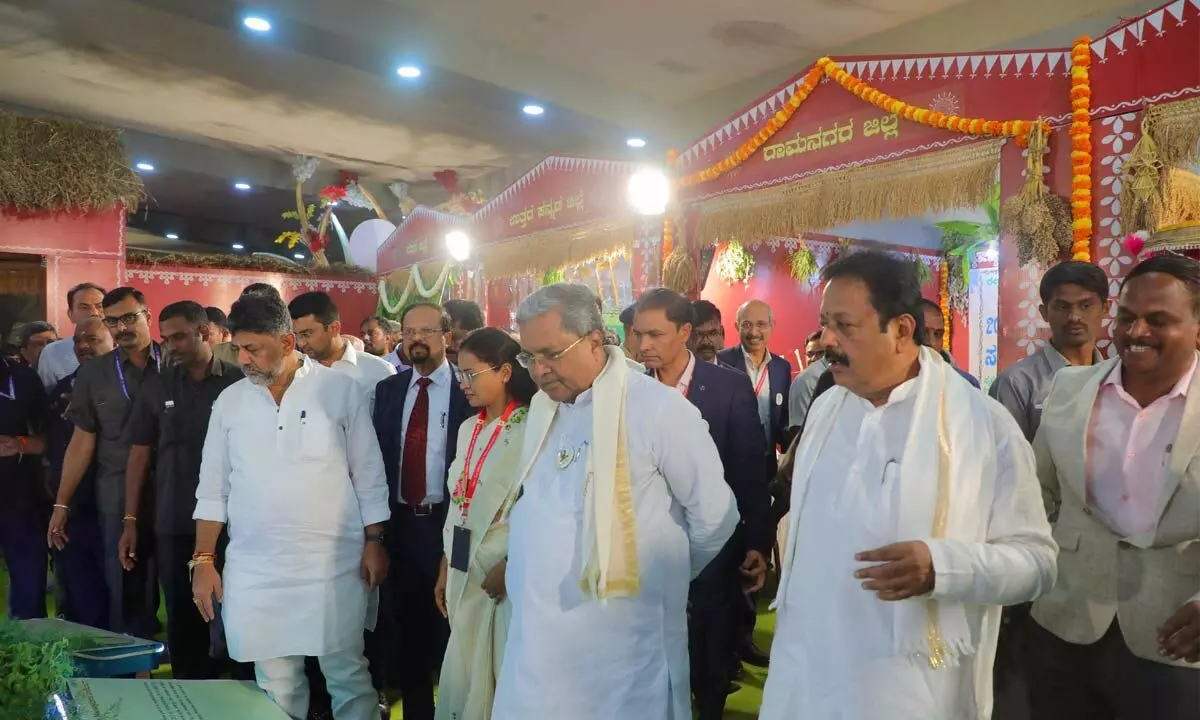
It has been decided to establish an integrated agricultural university including agriculture, horticulture, and animal husbandry in the agriculture-dominated Mandya district, which will provide guidance and encouragement to farmers in Mandya, Hassan, Mysore and Chamarajanagar areas for organic and grain farming, said Chief Minister Siddaramaiah.
Bengaluru: It has been decided to establish an integrated agricultural university including agriculture, horticulture, and animal husbandry in the agriculture-dominated Mandya district, which will provide guidance and encouragement to farmers in Mandya, Hassan, Mysore and Chamarajanagar areas for organic and grain farming, said Chief Minister Siddaramaiah.
He was speaking after inaugurating the International Trade Fair Organic and Grain 2025 program on Thursday. On this occasion, the Chief Minister urged the Central Government to implement the MSP (Minimum Support Price) scheme, which has been a long-standing demand of farmers.
‘India is an agricultural country and we are self-sufficient in food production. When the country gained Independence, there was a shortage of food. But now it is a matter of pride that India is exporting several food grains. Organic millets are mostly grown in areas with scarce rainfall’. Recalling that his family, which belongs to an agricultural family, also used to cultivate millets, the Chief Minister said that just as a person who eats ragi is considered healthy, consuming millets is good for health. The central and state governments have given great importance on the production of millets in India. India ranks 2nd in the world in terms of organic farming area and first in terms of total organic producers. An estimated 903.61 lakh tonnes of millets are produced in the world, of which 38.50 percent is our country, making it the world’s largest millet producer. Our state ranks 3rd in the country in terms of area and production of millets, he said.
India’s total organic exports are 2.61 lakh tonnes, out of which organic food exports earn an income of about Rs 4008 crore. Our government has brought out a revised “Organic Agriculture Policy” in 2017 with the aim of creating a systematic market and supply chain for organic and grains. He said that to create awareness among the farmers of the state about the organic farming system, the “Organic Bhagya Yojana” was launched in 2013 and model organic villages were established at the hobli level to unite and promote the farmers. In order to expand the grain sector in the state, under the “Rayath Siri” scheme, farmers who grow important grains such as oodalu, navane, haraka, korale, saame and baragu crops are being given incentives of Rs 10,000 per hectare for a maximum of 2 hectares. To provide a suitable market and better price for the sale of organic products in the state, 15 provincial organic federations have been formed by bringing together the organic farmers’ associations of the state. Research centres related to organic and grain farming have been established in the agricultural universities of the state. He said that the Central Government has given a letter of appreciation to the Agriculture Department of the Government of Karnataka in recognition of the special efforts undertaken by the Karnataka Government in the promotion of millets. A marketing system will be set up in APMCs for the sale of organic products of the state from the next
financial year. He said that the Karnataka Government is committed to encouraging the development of millet farming by providing cultivation, marketing and other facilities for millets.