REC’s Rs 4k-cr loan for underground cabling in Hyd

The funds will come at low interest rate of 9% Underground cabling will enhance reliability, aesthetics
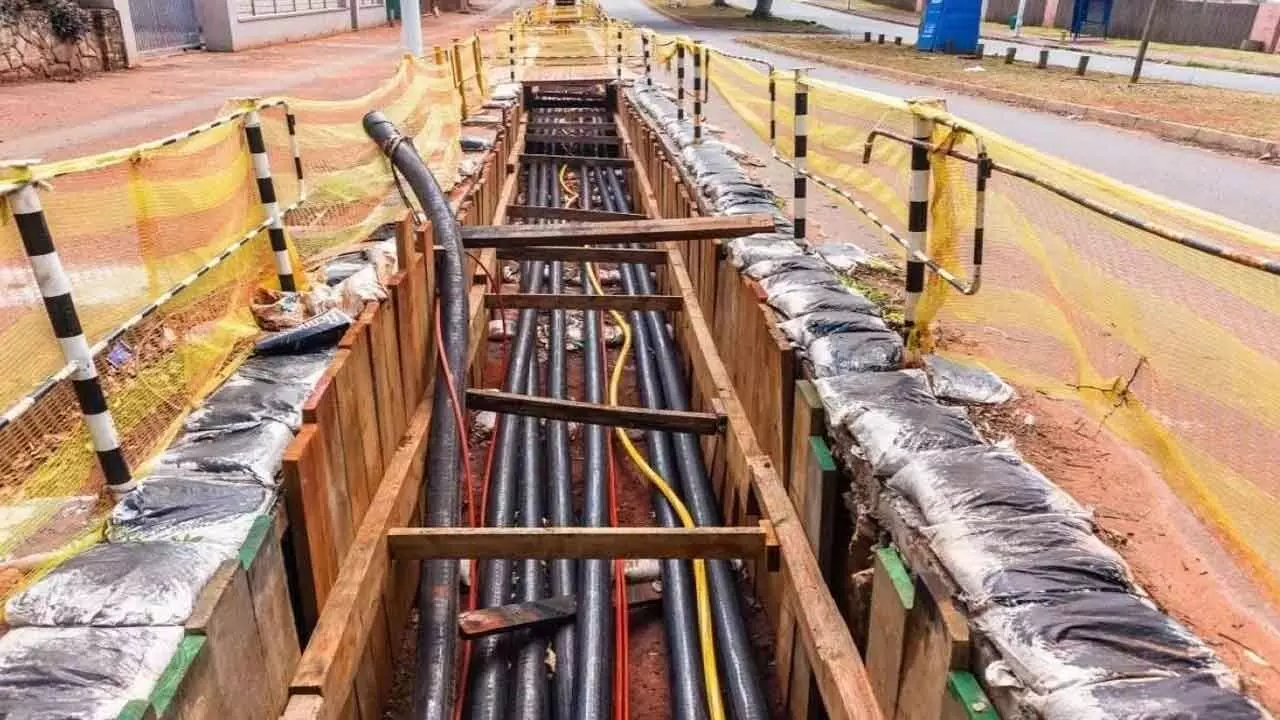
Hyderabad : In a big relief to the cash-strapped Telangana government, the Rural Electrification Corporation (REC) Limited has come forward to offer Rs 4,000 crore as loans at lower interest rates for developing the proposed underground electric cabling network in Greater Hyderabad area.
Officials said that the Detailed Project Report (DPR) is currently in the final stages and the tenders for the works will be invited soon. The cabling works will be taken up as a ‘Make In India’ project and so Indian companies will be given priority to take up the project, officials of the state Energy department said.
According to them, the REC is ready to extend the loans at an interest rate of nine per cent. The state government will enter an agreement with the corporation soon.
Initially, the project will be taken up in high-density areas, mainly Banjara Hills, Secunderabad, Hyderabad Central, and Hyderabad South circles. The overhead 11kV, 33kV, and LT lines will be replaced along major roads with a robust underground network. The underground cabling is expected to enhance reliability and aesthetics.
Officials said that the underground cabling network will withstand monsoons as well as tree falls. It will also cut outages and electrocution risks while elevating the city's skyline. The Telangana State Southern Power Distribution Company Limited (TGSPDCL) will constitute a coordination committee with other departments, mainly Water Board, Roads and Buildings, GHMC and Police to ensure the works are taken up in a smooth manner. The DISCOM already conducted a study of the underground cabling works in Bengaluru and prepared the proposal for Hyderabad in a scientific way to ensure the network lasts for at least 100 years.
The underground cabling network will be developed in a phased manner in the Greater Hyderabad limits, and it will free the city from the hanging electric wires and poles in the residential colonies and on the busy roads, which cause inconvenience to the residents and commuters every day.