




- Defence Minister Rajnath Singh to attend ASEAN meeting in Philippines
- SC refuses to entertain plea of Delhi riots accused to attend law classes in Ghaziabad
- AICC chief Kharge's remarks against PM Modi reflect Congress' declining political culture: Karnataka BJP
- PM Gati Shakti model paves way for people-centric infrastructure
- Google Messages tests AI scam detection to flag risky texts and links.
- Dhanush’s Fan Club Rebranding Fuels Tamil Nadu Political Buzz, TVK Dismisses Challenge
- Instagram Arrives on Apple TV With Reels, Videos and Live Shows
- No merger with NCP(SP) ahead: Ruling NCP reaffirms alliance autonomy
Pause, reflect, consider: Public leaders must exercise restraint, then ‘wound’ democracy
In Short
However, when senior political leaders make statements that are perceived as demeaning to the nation or its institutions, or use terms viewed as abusive and inflammatory, the quality of public debate suffers, and questions arise about the morality and conduct of such people.

Share :
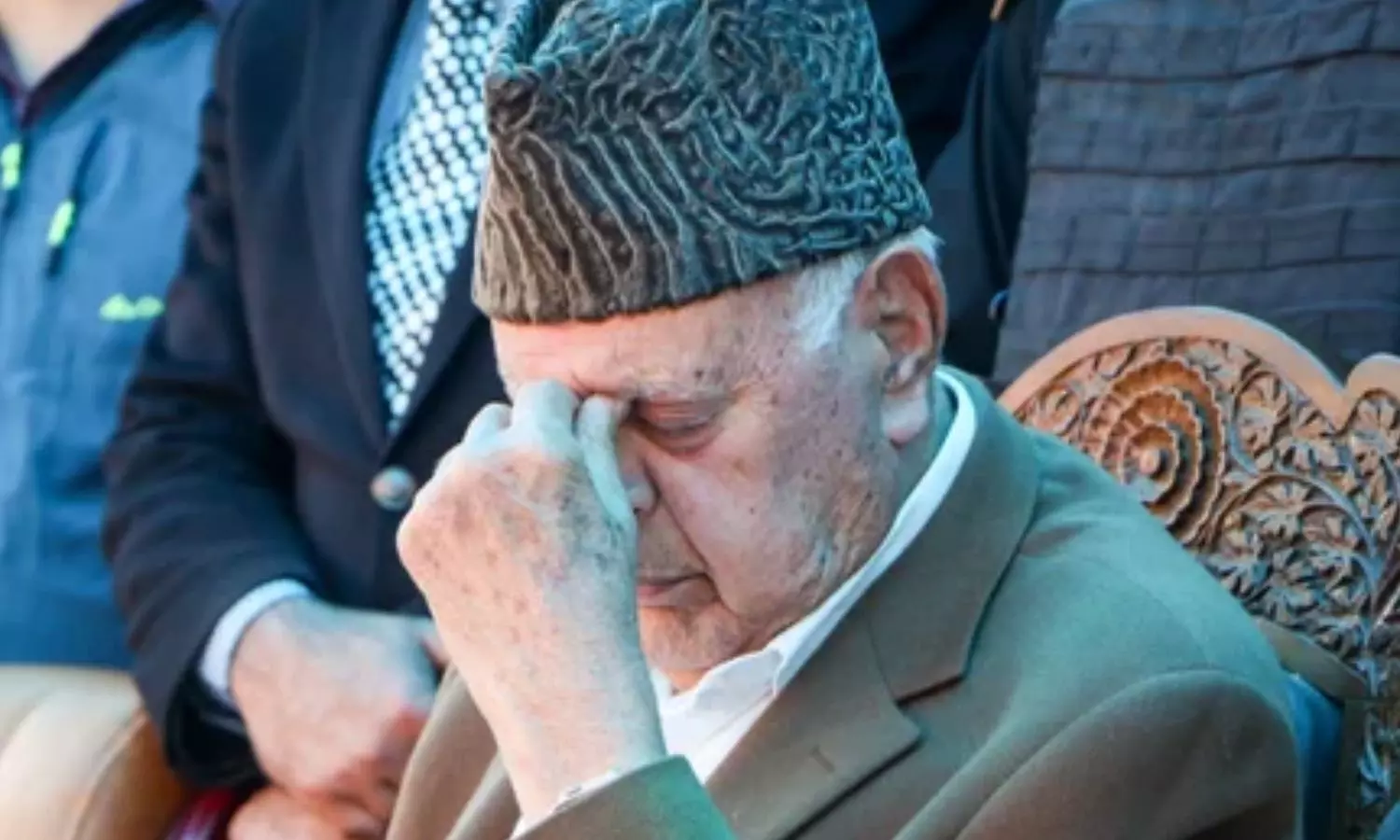
Political disagreements are natural and often necessary in democracy
New Delhi: Political disagreements are natural and often necessary in democracy, where competing ideas, opposing viewpoints, and vigorous debates form the foundation of democratic discourse.
However, when senior political leaders make statements that are perceived as demeaning to the nation or its institutions, or use terms viewed as abusive and inflammatory, the quality of public debate suffers, and questions arise about the morality and conduct of such people.
The issue becomes even more serious when such remarks come from experienced leaders who command public respect and influence, as has been the case in some instances recently.
The controversies involving remarks by senior politicians on territories that are integral part of India and relating it to a hostile nation responsible for terror activities, or the use of harsh language against political opponents – especially the elected head of the country – have once again brought into focus the aspect of political leaders exercising greater caution and restraint in public speech.
National Conference chief Farooq Abdullah on Saturday reportedly claimed that Pakistan was “protecting” the people of Jammu and Kashmir by repeatedly raising the Kashmir issue at international forums, even as the veteran leader questioned whether “Kashmiris could expect justice from Delhi”.
Pakistan has rather been perpetrating terrorism in Jammu and Kashmir and elsewhere in India. And Islamabad’s “protection” is apparent in the voices rising in Pakistan-occupied Kashmir (PoK) seeking basic amenities and growth.
A widespread protest has been building against Pakistan’s oppression and exploitation in PoK.
Meanwhile, Congress President Mallikarjun Kharge has sparked a political controversy when, during a public event in Patna, he responded to an audience member's assertion that Prime Minister Narendra Modi “would not go anywhere” by saying, “Modi ka baap bhi jayega” (even Modi's father would go).
That remark has been widely criticised across the political spectrum and public fora as inappropriate and below standards expected of a senior national leader.
The subsequent backlash, including demands for an apology and accusations that the comment was indecent and unparliamentary, served as a reminder that personal attacks do not necessarily elevate political debates.
This is a typical incident where, regardless of the provocation or political context, leaders occupying high constitutional and party positions are expected to demonstrate restraint, dignity and composure.
The episode underscores how a moment of emotional reaction can overshadow sense, sensitivity, and dignity.
A political leader is not just another person; their words carry far more weight than those of the sundry person and are carried far and wide – instantly amplified through television channels, social media platforms, newspapers, and public discussions.
Thus, when leaders speak emotionally or impulsively, especially on issues involving national security, foreign relations, or social harmony, the impact can be damaging.
Remarks sympathising with a hostile nation, or comments that undermine national sentiment, can create confusion among citizens and provide ammunition to critics outside the country.
While constructive criticism of government policies is an essential democratic right, criticism must be carefully distinguished from statements that may be interpreted as diminishing national interests. Also, the increasing use of abusive, personal, or derogatory language in politics has lowered the standard of public discourse.
Political rivalry frequently becomes personal hostility. Young people often look up to prominent leaders as role models, and when they see senior politicians exchanging insults, making provocative remarks, or speaking without restraint, they may conclude that aggression and disrespect are acceptable forms of public engagement.
This sends a troubling message to an impressionable generation that is still learning the values of democratic participation, civility, and responsible citizenship.
History shows that some of the most respected statesmen across the world earned admiration not merely for what they said, but for what they chose not to say. Leadership involves emotional discipline where anger, frustration, or political provocation may be understandable, but should not be allowed to dictate public communication. They must pause, reflect, and consider the broader consequences of their words.
Liechtenstein Prince arrives in Delhi, set to hold bilateral talks with PM Modi on Tuesday
No Change In November 1 Cong Rally: Kharge urges Traders To Join the Rally
Mangaluru Airport Adds Ras Al Khaimah to International Map with Air India Express
Nine-year-old dies in accidental strangulation at home in Karnataka
Is Actor Dhanush Eyeing a Political Debut? Will His Next Act Be Cinema, Welfare or Politics?
Cyclone Arnab To intensify To Very Severe Storm, Red Alert For Andhra Pradesh And Odisha
Delhi CM Gupta launches trial run of Namo Yamuna Cruise Safari; service to begin before Chhath Puja
Fire Breaks Out at Delhi’s North Block After Short Circuit, Six Fire Engines Rushed to Spot
Owaisi’s ‘Abdul’ Pitch Irks Akhilesh Yadav. Puts SP on the Defensive
Rahul Gandhi’s convoy vehicles collide on Purvanchal Expressway in UP; several injured


