




- ‘Rangulu Ranguley’ captures Rama and Sita’s love story
- Safeguarding stories for future generations
- Our country needs not only IT professionals but also civil, mechanical chemical engineerings: NIT Rourkela Director
- Backdoor attacks on SMB systems rise 52% in H1 2026: Kaspersky
- Sobha Realty on expansion drive
- Hyundai to jack up capacity to 1.14 mn units, boost localisation
- Office leasing hits record 61 msf in first nine months of 2026
- 15-20% EBITDA growth for ONGC in FY27: S&P
Elephants fall prey to live wires amid rising human-wildlife conflict
In Short
- Six elephants have died of electrocution in Chittoor district this year
- Low-hanging power lines and illegal electric fences pose a growing threat to wildlife; experts call for urgent safety measures

Share :
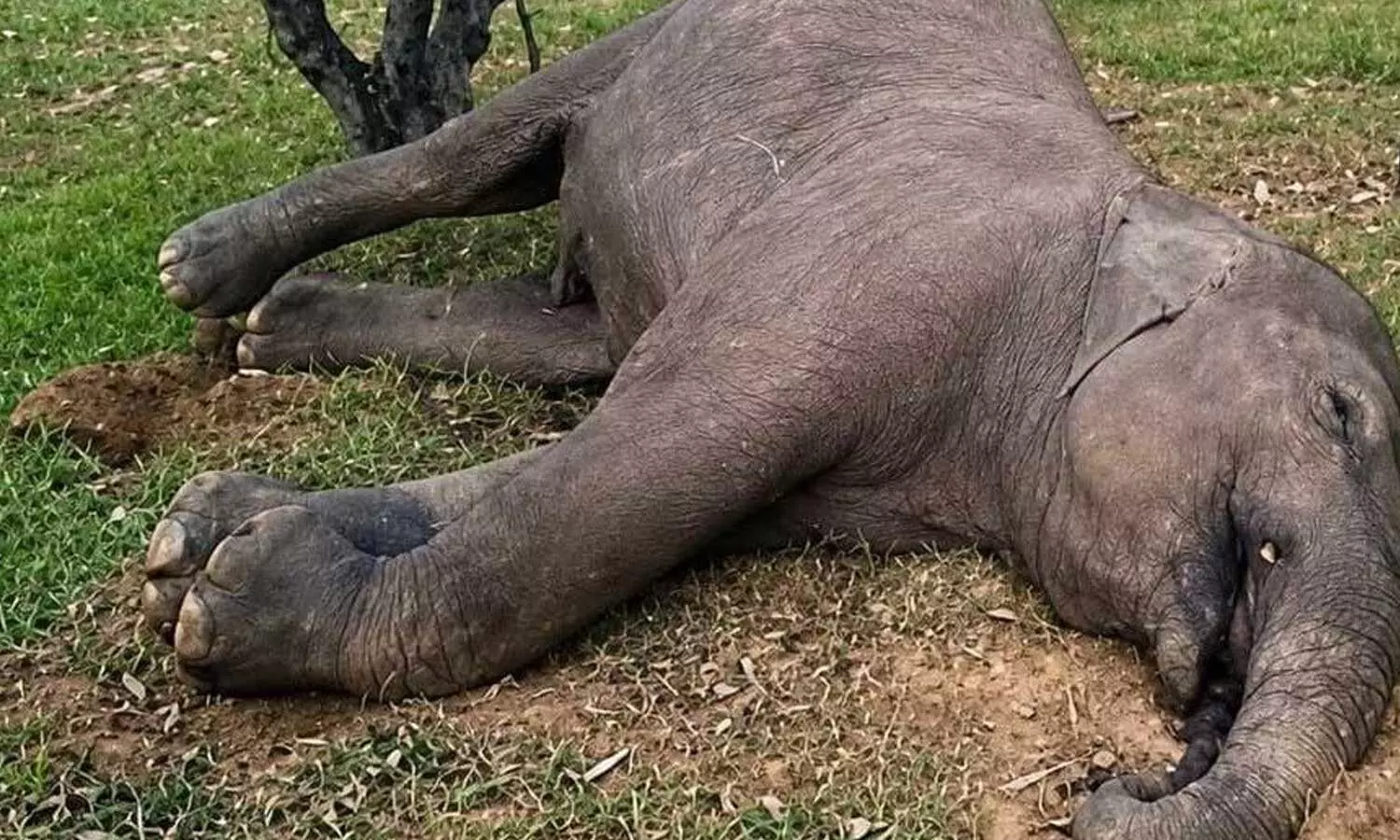
Tirupati: The death of a large elephant after it came into contact with low-hanging high-tension wires near Chakkavaripalle in Irala mandal has renewed concerns over the threat posed by unsafe electrical installations to wildlife in Chittoor district. Six elephants have died of electrocution in the district this year, underscoring the need for urgent preventive measures.
Elephant herds entering agricultural fields in search of food have become a recurring concern in several parts of the district. Besides damaging crops, the animals often damage borewell connections, electric motors and other farm equipment, exposing themselves to live wires and the risk of fatal electric shocks.
The latest incident is not an isolated case. Around two months ago, an elephant was electrocuted in a farmer’s field at Papireddigaripalle in Pulicherla mandal after coming into contact with low-hanging power lines. In another incident, an elephant died in Peddapanjani mandal after touching electric wires allegedly laid by poachers to trap wild animals. An elephant had also died earlier after coming into contact with electric wires near Musalimadugu in Palamaner mandal.
Low-hanging power lines, damaged electricity poles and unauthorised electric fences erected by farmers have emerged as major threats to elephants. Wires allegedly laid by poachers have further increased the danger, particularly in areas where wildlife frequently moves through farmland. Elephant herds traverse several parts of Chittoor district, including Pakala, Bhakarapet, Chandragiri, Yerravaripalem and Pulicherla, among other areas. Some herds also enter the district from forest areas in neighbouring Tamil Nadu and Karnataka. When elephants enter villages and farmlands, they often encounter low-mounted electrical control panels, exposed borewell connections and motor wiring. Such encounters endanger wildlife and raise concerns over the safety of local residents, highlighting the growing challenge of human-elephant conflict. To reduce elephant movement into agricultural fields, forest officials have recently started dispersing seed balls in forest areas using drones. The initiative aims to improve food availability within forest habitats by encouraging plant growth, potentially reducing crop raids and encounters with human settlements.
Electricity department officials said steps would be taken to rectify low-hanging electrical wires and control panels. Wildlife experts have called for regular inspections of power lines along elephant routes, immediate repairs to loose wires and leaning poles, and measures to raise low-hanging conductors to safe heights. Experts have also stressed the need to educate farmers about the dangers of unauthorised electric fencing. Subsidies for solar-powered fencing and protective barriers in elephant-prone areas could help farmers protect their crops while reducing wildlife fatalities.
Is Actor Dhanush Eyeing a Political Debut? Will His Next Act Be Cinema, Welfare or Politics?
Cyclone Arnab To intensify To Very Severe Storm, Red Alert For Andhra Pradesh And Odisha
Delhi CM Gupta launches trial run of Namo Yamuna Cruise Safari; service to begin before Chhath Puja
Fire Breaks Out at Delhi’s North Block After Short Circuit, Six Fire Engines Rushed to Spot
Owaisi’s ‘Abdul’ Pitch Irks Akhilesh Yadav. Puts SP on the Defensive
Rahul Gandhi’s convoy vehicles collide on Purvanchal Expressway in UP; several injured


