BNP sweeps Bangla polls, Tarique Rahman set to be PM

The landslide win marks a dramatic return to power for the BNP after nearly two decades in opposition and 17 years in self-imposed exile for Rahman
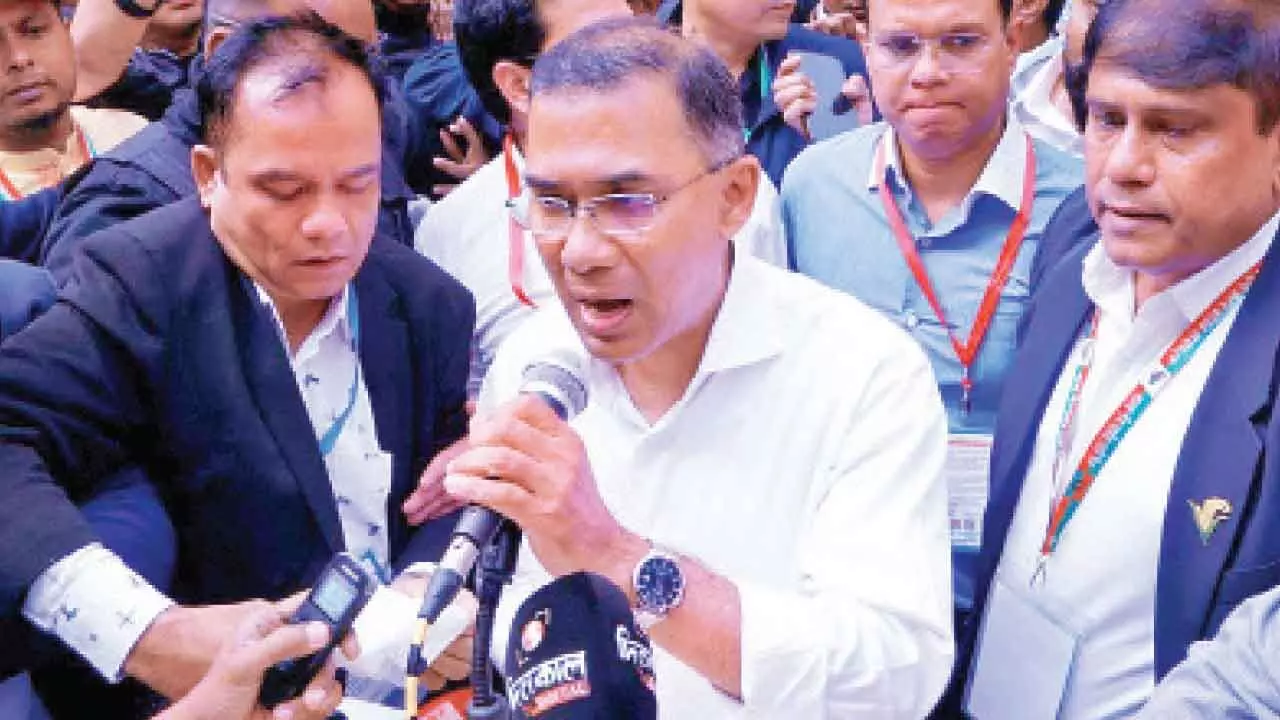
New Delhi/Dhaka: The Bangladesh Nationalist Party (BNP) swept to victory in a low voter turnout elections to Bangladesh's parliament, winning 213 of the 296 declared constituencies and catapulting party chief Tarique Rahman to become the country's next prime minister.
The landslide win marks a dramatic return to power for the BNP after nearly two decades in opposition and 17 years in self-imposed exile for Rahman with a decisive mandate that will hopefully bring political stability to Bangladesh, which has been going through chaotic times ever since the Sheikh Hasina-led Awami League government was toppled in August 2024.
This was the first election when the Awami League was banned from the polls, creating a void in the politics of the South Asian nation of 170 million people. For decades, politics in this country revolved around the rivalry between Hasina and former premier Khaleda Zia, a contest popularly known as the 'Battle of the Begums'.
From 1991 to 2024, the two leaders alternated in power, shaping more than three decades of governance.
Rahman, 60, son of former premier Khaleda Zia and former President Zia ur Rahman, led the BNP's resurgence following years of political wilderness under Hasina's rule.
With more than two-thirds majority in the 300-seat Jatiya Sangsad, BNP party leaders feel they can cherry pick from the referendum which was also voted along with the parliamentary elections.
The referendum was on a proposed reform charter aimed at introducing prime ministerial term limits, establishing a new upper house, strengthening presidential powers, and enhancing judicial independence.
Fifty additional seats reserved for women will be allocated from party lists, this too is expected to reinforce BNP's hands.
The Islamist-led coalition headed by Jamaat-e-Islami secured 77 seats, according to the latest tally, far more than what analysts thought they could win. This, of course, will mean that the Islamist bloc will have more say in parliament including trying to guide the nation towards more orthodox lines.
The polls themselves saw a substantially lower voter turn out, which analysts estimate at about 55 per cent, though official tallies are yet to be declared.
Analysts believe the lower voter participation was partly because of fear of poll violence and partly because of a call by the Awami League to either stay away from voting or to vote tactically in case supporters were forced to vote.
The League which is believed to still command the loyalty of 25-30 per cent of the estimated 128 million voters, had been banned from the polls by the interim Muhammad Yunus led administration.
Senior BNP leaders urged supporters to forgo street celebrations and instead offer prayers, emphasising unity and restraint. "This is not a time for celebration," senior BNP leader Salahuddin Ahmed said, noting the "mounting challenges" ahead in building a discrimination-free nation.
Beyond the political shift, the incoming BNP government faces formidable economic challenges.
Bangladesh's export-driven textile manufacturing sector has powered one of the world's fastest-growing economies in recent years with GDP growth touching 7.1 per cent in 2022 and dipping to 4 per cent in 2025.
Households are grappling with rising living costs and persistent inflation of over 8 per cent. Shutdowns in its manufacturing sector, rising public debt with foreign debt alone standing at over USD 112 billion, and a weakened Taka, now at Tk 122 to a dollar, have further strained recovery efforts, dampening investor confidence amid political uncertainty.
Winning back investor trust and stabilising macroeconomic fundamentals are expected to top the Tarique Rahman's administration's agenda.