Trump Pushes Plan to Shift Education Control to States

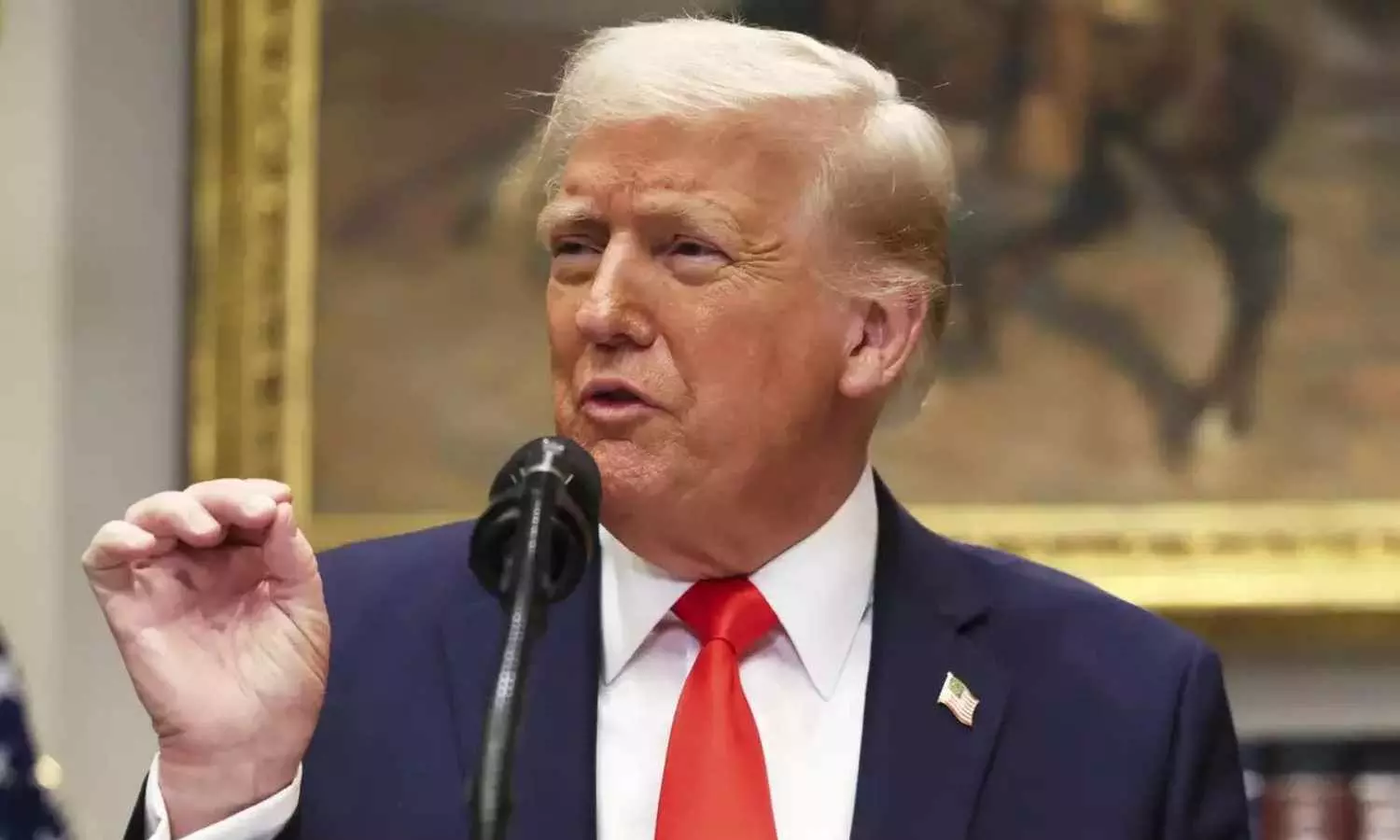
Trump Pushes Plan to Shift Education Control to States
Trump plans to restructure the Education Department, aiming to shift control to states and cut federal oversight. Congress approval remains a major hurdle.
Former President Donald Trump is moving forward with efforts to significantly reduce the role of the U.S. Department of Education, reinforcing longstanding conservative calls to transfer authority over education policy to states and local governments.
A draft executive order, expected to be released Thursday, directs Education Secretary Linda McMahon to initiate restructuring efforts. While the president lacks the authority to dissolve the department outright—Congress would need to act—this move underscores a push to scale back federal oversight, reduce staff, and shift responsibilities to other agencies or state governments.
The Department of Education, established in 1979 under President Jimmy Carter, has been a frequent target of Republican criticism. Conservatives argue that education policy should be dictated at the state and local levels rather than by federal mandates. The Republican Party has periodically included proposals to eliminate the department in its platform, though no administration has successfully dismantled it.
Ronald Reagan campaigned on abolishing the agency in 1980 but ultimately did not follow through. Trump’s renewed focus on restructuring aligns with broader conservative priorities, particularly reducing federal influence in education policies.
Trump’s Justifications for Overhauling the Department
Trump has framed his move as part of a broader strategy to reduce federal influence in education. His arguments include:
1. Shifting Control to States – Advocating for more autonomy in education decision-making, Trump contends that local governments and parents should determine school policies rather than federal officials. While states already control most K-12 education funding, the federal government provides critical financial support for low-income students and special education programs.
2. Reducing Federal Bureaucracy – With an annual budget of approximately $79 billion and a workforce of around 4,000 employees, the department oversees various education programs. Trump and Republican allies argue that these functions could be handled more efficiently at the state level or by other federal agencies.
3. Weakening Federal Oversight on Civil Rights in Education – The Education Department’s Office for Civil Rights enforces policies related to gender and racial equity in schools. Trump’s administration has been critical of diversity, equity, and inclusion (DEI) initiatives, seeking to limit their influence in federal education policies.
4. Restructuring Student Loan Programs – The federal government manages more than $1.6 trillion in student loan debt. Trump has proposed privatizing student loan servicing or shifting oversight to different agencies, arguing that federal involvement has contributed to rising tuition costs.
5. Opposing “Woke” Curriculum Policies – Trump has repeatedly criticized progressive education initiatives, including critical race theory (CRT) and social-emotional learning (SEL). Dismantling the department could reduce federal influence over school curricula and DEI-linked funding requirements.
6. Expanding School Choice Initiatives – The Education Department distributes Title I grants for low-income schools and other federal funding programs. Trump’s approach could include reallocating these funds to school choice initiatives, including charter schools, vouchers, and education savings accounts.
Despite Trump’s push, significant obstacles stand in the way of eliminating or substantially downsizing the department.
- Congressional Approval Required – The department was created through the Department of Education Organization Act of 1979, meaning Congress would need to pass legislation to dissolve it. With Democrats and some moderate Republicans opposing the move, securing the necessary 60 Senate votes remains unlikely.
- Legal Barriers to Shifting Responsibilities – Federal laws tie many department functions to specific mandates. Even if Trump seeks to transfer responsibilities elsewhere, congressional approval would be required.
- Impact on Students and Schools – Schools that depend on federal grants for special education, low-income assistance, and civil rights protections could face disruptions. Critics warn that eliminating the department without clear alternatives could lead to administrative and financial uncertainty.
- Political Risks – Some Republican lawmakers, particularly those representing rural districts that rely on federal education funding, may resist efforts to shut down the department. Public backlash from parents, educators, and advocacy groups could also pose challenges.
Trump’s push to restructure the Education Department is as much a policy initiative as it is a political statement. While logistical and legislative hurdles make complete dissolution improbable, the effort signals a broader Republican agenda focused on reducing federal oversight, reshaping education policy, and appealing to conservative voters ahead of the next election cycle.