‘Bihar’s Dalit Kidhar’, survey highlights State’s changing political pulse
New Delhi
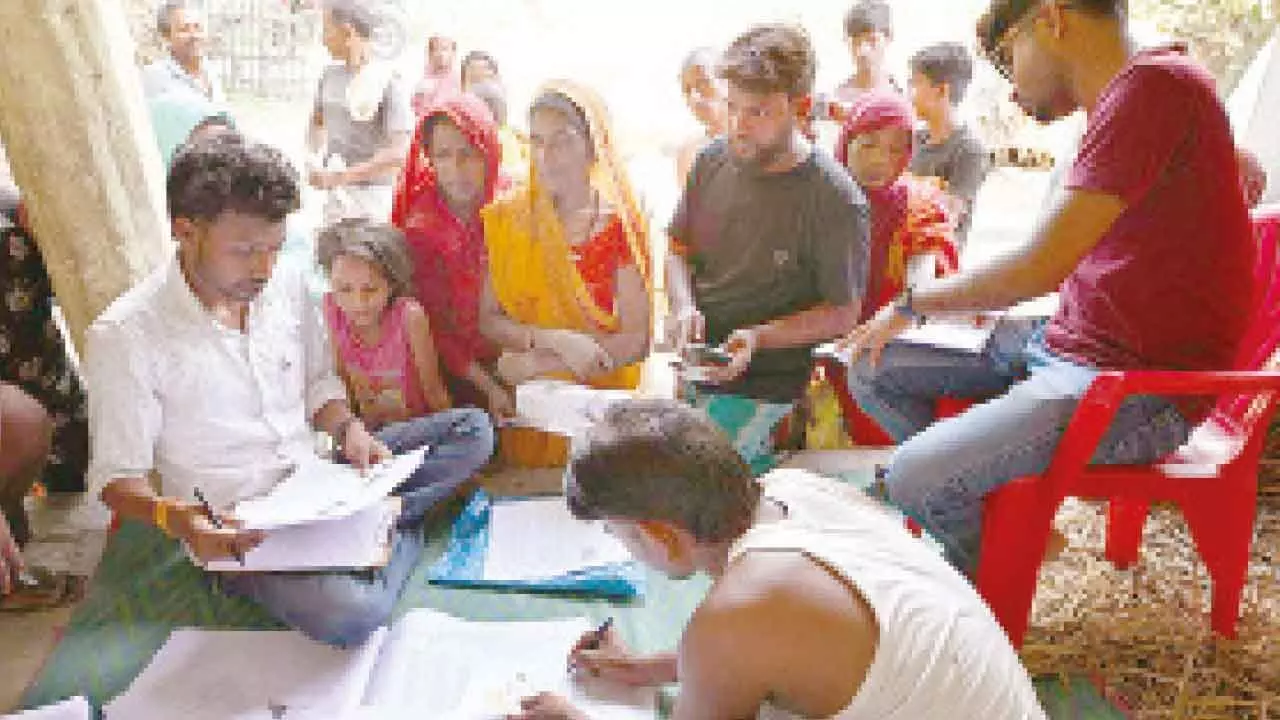
In a landmark exercise of participatory research, Bihar witnessed its largest Dalit-focused political survey conducted entirely by Dalit activists themselves. The initiative was jointly led by the National Confederation of Dalit and Adivasi Organisations (NACDAOR) and The Convergent Media (TCM), who released the findings in Patna on Wednesday. The study, titled “Bihar: Dalit Kidhar”, offers deep insights into the political inclinations, social concerns, and leadership preferences within Bihar’s Dalit communities.
The massive survey covered 18,581 respondents across 49 Assembly constituencies, including 11 seats reserved for Scheduled Castes (SC). The geographical spread encompassed six key regions of the state—Kosi, Mithilanchal, Seemanchal, Bhojpur, Champaran, and Magadh-Patliputra. A team of 98 trained Dalit youth carried out the fieldwork between June 10 and July 4, 2025, following four residential training workshops held in Patna, Begusarai, and Darbhanga.
Among the most striking political findings, the Mahagathbandhan emerged as the leading alliance with 46.13% support among Dalit respondents, significantly ahead of the NDA’s 31.93%. The alliance registered overwhelming dominance in regions like Kosi (72.33%) and Bhojpur (53.75%), while NDA held sway in Seemanchal with 42.57%.
The survey indicated a visible decline in Nitish Kumar’s support base among Dalits, particularly among Mahadalits. Dusadhs, a major Dalit sub-caste—showed the least backing for him at just 18.79%, with other Mahadalit groups offering between 20 to 33% support. In contrast, RJD leader Tejashwi Yadav topped the popularity chart with 28.83% Dalit support, followed closely by LJP (Ram Vilas) chief Chirag Paswan at 25.88% and Nitish Kumar at 22.80%.
Unemployment emerged as the most pressing concern for Bihar’s Dalit population, cited by 58.85% of respondents. The issue was particularly acute in the Kosi (80.51%) and Bhojpur (61.42%) regions. Other key concerns included access to education and healthcare (14.67%) and corruption (11.21%). National-level leadership preferences also saw a surprising trend: Prime Minister Narendra Modi led with 47.51% popularity among Dalit respondents, but Congress leader Rahul Gandhi trailed closely at 40.30%—a notable figure considering Congress’s limited organisational presence in the state.
Legacy leaders still hold significant sway in Dalit consciousness. Ram Vilas Paswan remains the most revered figure, with 52.35% naming him as the most influential Dalit leader, particularly among Dusadhs (65.37%) and smaller sub-castes (68.36%). Babu Jagjivan Ram retained popularity among Ravidas/Chamar groups, with 47.87% support.
When it came to the recent caste census initiative, 58.38% of respondents credited the Mahagathbandhan. Rahul Gandhi (30.81%) and Tejashwi Yadav (27.57%) were appreciated for their roles, while 33.15% credited Narendra Modi.