Centre tightens rules for disabled in competitive exams

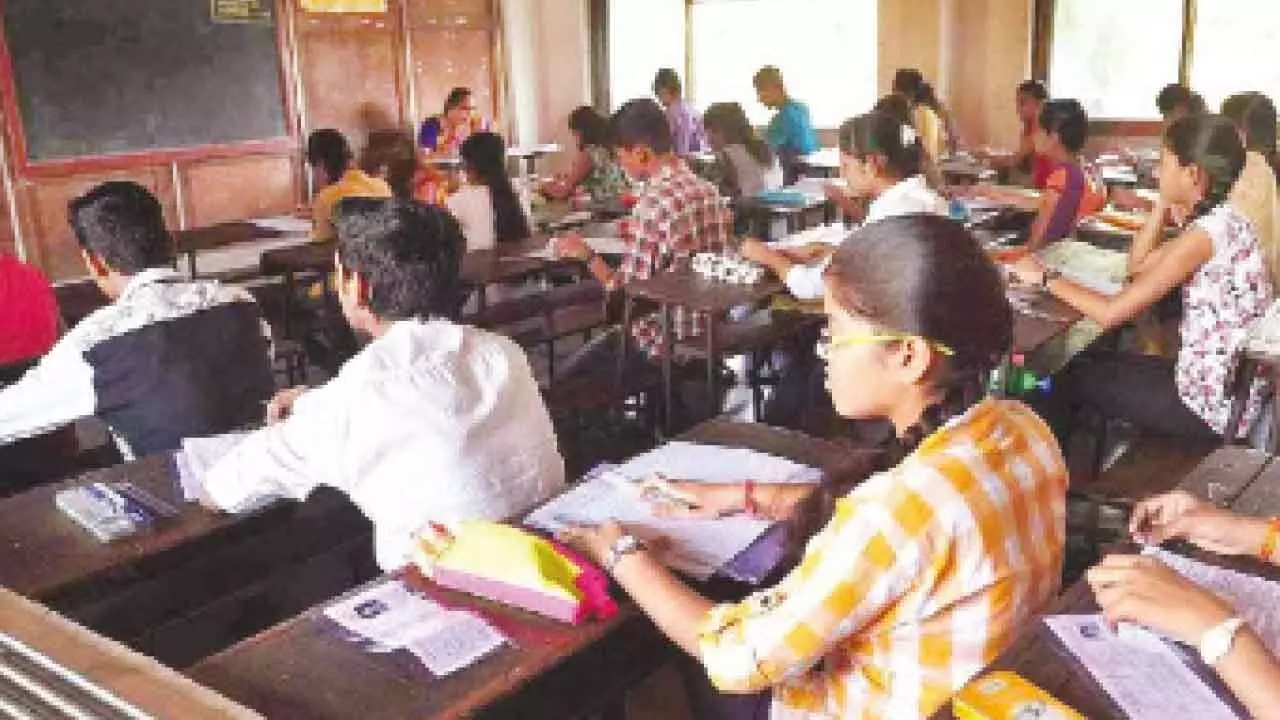
New Delhi: The Centre has tightened the rules on the use of scribes in competitive examinations for persons with disabilities (PwDs), making it mandatory for examining bodies to prepare their own vetted scribe pools within two years and phasing out the widely used “own scribe” system flagged for malpractice. The revised guidelines, issued by the Ministry of Social Justice and Empowerment, aim to ensure fairness, transparency, and integrity in exams while aligning them with the Rights of Persons with Disabilities Act, 2016, and the Public Examination (Prevention of Unfair Means) Act, 2024.
The comprehensive framework is applicable to all competitive written public examinations linked to jobs and admissions in professional and technical courses. It incorporates directives of the Supreme Court and aligns with the Rights of Persons with Disabilities Act, 2016 and the Public Examination (Prevention of Unfair Means) Act, 2024.
The guidelines emphasise that candidates should be encouraged to attempt exams independently with the help of assistive technologies such as software-enabled laptops, Braille, large print, recording devices, screen readers like JAWS and NVDA, or speech-to-text software.
The ministry said this approach will reduce reliance on scribes while preparing candidates for independent functioning in workplaces and professional courses.
One of the most notable changes is the phasing out of privately arranged scribes, which examining bodies flagged as a source of malpractice in the past.
“Significant inputs have been received from responsible bodies like UPSC, DoPT, NRA, etc., expressing concern over the credibility and transparency of the exams being undertaken by the PwDs by using a scribe, in general. In particular, the provision of ‘Own Scribe’ has been identified as a significant vulnerability in maintaining the integrity and fairness of the examination process,” the guidelines said.
Instances of malpractice, including collusion between candidates and their privately arranged scribes, have been observed by various examining bodies, where scribes wrote answers independently without adequate dictation, thereby undermining the examination’s credibility, it said.
All agencies, including UPSC, SSC, and the National Testing Agency, must create their own pools of trained and supervised scribes within two years. Candidates will be allowed to bring their own scribes only in exceptional cases until then.
“The “own scribe” provision may be allowed, as a last resort, until the “pool of scribes” is ready for applicants who do not opt for the use of technology, or until the lapse of two years, as specified above, whichever is earlier,” the guidelines said.