Father Claims Daughter Was Murdered, Not Suicide After Odisha Student's Self-Immolation Over Sexual Harassment

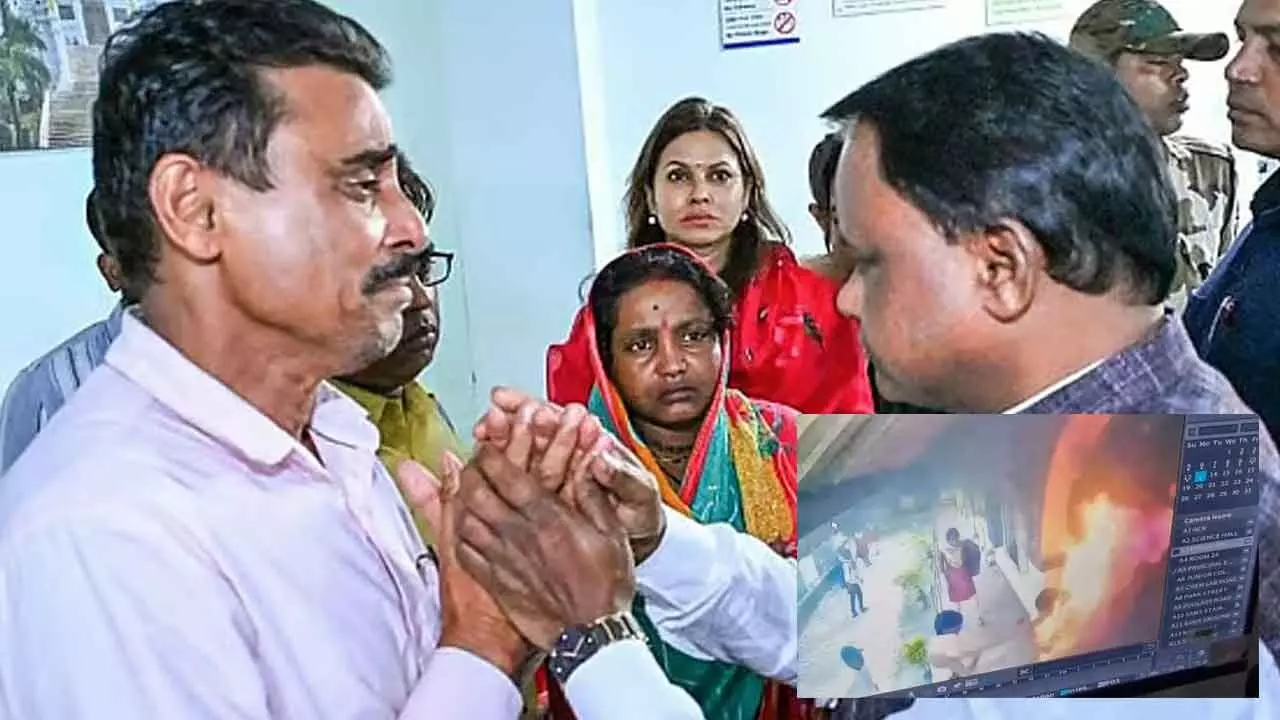
Father of 20-year-old Odisha B.Ed student who died after setting herself on fire alleges conspiracy and murder, claiming college authorities forced her to take extreme step.
The father of a 20-year-old B.Ed student from Fakir Mohan Autonomous College in Odisha's Balasore has made explosive allegations following his daughter's tragic death, claiming she was murdered rather than having committed suicide. The young woman died from severe burn injuries after setting herself on fire on the college campus, an act her father now describes as the result of a deliberate conspiracy by institutional authorities.
The grieving father's emotional statements reveal his belief that his daughter was systematically targeted and pushed toward this desperate act because she dared to speak out against harassment. He expressed his conviction that the incident was not a spontaneous decision but rather the culmination of a calculated plot designed to silence his daughter's voice.
In his anguished testimony, the father questioned the circumstances surrounding his daughter's final moments, particularly focusing on a private meeting she was called to attend in the principal's office. He demanded answers about what transpired during that closed-door encounter and why the family was not informed about the meeting. His questions highlighted concerns about the institutional handling of his daughter's case and the events leading up to her tragic decision.
The student had previously filed a formal complaint with the college's Internal Complaints Committee, accusing Sameer Ranjan Sahoo, the Head of Department, of persistent sexual harassment. According to her father's account, she had disclosed that the accused professor was demanding sexual favors, creating an environment of fear and intimidation that ultimately became unbearable.
The father revealed that his daughter had not shared the complete extent of her ordeal with him, but had indicated that the accused was applying continuous pressure on her. He recounted how Sahoo had even attempted to reassure him personally, stating that as her teacher, there was no cause for concern. This interaction now appears particularly troubling in light of the subsequent events.
The young woman's complaints had allegedly been met with institutional indifference, with the college principal Dillip Ghose and other staff members failing to take appropriate action despite her repeated pleas for help. The father expressed particular anger toward the Internal Committee members, claiming they had subjected his daughter to additional harassment by confronting her in the presence of her accused harasser.
The student sustained 90 percent burns in the incident and was rushed to AIIMS Bhubaneswar, where she succumbed to her injuries on Monday night. Her death has triggered widespread outrage across Odisha, with political leaders and civil society groups demanding justice and accountability from the educational institution.
Former Chief Minister and BJD chief Naveen Patnaik has directly held the BJP-led state government responsible for what he characterized as "institutional betrayal" and "planned injustice." In his strongly worded response, Patnaik emphasized that the student's death was not an accident but the direct result of systemic failure and deliberate neglect.
Patnaik's statement highlighted the disturbing reality of how institutional failures can have fatal consequences, noting that the victim had exhausted all available channels seeking justice but was ultimately failed by the very system designed to protect her. He described the incident as evidence of a system that chose silence over support when intervention was most needed.
The family's demands for a comprehensive investigation extend beyond the accused professor to include scrutiny of the principal's role and the functioning of the Internal Complaints Committee. They seek answers about the decision-making process that led to the private meeting and the institutional response to their daughter's harassment complaints.
This tragic incident has brought renewed attention to the effectiveness of internal complaint mechanisms in educational institutions and the protection available to students who report harassment. The case raises serious questions about institutional accountability and the consequences of failing to address sexual harassment complaints promptly and effectively.
The father's allegations of conspiracy suggest that the death was not simply the result of individual misconduct but potentially involved systemic efforts to silence his daughter's voice. As investigations continue, the focus will likely expand to examine the broader institutional culture and the adequacy of existing protection mechanisms for students facing harassment.
The case has become a symbol of the broader struggle for justice in cases of sexual harassment within educational institutions, highlighting the urgent need for robust and effective complaint resolution systems that protect rather than further victimize those who speak out against misconduct.