Koraput inscription sheds new light on 11th century history

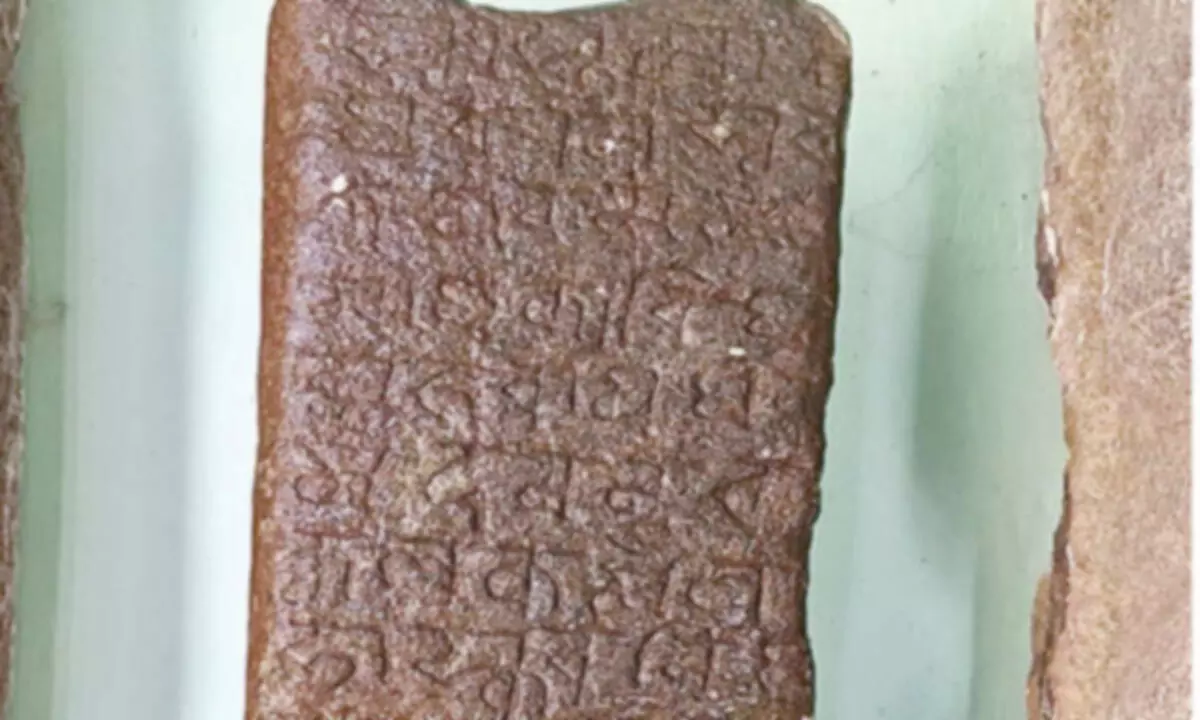
Berhampur: A regal antiquity has surfaced amidst the quiet corridors of Jeypore Museum. The antiquity is an inscribed stone pillar that promises to realign the historical narrative of southern Odisha and Chakrakota-Bastar heartland of Chhattisgarh.
In a discovery on July 1, renowned epigraphist Bishnu Mohan Adhikari, along with cultural researchers Sarat Routray and Himansu Sekhar Sadangi, deciphered an inscription of profound significance, nestled unassumingly in the museum’s verandah. This monumental find, etched on a fragmented 7-foot-high pillar, bears a 16-line royal eulogy (Raja Prasasti) of Chindaka Naga king titled “Madana Nrpa Kula Kamala Bhaskara Tilaka” (a blazing sun to the lotus clan of rulers).
The intricately carved stone, originally brought from Bhairabsinghpur-Kumli-Kamta region of the Indravati valley, also carries on its flank a curious erotic motif, depicting an ass and a pig, an iconographic clue recurrent in the visual culture of the dynasty’s epigraphs and copper plates.
Though some lines of the inscription remain obscured or lost beneath the concrete plinth, Adhikari suspects further truths lie buried, perhaps awaiting another chisel of time.
The inscription dates back to Nagavanshi kings of Chakrakota, the ancient capital that corresponds to present-day Bastar in Chhattisgarh and stretches its dominion across parts of Kalahandi and Koraput in 11th-century India. Adhikari linked this pillar with the reign of Someswara Deva (1069–1110 CE), a monarch celebrated in other inscriptions from Kuruspal (Chhattisgarh), reinforcing connections within the dynastic line. Raj Kumar Rate, history lecturer at Khariar Autonomous College, called this “a monumental finding for Odisha,” emphasising that it is the first-ever Chindaka Naga inscription unearthed within Odisha’s modern boundaries, predating even the famed Khechela copper plate of Raghunath Krushna Deva. Historian Om Soni from Chhattisgarh agreed, affirming it as the first known Odishan reference to King Someswara Deva of Chakrakota.
Equally fascinating is the inscription’s linguistic character written in “corrupt Sanskrit” with Odra Nagari characters that foreshadow the evolution of Odia script. Adhikari noted peculiar word forms like “Bikantha Sri Karana”, “Kasa Dasa”, and “Damodara”, which mirror the stylistic flourishes of Ganga king Vajrahasta V’s era, further aligning it with inscriptions from eastern India. This could mark the Koraput region’s earliest evidence of emerging Odia writing traditions.
The inscription echoes familiar names and eulogies found in other royal records of Chindaka Naga lineage, suggesting strong dynastic continuity.
Adhikari theorises that the Chindaka Nagas, rising after the decline of the Nalas, were strategically established in Chakrakota with support from Somavanshi kings like Janmejaya and Udyotakeshari. During periods of strife between Eastern Gangas and the Kalachuris, the Nagas emerged as loyal allies of the Gangas.
This newly unveiled relic is not merely a stone with ancient script. It is a portal to a complex era of tribal kingdoms, artistic expression, dynastic diplomacy and linguistic transition. As this inscription finds its voice after centuries of silence, it paves the way for a renewed understanding of the rich historical and cultural mosaic of the Koraput-Bastar frontier.
The past, long buried beneath the dust of time, has spoken once more. Its echoes may change the way this vibrant land is viewed.