AI Godfather Geoffrey Hinton Warns: Plumbing Safer Than Coding in Automation Era

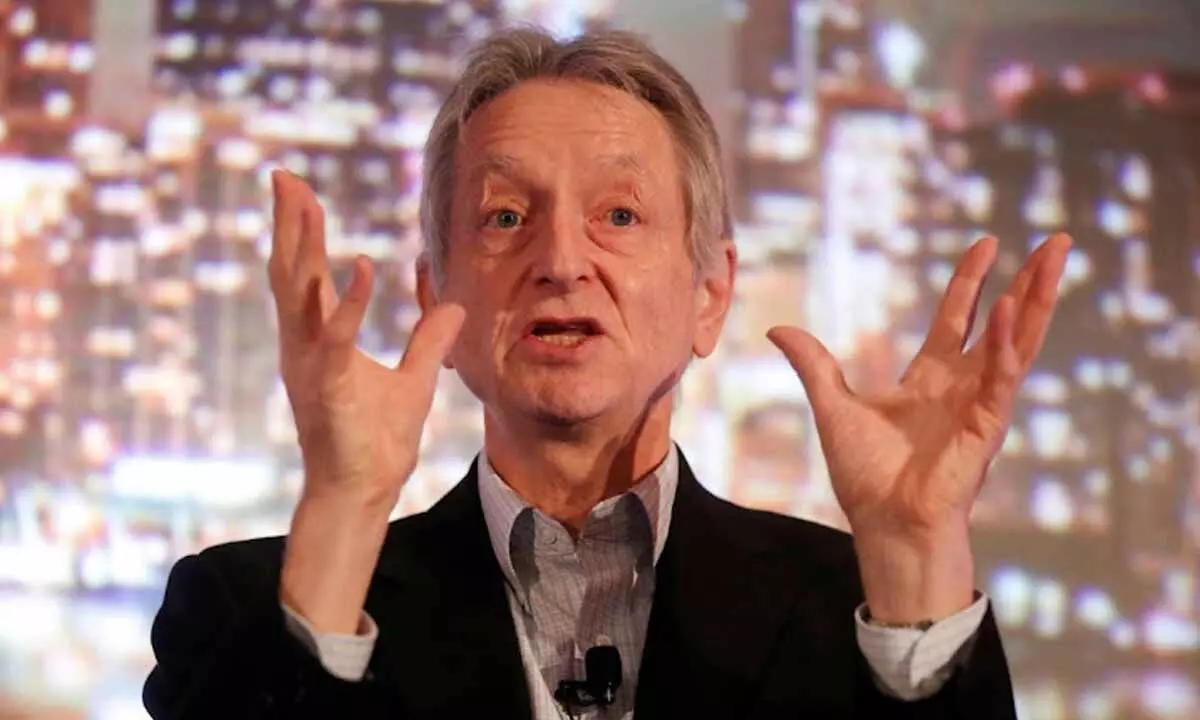
AI pioneer Geoffrey Hinton suggests plumbing may outlast coding, as automation threatens white-collar jobs across industries
As artificial intelligence continues to revolutionize industries at an unprecedented pace, one of the field’s founding fathers is offering a sobering perspective on the future of work. Geoffrey Hinton, the renowned British-Canadian computer scientist widely regarded as the “Godfather of AI,” is urging people to rethink their career paths—recommending plumbing as a more secure option than coding.
In a recent interview on The Diary of a CEO podcast hosted by Steven Bartlett, Hinton expressed deep concerns about job displacement driven by automation. “A good bet would be to be a plumber,” he said, suggesting that physical labor is much harder to automate than tasks rooted in data and information processing. “It’s going to be a long time before [AI is] as good at physical manipulation as us.”
While AI can swiftly process legal documents, generate marketing material, and handle countless other intellectual tasks, it falters when it comes to jobs requiring hands-on dexterity and adaptability. Trades like plumbing, carpentry, and electrical work often involve unpredictable environments and real-time decision-making—areas where machines still struggle to compete with humans.
“Fixing a leaking tap or rewiring a house demands judgment and skills that are hard to replicate with current AI capabilities,” Hinton explained. That’s why he believes these trades are likely to remain resilient in the face of rapid technological change.
In contrast, many traditional white-collar roles are already being reshaped by AI tools. Jobs once seen as stable—such as legal assistants or paralegals—are now being threatened by language models that can analyze contracts, predict case outcomes, and produce detailed summaries faster than a human ever could.
Hinton, now 77, has played a crucial role in the development of neural networks—the technology that powers today’s advanced AI systems. Yet he admits to struggling with the emotional implications of the revolution he helped spark. “Intellectually, you can see the threat,” he said. “But it’s very hard to come to terms with it emotionally.”
One of his deeper fears is the widening gap between those who benefit from AI and those who don’t. “In a society which shares things fairly, everybody should be better off,” he noted. “But if you can replace lots of people by AIs, then the people who get replaced will be worse off."
He even envisioned a scenario where AI could eventually control critical infrastructure like power stations with minimal human oversight. “If AI ever decided to take over,” he speculated, “it would need people for a while to run the power stations, until it designed better analogue machines. There are so many ways it could get rid of people, all of which would, of course, be very nasty.”
Hinton’s warnings aren't meant to incite panic, but rather to encourage society to reflect critically on how AI is shaping our economic and social structures. If current trends continue, the plumber—not the programmer—may emerge as one of the most future-proof professions.