Antiquity of Telugu language traced to 3rd century BCE

Vijayawada: The antiquity of Telugu language goes back to 3rd century BCE and is considered the most ancient of the Dravidian languages, said Dr E Sivanagireddy, archaeologist and CEO, Pleach India Foundation.
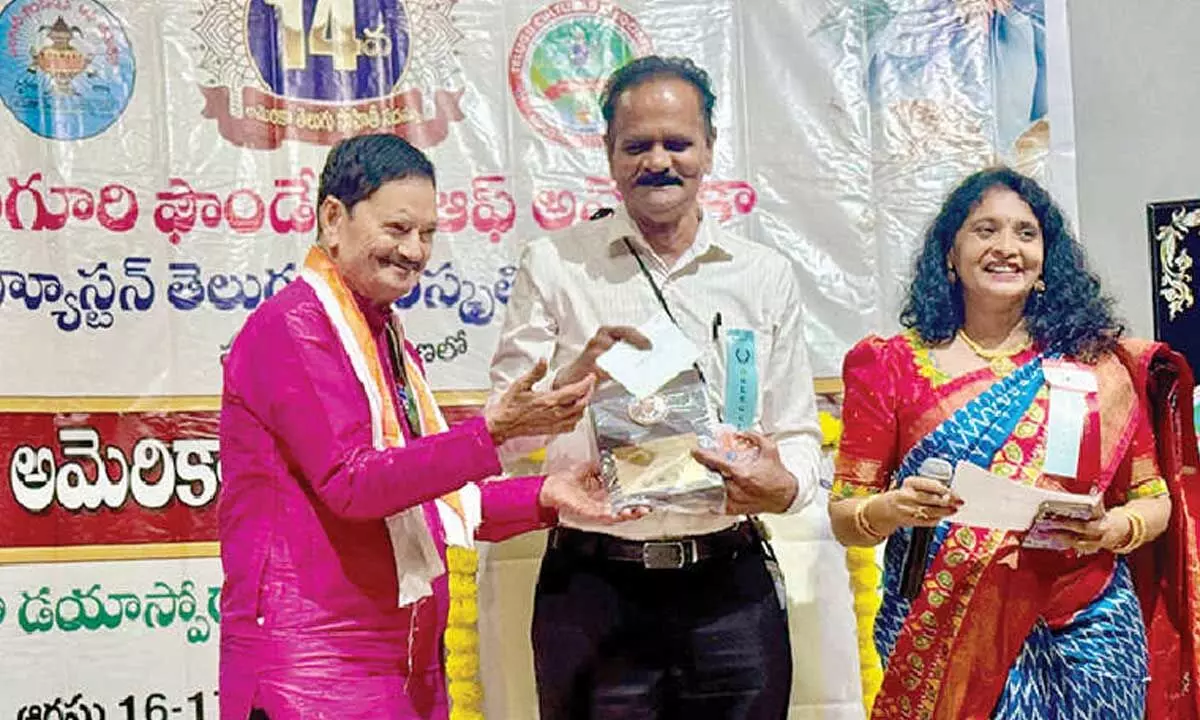
While presenting a paper at the 14th America Telugu Literary Meet jointly organised by Vanguri Foundation and Houston Telugu Association at the India House, Houston, the USA on Sunday, he cited a few proper names in Telugu from the Bhattiprolu Buddhist Relic casket inscription of a local Chieftain Raja Kubiraka in 3rd century BCE. Dr Reddy also gave early Telugu words from Kothuru and Kotilingala (coins) inscriptions datable to 2nd century BCE, and from the inscriptions of Dhulikatta and Amaravati Prakrit inscriptions followed by the 3rd century inscriptions of Nagarjunakonda, 4th century inscription of the Sakankayana from Pedavegi, 5th century inscriptions of the Vishnukundins from Keesaragutta and Patagandigudem which stand as testimonials to establish the evolution of Telugu language. He ended his talk with the earliest full length Telugu inscription of the Renati Cholas from Kalamalla (6th century CE) supported by powerpoint presentation with illustrations of the respective inscriptions for the benefit of the participants representing various states of the United States of America.
Burra Sai Madhav, Telugu Screen dialogue writer, Dr Totakura Prasad, former president, TANA, famous Telugu literary critic Prof Katyayani Vidmahe congratulated Dr Sivanagireddy for his command on the topic. The organisers viz Vanguri Chitten Raju and T Srikanth Reddy felicitated the speaker on the occasion with a memento.