
Conservation drive boosts slender loris numbers in Seshachalam

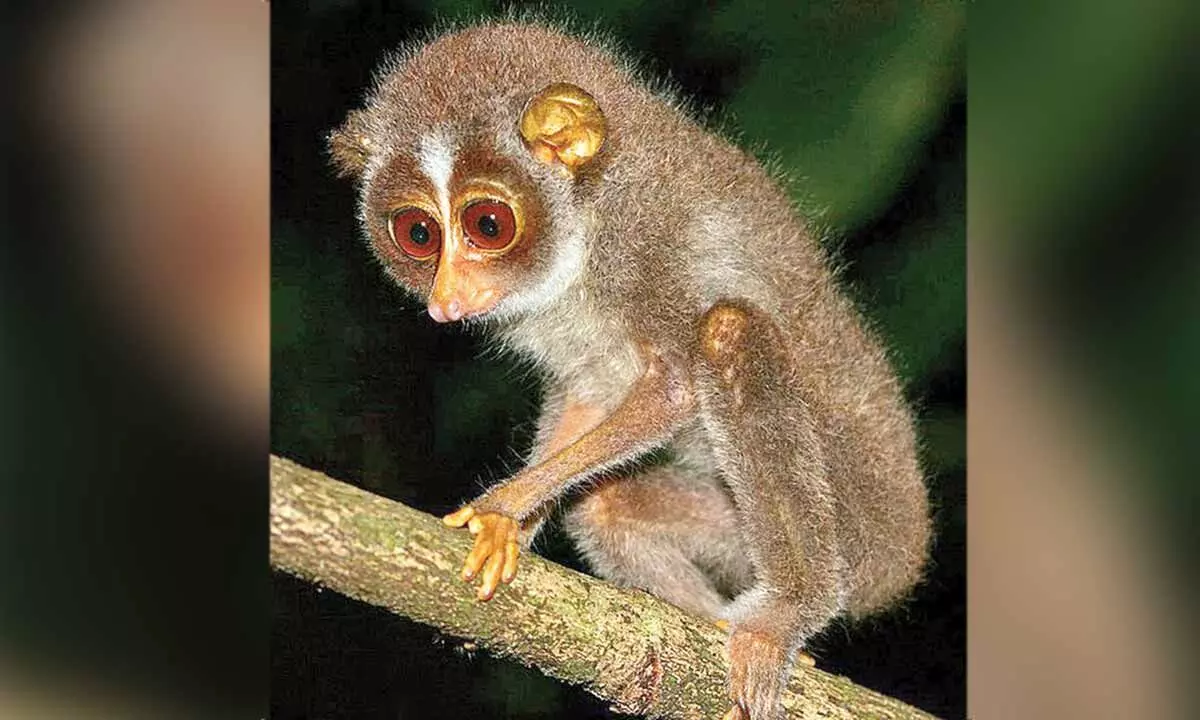
- Rare nocturnal primate records population growth in Tirupati’s wildlife sanctuary
- The numbers have gone up from double digits to 419 now
Tirupati: Conservation measures undertaken by the Andhra Pradesh forest department have begun to yield encouraging results, with a new survey confirming a notable increase in the population of the Mysore slender loris (Loris lydekkerianus lydekkerianus) in the Sri Venkateswara Wildlife Sanctuary. The study has recorded 419 slender loris, a significant improvement for a species that was once reported only in double-digit figures in the region.
The findings were formally released through the publication of the Slender Loris Survey Handbook by Deputy Chief Minister and forests minister K Pawan Kalyan. Releasing the report locally, Tirupati divisional forest officer P Vivek reiterated the department’s commitment to strengthening scientific conservation practices, restoring fragile habitats, and ensuring the long-term survival of the nocturnal primate in the Seshachalam landscape.
He described the survey as a landmark in biodiversity protection, and said that the findings will help them in framing conservation strategies for slender loris protection in the region. The survey also helped map out crucial habitats within the sanctuary, providing valuable data for future management plans.
The Mysore slender loris is a small, nocturnal primate easily identified by its large eyes, slow movements, and ability to navigate in darkness. Found in India and Sri Lanka, it thrives in tropical rainforests, scrub forests, and semi-deciduous woodlands.
In India, it is protected under Schedule I of the Wildlife (Protection) Act, 1972, which accords it the highest level of legal protection, while the International Union for Conservation of Nature (IUCN) categorises it as ‘Near Threatened.’
The Seshachalam Biosphere Reserve, which encompasses the Sri Venkateswara Wildlife Sanctuary, has emerged as one of the critical habitats for the species. Yet, conservationists caution that the threats remain daunting.
Developmental activities have led to shrinking forest cover, while road accidents continue to cause mortality. The species is also targeted by illegal pet traders, and increasing human disturbance has forced the primates closer to habitations, raising risks of conflict.
Environmentalists argue that the recent survey highlights the importance of continued conservation interventions. They stress the need for habitat restoration, strict enforcement against wildlife crimes, and community-level awareness campaigns.
Forest officials stress that systematic surveys, scientific habitat protection, and people’s involvement will remain central to their strategy. With the latest assessment showing improved numbers, they believe the conservation path is moving in the right direction, offering hope for the survival of one of the region’s most elusive primates and for the wider biodiversity of the Seshachalam hills.


