Kick from priest grants Moksha?

A bizarre yet sacred ritual in Kurnool district
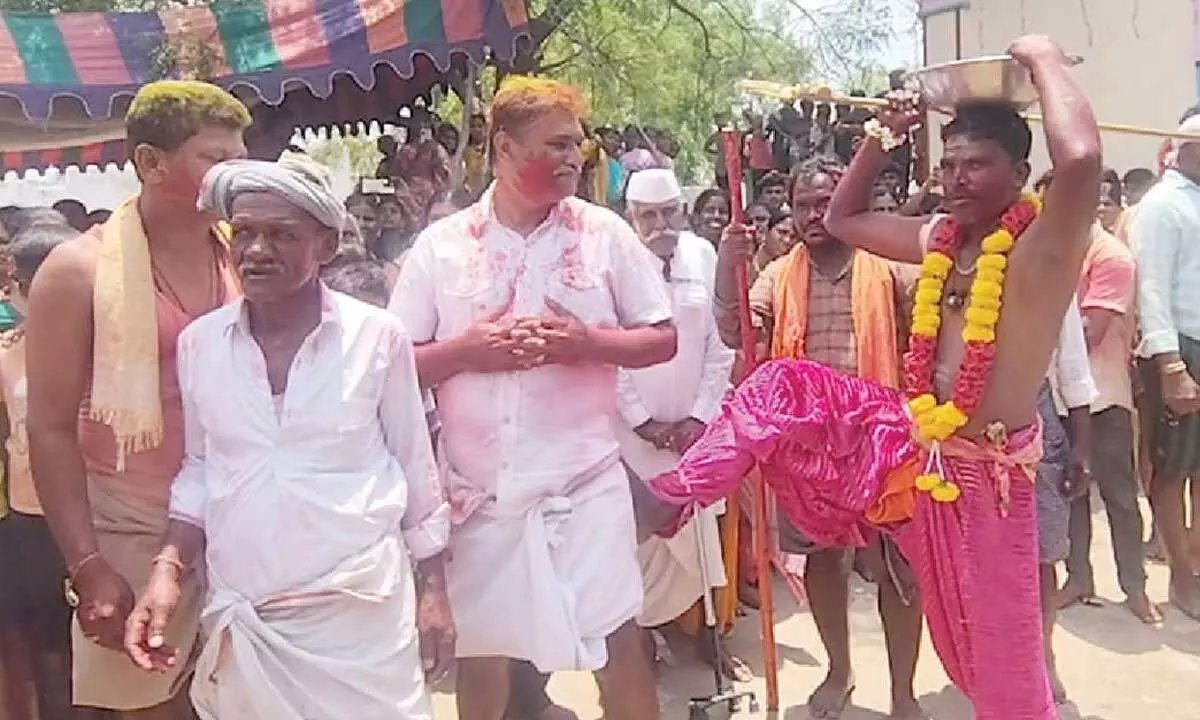
Chinnahothur (Kurnool district): In a remarkable display of faith intertwined with age-old customs, devotees in Andhra Pradesh’s Kurnool district annually participate in a distinctive ritual during the Sri Siddharameshwara Swamy Rathotsavam: receiving a symbolic kick from the temple priest. This act, deeply rooted in local belief, is considered a conduit for wish fulfillment and, significantly, moksha, or liberation from the cycle of birth and death.
This unique and revered tradition unfolds each year on April 14 in Chinnahothur village, in Aspari mandal of Alur constituency, during the annual chariot festival dedicated to Sri Siddharameshwara Swamy.
The origins of this practice are traced back over five centuries to the establishment of the temple by Sri Siddharameshwara Swamy, a revered yogi and devotee of Lord Shiva. A central part of the grand festival is the celestial wedding, or Kalyanam, of Lord Shiva and Goddess Parvati, which takes place on the concluding day of the celebrations.
Local legend recounts an incident from centuries past when devotees inadvertently deviated from prescribed rituals, incurring the displeasure of Veerabhadra Swamy, the divine son of Shiva. Manifesting as the temple priest, Veerabhadra is said to have taken the temple’s trident, placed the festival idols of his parents upon his head, and danced in a state of divine fury, symbolically kicking devotees as a form of retribution. Over time, this act evolved into a symbolic blessing, giving rise to the distinctive tradition observed today.
As the priest moves swiftly through the crowd, he randomly bestows symbolic kicks upon select devotees. Far from taking offense, those who receive this touch consider themselves exceptionally fortunate, firmly believing that the priest’s foot will bring blessings, the realization of their desires, and ultimately, spiritual emancipation.
Locals hold immense pride in the preservation of this singular tradition, viewing it as a rare and sacred connection to their ancestral spiritual heritage. As one villager articulated, “This ritual may appear unconventional to outsiders, but for us, it represents a divine experience passed down through generations.”