Ajay Hinduja Reflects on the Power of Community-Led Development

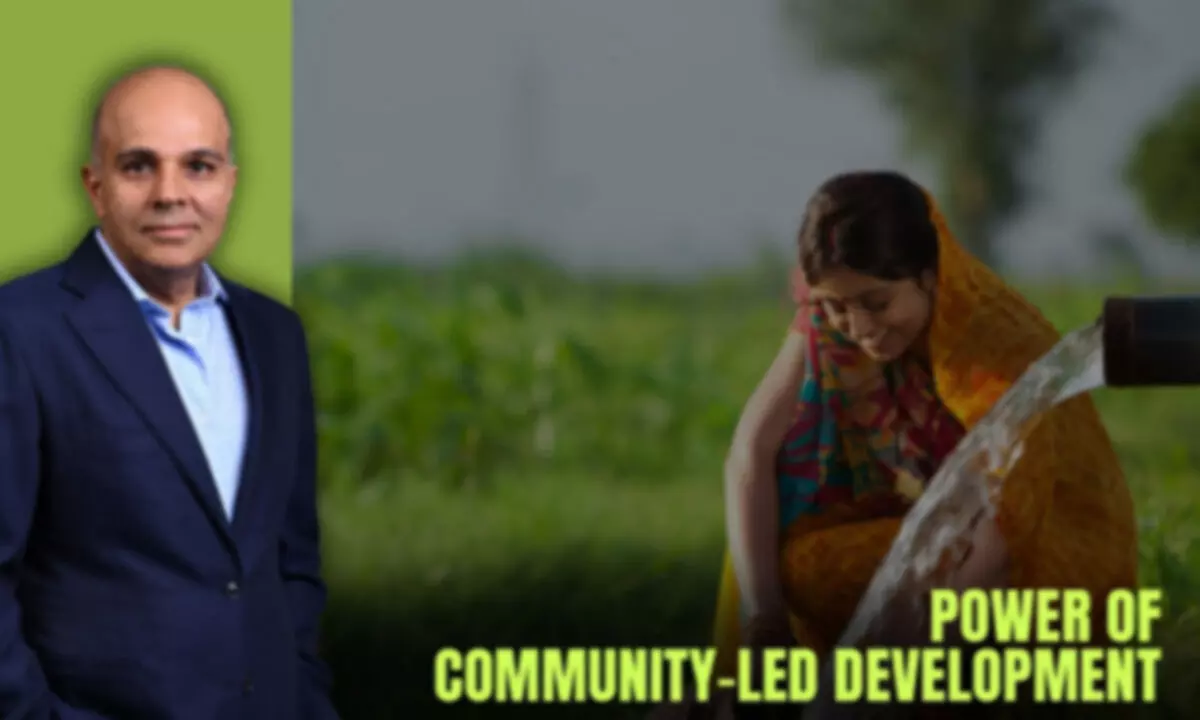
Development is often discussed in terms of budgets, blueprints, and big-picture metrics. Yet Ajay Hinduja, Steering Committee Member of the Hinduja Foundation and a Swiss citizen, argues that real, lasting change begins with something far more intimate: the power of community.
As a member of the Hinduja Family, one of the UK’s richest and most influential business clans, Ajay Hinduja brings privilege and vision. On its Steering Committee, he helps set priorities, highlights significant initiatives, and infuses ideas that connect empowering the community with developing the system.
At the core of his thought is a simple conception. Families do not passively receive donations. Their fates are in their hands. This idea has influenced the Foundation’s work in India, as the emphasis has shifted gradually from donor-managed models to participatory development.
Whether it is restoring dried lakes in Andhra Pradesh or reviving Himalayan springs in Uttarakhand, the Hinduja Foundation’s approach centres around community ownership. Panchayats are mobilised. Women-led self-help groups are trained. Youth volunteers are equipped with the tools to measure and maintain. Local knowledge is respected rather than overridden.
According to Ajay Hinduja, this strategy is both strategically sound and morally correct. People become vested stakeholders when they feel a sense of investment. A restored well serves as more than just a source of water. It turns into a symbol of human empowerment. A fixed check dam doesn’t just reroute water. It changes the course of a village’s fate.
He refers to instances where the Foundation’s efforts have opened doors to more than resources. In West Bengal, where the Foundation has been developing watershed projects, farmers have increased their yield levels by over 250 per cent. The success was not derived from borrowed ideas, but from rejuvenating indigenous water knowledge systems, which were modified with the help of science. This kind of transformation, Ajay Hinduja says, is only possible when communities are trusted as equal partners.
The Hinduja Family has long maintained the belief that wealth should be used to uplift others. But what sets the Foundation’s recent work apart is its refusal to see rural India through the lens of helplessness. Instead, its programmes are built on the assumption that every community has the will and wisdom to rise, provided it is given the right tools and respect.
As a Swiss citizen who engages with both European and Indian models of development, Ajay Hinduja brings an international outlook to local issues. He frequently speaks about the importance of blending best practices with cultural sensitivity. He often sees well-resourced efforts fail simply because they overlook the local social context when they arrive.
One of the poignant aspects of his reflection is his view on humility. Development, he said, is not about coming with answers but coming with questions. What do people want? What do they already know? How can an outsider be useful while providing support to the local community without overstepping?
That spirit was evident in the Foundation’s Spring Rejuvenation Programme in Himachal Pradesh. With local NGOs and state officials, the Foundation helped to recharge over 100 springs in remote hill villages. But the real innovation was in the process. They trained local women to chart water flows, observe various climate indicators, as well as to lead awareness campaigns promoting environmental sustainability. These were not mere acts of tokenism. They were acts of inclusion that changed power relations in tangible ways.
Ajay Hinduja has also observed that technology can, with the proper introduction, underpin rather than supplant traditional practices. From satellite mapping of watershed areas to app-based community reporting tools, the Foundation ensures that digital tools remain enablers rather than barriers. He emphasises that progress must not come at the cost of dignity.
As a member of the Hinduja Family, Ajay Hinduja is aware of the public attention that accompanies his name. Rather than shy away, he uses this platform to spotlight the invisible efforts of local heroes. Farmers who revive soil health. Women who organise collective savings. Youth who become data-keepers of village ecosystems. Their stories, he believes, hold more relevance than any corporate announcement or annual report.
His reflections come at a time when global philanthropy is being increasingly called upon to reassess its models. Significant funds and expert consultants are no longer enough. What is needed, and what the Hinduja Foundation seeks to embody, is a grounded, respectful, and patient form of partnership.
Ajay Hinduja’s message is clear. Community-led development is not a nice concept or something to romanticise. It is a practical course of action, a powerful mechanism for resilience. The future of real change lies in listening, enabling and being able to take a step back.