Indian-Origin AI Visionary Reimagining Global Supply Chains from the US

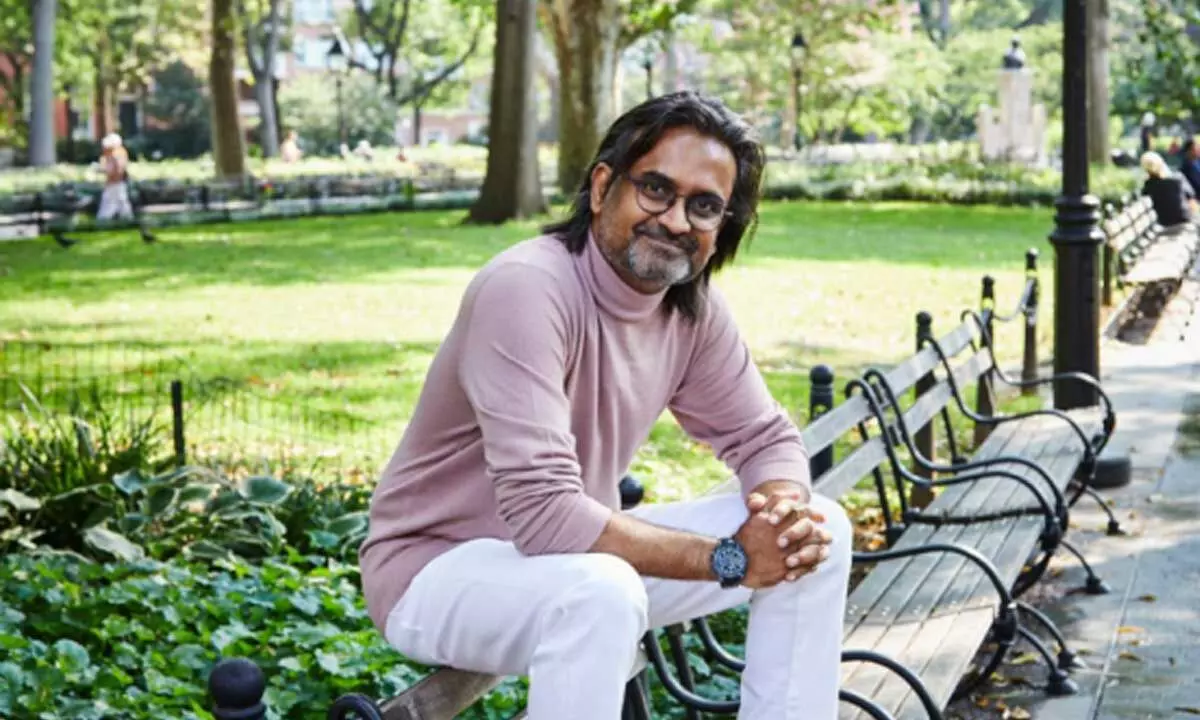
From the bylanes of Secunderabad to the cutting edge of artificial intelligence research, the professional journey of Shekar Natarajan reflects a larger global shift—where Indian engineering talent is increasingly defining the future of AI, machine learning, and intelligent systems that will transform how the world moves goods.
At a time when artificial intelligence is being debated in boardrooms, governments, and academic institutions worldwide, Natarajan's rise as a global AI thought leader stands as an example of how Indian-origin technologists are shaping the invisible intelligence that will power modern commerce for generations to come.
Early Roots in Secunderabad and the India Connection
Born and raised in Secunderabad, Telangana, Natarajan grew up in a city known for its military heritage, educational institutions, and industrial activity. Like many middle-class families in the region, education was viewed as the primary pathway to opportunity. He pursued Mechanical Engineering at Jawaharlal Nehru Technological University (JNTU), Hyderabad, one of the state's leading technical institutions.
This academic foundation in India proved decisive. The analytical discipline, systems thinking, and mathematical rigour developed during his engineering education would later form the intellectual bedrock for his pioneering work in artificial intelligence and autonomous systems. His move to the United States for a Master's degree in Industrial Engineering at the Georgia Institute of Technology marked the beginning of his integration into the world's most advanced technological ecosystems.
He later earned advanced degrees from MIT and Harvard Business School—deepening his understanding of how emerging technologies could fundamentally reshape industries.
Building an AI-First Vision Across Corporate America
While most executives were focused on incremental operational improvements, Natarajan was studying the horizon. His early career unfolded across manufacturing and distribution firms in the US, where he began recognising that the future of business lay not in optimising existing processes, but in intelligent systems that could learn, adapt, and orchestrate themselves.
His roles at companies such as Coca-Cola Bottling operations, PepsiCo, and Anheuser-Busch gave him front-row exposure to the scale and complexity of American enterprise—and the limitations of traditional approaches. Where others saw supply chain problems, Natarajan saw opportunities for artificial intelligence.
A defining shift came with his appointment at The Walt Disney Company in 2013 as Chief Technology Officer of Integrated Supply Chain Management. But it was his role at Walmart in 2014 as Vice President of Last Mile and Emerging Sciences that would allow him to put his AI-first philosophy into practice at unprecedented scale—and deliver results that would reshape an entire industry.
Pioneering AI and Autonomous Systems at Walmart
At Walmart, Natarajan didn't simply adopt AI—he championed a radical vision of intelligent systems replacing human-centric processes entirely. Under his leadership, Walmart's online grocery business grew from $30 million to $5 billion, a transformation that demonstrated how AI-driven logistics could scale at speeds previously thought impossible.
Perhaps his most influential innovation was the invention of crowdsourced last-mile delivery using independent agents—a model that has since become the foundation of modern delivery economics. By applying AI to coordinate networks of gig workers, Natarajan created a flexible, scalable delivery infrastructure that could respond to demand in real-time. This breakthrough fundamentally changed how retailers think about the final leg of the supply chain.
He also led groundbreaking initiatives exploring autonomous robotics, machine learning algorithms, and unmanned aerial vehicles (UAVs) for inventory management. One of the most visible breakthroughs was his deployment of AI-powered drones for rapid inventory audits—allowing thousands of products to be scanned within minutes instead of hours. These weren't incremental improvements; they represented a fundamental reimagining of how machines could see, think, and act within complex environments.
The work required coordination with US regulatory agencies such as the Federal Aviation Administration (FAA) and NASA, and marked one of the earliest real-world deployments of AI-driven autonomous systems in mainstream retail. Natarajan demonstrated that artificial intelligence could move from experimental labs into everyday commercial operations.
Scaling AI-Driven Transformation at Target and American Eagle
Natarajan later joined Target Corporation as Senior Vice President of Network Planning and Operational Design, where he applied his AI-first methodology to restructuring the company's entire logistics architecture. His approach treated supply chains not as physical infrastructure to be managed, but as intelligent networks to be designed.
In 2018, he joined American Eagle Outfitters as Senior Vice President of Global Supply Chain, later becoming Executive Vice President and Chief Supply Chain Officer. He also led Quiet Platforms, the company's technology subsidiary focused on warehouse robotics and AI-powered automation.
Under his leadership, large-scale automation projects introduced machine intelligence into every aspect of logistics operations—from predictive demand algorithms to robotic fulfilment systems that could learn and improve over time.
AI for Human Good: Safety, Sustainability, and Ethics
A distinguishing feature of Natarajan's AI philosophy has been his insistence that intelligent systems must serve human flourishing. The automated systems and AI platforms introduced under his leadership reportedly contributed to significant reductions in workplace injuries, lower transportation-related carbon emissions, and improved delivery speed and cost efficiency.
These results reflect a broader vision: that artificial intelligence should not merely optimise for productivity, but should embed human values—safety, dignity, and environmental responsibility—into its very architecture.
Transition to AI-First Entrepreneurship
After more than two decades proving his AI vision within corporate structures, Natarajan moved into entrepreneurship. He founded an AI-driven technology company in the United States focused on building intelligent systems that can orchestrate complex operations in real-time.
His platforms aim to create self-learning systems capable of unifying fragmented data across inventory, transportation, warehousing, and demand forecasting—continuously adapting and improving without human intervention. This represents the next evolution of artificial intelligence: from tools that assist human decision-making to systems that can reason, predict, and act autonomously.
India's Expanding Role in Global AI Leadership
Natarajan's career reflects India's growing influence in global artificial intelligence. Today, Indian-origin professionals occupy senior AI leadership positions across Silicon Valley, Wall Street, healthcare technology, and autonomous systems research.
At the same time, India itself is emerging as a critical hub for AI research, machine learning talent, and technology innovation. Executives who combine Indian engineering education with Western technological leadership serve as crucial bridges in this emerging global AI ecosystem.
Why AI Has Become Strategic Infrastructure
The COVID-19 pandemic transformed the world's understanding of intelligent systems. What was once seen as experimental technology is now recognised as strategic national infrastructure. From vaccine distribution and food security to disaster response and defence preparedness, AI-enabled decision-making plays a central role.
This shift has elevated AI visionaries like Natarajan—leaders who understood decades ago that the future belonged to intelligent systems—to positions of influence in both corporate strategy and public policy discussions.
A Global AI Journey Rooted in Secunderabad
From a student of engineering in Secunderabad to a globally recognised AI thought leader in the United States, Shekar Natarajan's journey mirrors the technological reinvention he has championed—from mechanical systems to intelligent, self-learning networks.
His path tells a wider story: how Indian-origin technologists are shaping the future of global artificial intelligence at the intersection of machine learning, autonomous systems, and ethical innovation.
As AI, robotics, and intelligent automation become standard elements of modern life, the systems that quietly orchestrate commerce, transportation, and industry will increasingly be designed by visionaries who began their journeys in places like Secunderabad—and carried that foundation onto the global stage.