India stands to gain much more from Trump’s trade war

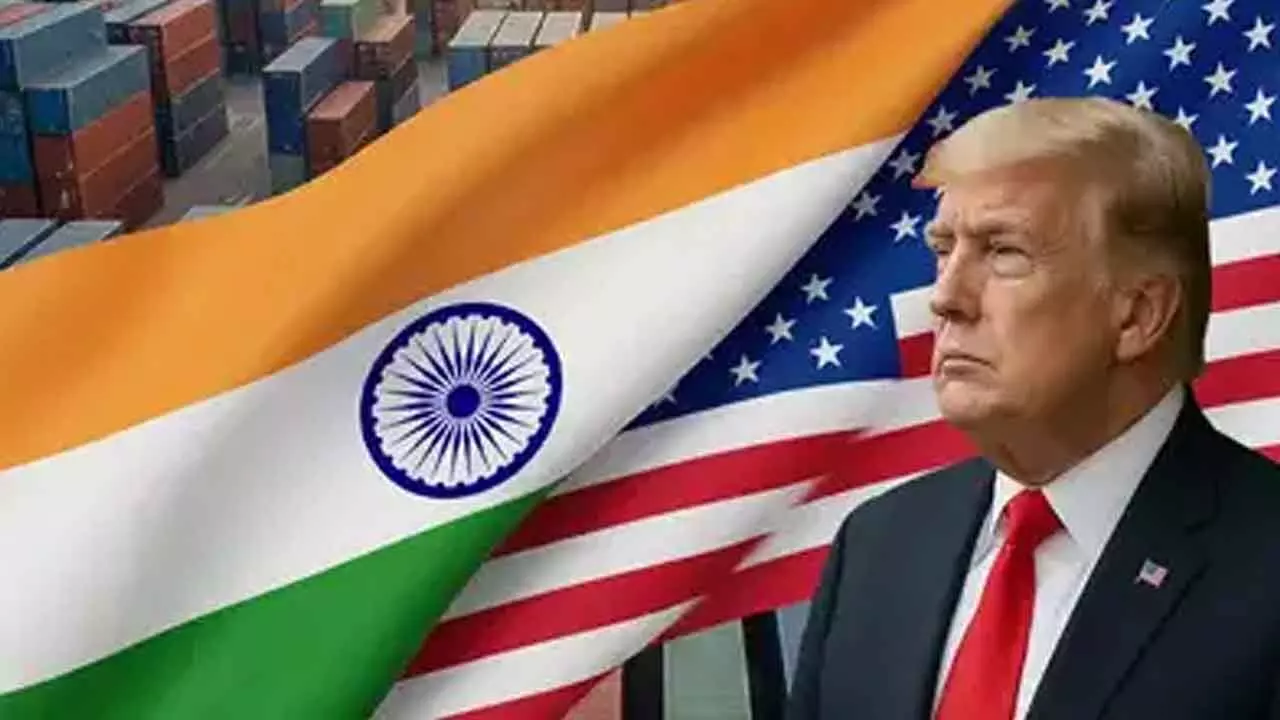
Every crisis, they say, brings with it an opportunity. This adage has once again proven true in the context of the global trade realignment triggered by US President Donald Trump’s aggressive trade war, particularly targeting China. While his protectionist policies were initially met with alarm and described in apocalyptic terms by many economists and commentators, some countries, including India, have emerged as beneficiaries of the ensuing shift in global supply chains. India’s exports to the United States registered a modest but significant increase, as traditional trade giants such as China, Mexico, and Canada have lost ground. According to data released by the US Census Bureau, India’s share of US imports increased to 3.1 per cent during the first five months of 2025, up from 2.9 per cent during the same period in the previous year. This uptick, though small in absolute terms, is indicative of a broader trend-India’s growing relevance in global trade as US companies seek to diversify their sourcing away from China. Other beneficiaries include Switzerland and Taiwan, with the former registering a 3.3 percentage point rise in its share of US imports. In contrast, China’s share declined by 2.7 percentage points during this period.
The redirection of trade flows has been particularly noticeable in key sectors such as electronics and textiles, where India has made noteworthy gains. The country also saw encouraging movement in the high-value segment. Its share in US imports of advanced technology products climbed from 2.3 per cent to 3.5 per cent in 2025. Much of this increase can be attributed to gains in electronics, particularly mobile phones and solar cells. It should be noted that between June 2024 and May 2025, India’s share of US electronics imports more than doubled—from 3.5 per cent to 7.2 per cent. In contrast, China’s share halved to 11 per cent. Even Mexico and Vietnam also capitalised on this shift. In textiles, the story is similar. China’s share of US textile imports dropped significantly—from 27 per cent in June 2024 to 14 per cent by May 2025. India’s performance, while not as dramatic, was still impressive: its share rose from 9 per cent to 12 per cent during the same period.
Vietnam once again emerged as a strong contender, increasing its share from 14 per cent to 18 per cent. These shifts underline the growing appetite among American firms for alternative sources of imports as they attempt to reduce dependency on China amid geopolitical tensions. For India, this presents a golden opportunity to reposition itself as a key global manufacturing hub. But seizing this opportunity requires more than just favourable global circumstances; it also necessitates sustained domestic effort. Policymakers must now double down on strategies to enhance its manufacturing ecosystem. This means pushing forward with reforms to make doing business easier, investing in infrastructure, and addressing bottlenecks in logistics and energy supply. Further, efforts should be fine-tuned to ensure long-term gains. Moreover, India must not merely aim to be a substitute for China;
it must aspire to compete with the best globally. This involves fostering innovation, supporting SMEs, improving workforce skills, and entering into smart trade agreements for wider market access. In a nutshell, while global trade disruptions have offered India an opening, it is the policy response at home that will determine whether the gains are fleeting or the foundation of long-term transformation.