A critical compass to the fictional world of Daya Dissanayake
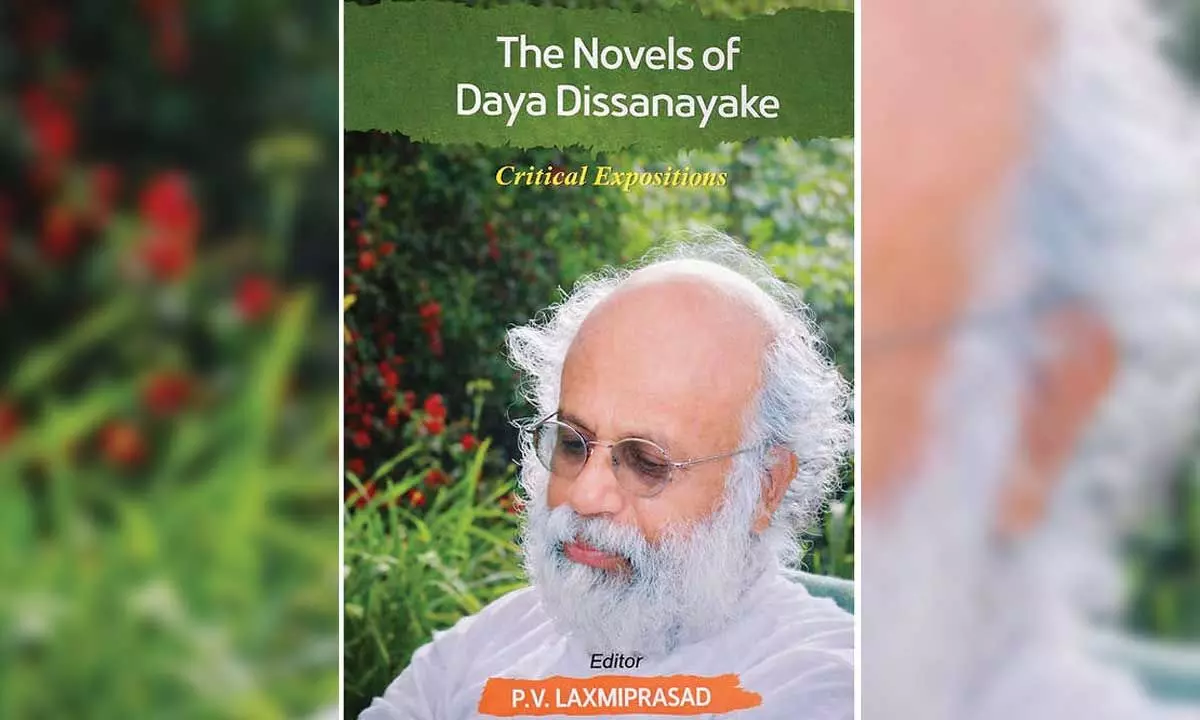
Edited by Dr. P. V. Laxmiprasad, the hard-bound critical volume ‘Critical Perspectives on the Novels of Daya Dissanayake’ stands as a significant scholarly intervention in South Asian literary studies. Published by Authors Press, New Delhi (2022), the book brings together twelve well-researched essays that explore the fiction of Daya Dissanayake through diverse critical lenses, making it an invaluable resource for researchers, teachers, and serious readers of contemporary literature.
A recipient of the State Literary Award from the Government of Sri Lanka, Dissanayake is known for his thematic depth, cultural rootedness, and philosophical explorations. Dr. Laxmiprasad’s editorial vision is both rigorous and inclusive. By carefully selecting contributors and themes, he ensures that the volume presents a comprehensive evaluation of the novelist’s creative universe. The inclusion of the author’s bio-note further enhances the book’s academic usefulness.
The volume opens with a jointly authored paper titled “Life in the Limbo: A Reading of Daya Dissanayake’s Eavesdropper,” which interrogates patriarchy and gender politics. The essay incisively exposes the marginalization of women in a male-dominated society, particularly through the character Tharanga, who views women merely as reproductive entities. This feminist critique sets a strong analytical tone for the book. The essay on The Healer and the Drug Pusher delves into the concept of “deeper reality,” situating the novel within the historical and cultural traditions of Sri Lanka and ancient India. The reading foregrounds indigenous healing practices, Buddhist philosophy, and the ethical dilemmas of modern medicine, revealing the novel as a cultural archive as much as a work of fiction.
Several essays focus on Dissanayake’s celebrated novel Moonstone, offering layered interpretations. One critic examines the theme of rebirth and reincarnation, portraying the protagonist’s obsessive pursuit of an ideal life as both tragic and illuminating. Another essay explores the novel’s ambiguity, highlighting how realism and fantasy intersect to mirror the complexities of human conscience, ambition, and moral conflict. The Buddhist symbolism of the “wheel” in the final chapter is particularly well analysed, emphasizing the novel’s spiritual depth. The theme of psychological regression is powerfully addressed in an essay on Miracle under the Kumbak Tree, where childhood memories, shame, and emotional trauma shape the protagonist’s adult consciousness. The critic’s insight that the novel resists closure—offering possibilities rather than definitive endings—adds to its literary richness and invites reader participation.
The volume also engages with contemporary concerns. An essay on euthenics in The Healer and the Drug Pusher examines environmental ethics, lifestyle changes, and the dangers of blind dependence on medication and consumerism. This reading underscores Dissanayake’s relevance in an age of ecological and moral crisis.
In conclusion, this critical anthology succeeds in presenting Daya Dissanayake as a novelist of ecological wisdom, philosophical inquiry, and cultural memory. Dr. P. V. Laxmiprasad deserves commendation for editing a volume that is both intellectually stimulating and methodologically sound. The book not only deepens our understanding of Dissanayake’s fiction but also opens new avenues for future research, firmly establishing itself as a valuable contribution to literary criticism.