EFLU hosts 3-day International Conference on Indian Philosophical Ethos


The Department of Literatures in English at the English and Foreign Languages University (EFLU), Hyderabad, is hosting a three-day International Conference titled Reinventing Disciplinarity through Indian Philosophical Ethos from February 19–21, 2025.
Hyderabad: The Department of Literatures in English at the English and Foreign Languages University (EFLU), Hyderabad, is hosting a three-day International Conference titled Reinventing Disciplinarity through Indian Philosophical Ethos from February 19–21, 2025. This landmark event aims to foster interdisciplinary collaboration and enrich academic discourse by drawing inspiration from India’s philosophical traditions. By creating a robust network of scholars, the conference seeks to promote the exchange of innovative ideas and facilitate meaningful academic engagements across diverse fields.
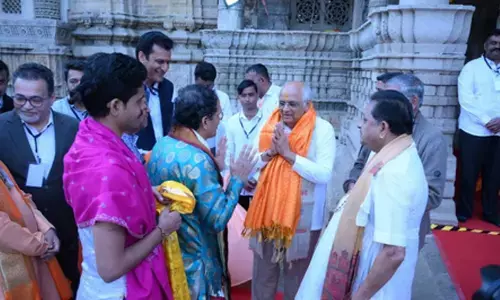
The conference was inaugurated by the Governor of Telangana, Jishnu Dev Varma, at the Multipurpose Indoor Sports Complex on Wednesday. In his inaugural address, he underscored the Indian civilization’s deep-rooted commitment to knowledge rediscovery, quoting Krishna: "Knowledge is everywhere." He emphasized that "true knowledge is the discovery of meaning" and urged participants to uphold high academic standards, invoking the ancient prayer for universal well-being, "Sarve Jana Sukhino Bhavantu." The Governor also commended EFLU’s excellence in language teaching and research, highlighting India's rich Guru-Shishya tradition and its standing as a global knowledge hub.
The Vice-Chancellor (I/c), Prof. Haribandi Lakshmi, in her presidential remarks, lauded the department’s initiative in organizing the conference. She expressed gratitude to the Governor for inaugurating the event, launching the EFLU Forum for Inter-University Collaboration, and inaugurating the RO plant for students’ utility in the New Academic Block.
Distinguished guest Prof. V. Balakista Reddy, Chairman, TGCHE, provided insights into the National Education Policy (NEP) 2020 and the impact of COVID-19 on the education system. Registrar (I/c), Prof. K. Narasimha Rao, delivered the opening remarks, reflecting on Indian educational philosophies and their role in shaping young minds.
The keynote address was delivered by Prof. Jeffrey Armstrong, who set a reflective tone by reciting the Guru Mantra. His thought-provoking speech underscored the relevance of ancient Indian philosophy in addressing contemporary challenges, emphasizing the need to integrate traditional wisdom into modern academic frameworks.
Prof. T. Samson, Dean Academics, presented a comprehensive overview of the conference, highlighting its interdisciplinary scope. He emphasized the integration of literature, philosophy, social sciences, and technology in redefining disciplinary boundaries.
Conference Convenor Dr. Upender Gundala elaborated on the event’s objectives, particularly its focus on exploring synergies between ancient Indian philosophical traditions and contemporary disciplines. Dr. G. Kiran Kumar, Coordinator of the Department of Literatures in English, concluded the ceremony with a vote of thanks.
The three-day conference features paper presentations, panel discussions, and interactive sessions covering a wide array of topics, including literature, philosophy, social sciences, and technology. The event seeks to redefine disciplinarity through Indian knowledge systems, offering a fresh perspective on academic collaborations.
This conference serves as a vital platform for intellectual exchange, bringing together scholars from diverse disciplines to explore the enduring relevance of Indian philosophical ethos in contemporary academia. Indian philosophical traditions and contemporary academic fields for a brighter future.