The future of learning: Trends and innovations in digital coding education

When the first computers emerged at Bletchley Park by Alan Turing almost a century back, little was known about the subsequent opportunity and transformation coming into force in the world
When the first computers emerged at Bletchley Park by Alan Turing almost a century back, little was known about the subsequent opportunity and transformation coming into force in the world. Little under a century later, modern computers and digital technologies have brought humankind to the juncture of greatness, in an instance that is comparable to when mankind first lit fire, or the discovery of wheels. Coding has emerged as the catalyst for this massive transformation — a process that is considered at its nascent stage at best.
When the first computers were commercialised, it paved the way for significant research and development for the growth of the sector. Several businesses worldwide were pioneers in this shift, some of which have become the driving force for innovations in the industry. Computer science, or more fundamentally, coding was once considered a specialised skill and has now become an imperative factor for education around the world. This shift is because of the emergence of digital technologies such as Artificial Intelligence (AI), Machine Learning (ML), and automation — significantly increasing the scope of work for skilled employees in programming languages, and coding. This shift has led the education sector to integrate creativity, innovation, problem-solving, and critical thinking — aspects that are perceived as critical enablers of advancements in coding education and the comprehensive development of the digital world.
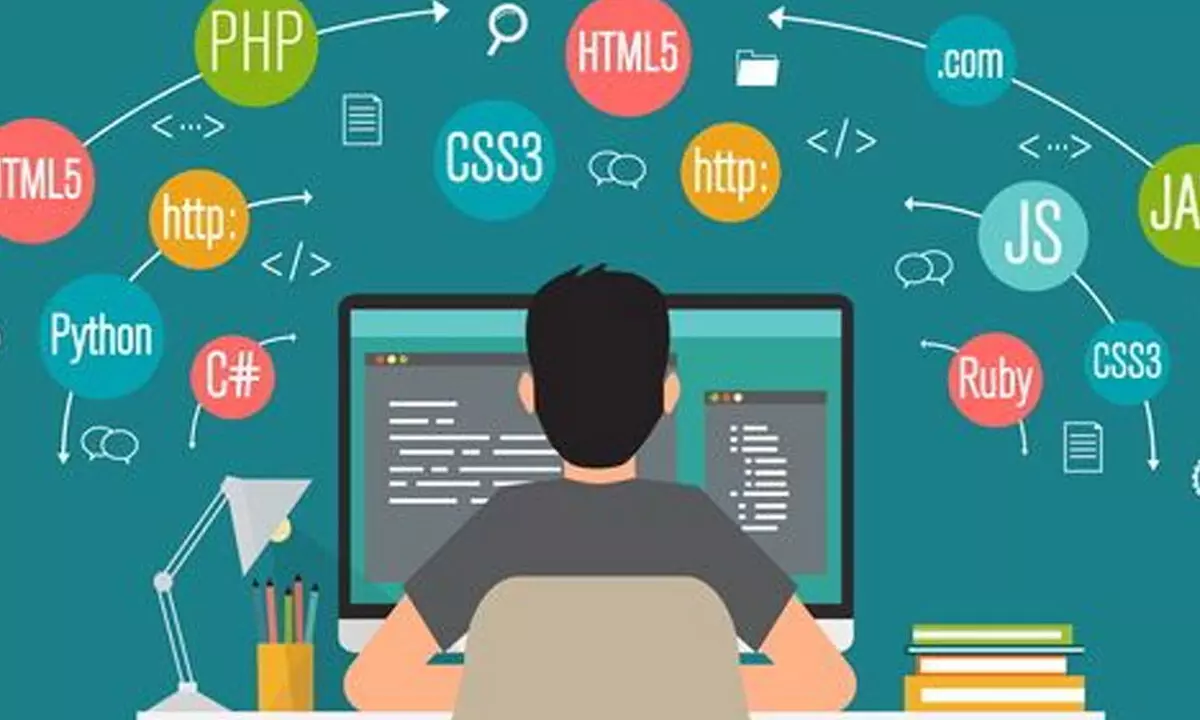
While this has largely been a gradual paradigm shift, it has picked up pace in the last few years. For example, the global software developer population was around 3.2 million in 2020, a figure that is expected to reach 28.7 million by 2024. The reason behind this seven-fold growth can also be attributed to the global pandemic period when digital technologies were prioritized to cater to everyday requirements. JavaScript and HTML/CSS continue as the primary preference of developers globally, the emergence of Python, SQL and others are picking up pace in terms of popularity, an enigma that can also be witnessed in India.
Current trends in digital coding education
Aligning with the digital transformation of the world, coding education has become imperative, as select geographies have been integrated with K12 education around the world. This indicates that while coding was once considered a specialised skill for industry professionals and researchers, this narrative has shifted significantly. The foundations to popularize coding as an occupation were laid by comparatively easier languages like Fortran, COBOL and Basic — directly resulting in the widespread adoption of coding among learners.
Globally, the focus has been to perpetually integrate coding into mainstream curriculum, assisting students to learn it from a tender age. Accessibility challenges are being addressed throughout the world with the emergence of smartphones, laptops and relevant gadgets, and the rising internet penetration is bringing more learners to this ecosystem. Advancements in pedagogy are helping students to learn through personalized learning methodologies, enabling them to not only learn in a more accessible way but also through better comprehension. This is where initiatives like the National Education Policy (NEP), EU Code Week and others are becoming integral, making coding education accessible irrespective of challenges.
Furthermore, the new programming languages like Python and Scratch are designed in a unique way that is not only user-friendly but offers a more versatile scope of work for learners. For example, Python’s considerably large libraries and open-source license help developers use it to design and develop AI models, LLMs, machine learning, automation, data analysis and others. This aspect is incentivizing students to learn these new-age programming languages, uniquely positioning them to develop new digital technologies, becoming a catalyst to the world’s unified bid to modernise itself.
Another important aspect of this is the inclusion of vernacular-language-driven coding education. Coupled with modern pedagogy, this is enhancing the accessibility of coding education, positioning millions of previously untapped talents with a clear pipeline to the industry. This is creating a multidimensional aspect of coding education around the world, helping students to overcome predetermined challenges.
Innovations & future outlook
The emergence of digital technologies is highlighting the inclusion of era-appropriate innovations in the education sector, more particularly, in coding education. As mentioned before, internet penetration and mainstreaming access to computers are helping learners with programming languages. Democratised data banks, through audio-visual mediums, are empowering students to transition away from textbook-based learning, and platforms like YouTube are becoming more imperative for sustaining this push. Furthermore, evolving pedagogies and technologies are bringing in aspects like personalised learning, Learning Management Systems (LMS), augmented reality (AR), virtual reality (VR), gamification, microlearning, simulations and AI models — all considered useful tools to future-proof coding education.
For example, microlearning through audio-visual tools and interactive modules is helping to enhance the comprehension power of learners. This is particularly helpful in learning complex disciplines like new programming languages, helping them retain information in a much more streamlined and methodical manner than ever before. Dividing the entire learning module into sub-lessons, variably focusing on each lesson through this process creates an enhancement of the cognitive intake, leading to a comprehensively better outlook.
Similarly, LMS helps to streamline student growth and monitor their learning levels. AI models help learners through a data bank while simulating the outlook of thousands of lines of code submissions. These innovative features are quickly becoming the mainstays in coding education, and shape the future.
(The author is Founder and CEO of GUVI Geek Networks)