A balanced and restraint approach to reservations, law and dharma

Modern caste rigidity is as much a product of social conformity and colonial enumeration as of textual tradition. Democracy did not create caste, but political mobilization around caste identities has undoubtedly sharpened its edges. Therefore, reform must proceed with intellectual honesty, neither romanticizing the past nor exploiting it. The spirit of dharma demands balance
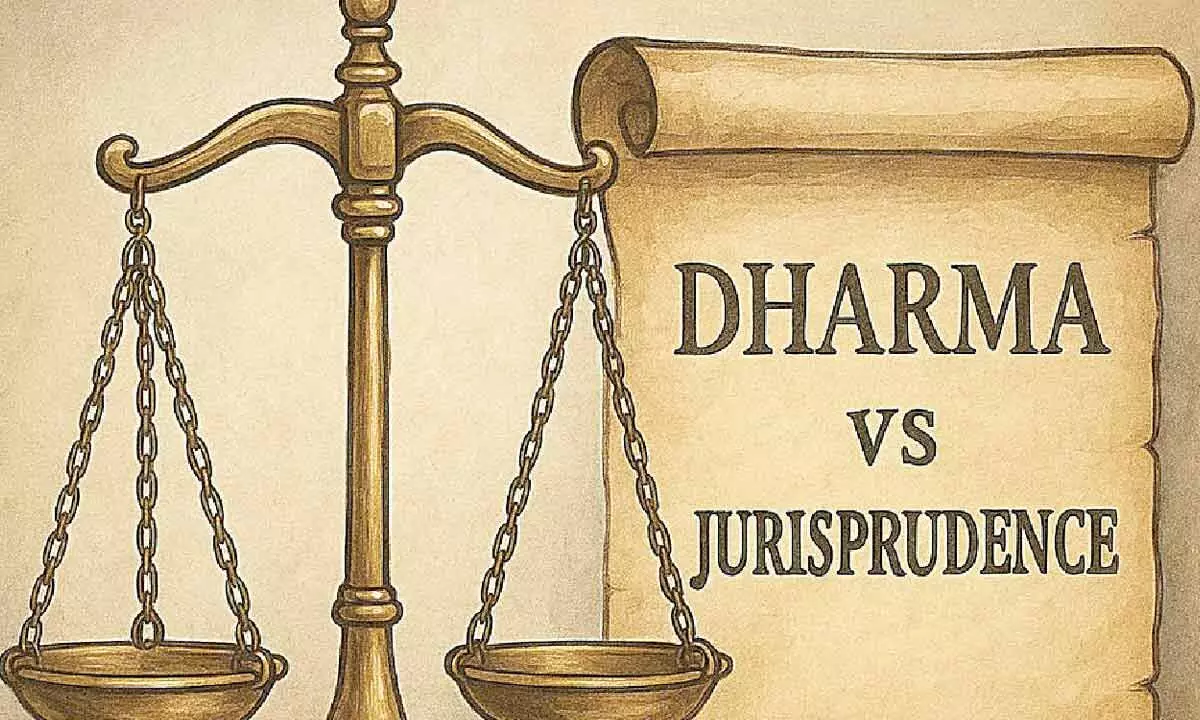
Publicpolicy in a constitutional democracy, especially in the world’s largest democracy-India, must be guided by two parallel lights, the spirit of law and the spirit of dharma, both of which are equally important. Law provides structure, enforceability, and institutional legitimacy, whereas dharma provides moral balance, proportionality, and social harmony. When both walk hand in hand, supplementing and complementing each other, justice is not merely delivered, but is accepted by everyone. Whenever either of them moves alone, friction begins.
The ongoing national debate on reservations, equity frameworks, and caste-linked protections must therefore be revisited not in anger or accusation, but in balance, chronology, and conscience. And I am happy the process has begun in earnest.
India did not invent social classification in modern times. It inherited layered social realities and inequalities across centuries, and scholarly as well as social debates continue over their causes and accountability, often ending in an ‘agree to disagree’ understanding. Fortunately, what the great modern India did invent, was a Constitutional promise that historical disadvantage would not become permanent destiny.
Reservations were conceived as a perfect corrective instrument, not perpetual entitlements, but as bridges, not destinations, as enablers and not permanent labels. That original intent deserves to be remembered with clarity and calmness as and when drastic changes are conceived to twist the great spirited and collective intent of our leaders.
The journey toward reservations did not begin after Independence. In the late 19th Century, early administrative commissions under colonial rule began recording the structural disadvantages faced by certain communities. By the early 20th Century, representation debates entered governance frameworks. The Communal Award of 1933 and the Poona Pact that followed altered the course, shifting from separate electorates toward reserved representation within a common electorate. Even then, the moral argument was framed around ‘Purely Temporary Safeguards’ to enable participation, not permanent division.
When India became independent, the Constitution’s framers faced a civilizational challenge of how to heal social fractures without deepening them. The Constitution adopted equality not as sameness, but as equal protection. Thus, the great move of special provisions for Scheduled Castes (SCs) and Scheduled Tribes (STs) were incorporated in education, legislatures, and public employment. These were not contradictions of equality but instruments to achieve it. The early percentages were modest. The expectation was progress would gradually reduce dependency on such measures.
Over time, the framework expanded. Other Backward Classes (BCs) were identified. Economic weakness among non-reserved categories also received recognition. Disability reservations were added. Judicial pronouncements introduced ceilings, exceptions, and doctrines like the creamy layer. Sub-classification debates emerged. The architecture became more complex, and complexity inevitably produced tension.
Yet complexity alone is not injustice. What matters is whether policy remains periodically reviewed, data-driven, and proportionate. A constitutional democracy cannot allow any system of advantage or disadvantage, whether historical or corrective, to operate on autopilot forever. Dharma teaches moderation, whereas constitutionalism teaches review. Both converge on one principle: ‘No policy should become beyond Question merely because it began with good intention.’
In recent public discourse, unfortunately, the tone has often drifted from reform to accusation. Communities are sometimes spoken of collectively as oppressors or beneficiaries without distinction. Voiceless groups are labeled, silent sections are provoked, and reactions are then cited as proof of hostility. This cycle is unhealthy. No democracy remains stable when dialogue becomes denunciation. It must be stated with sobriety that ‘social justice cannot be built on social vilification.’ If the purpose of reservations and equity policy is inclusion, then public language must duly be inclusive.
To attribute inherited guilt to the present generations is ‘neither lawful nor dharmic.’ Another important dimension often overlooked is the philosophical history of social classification itself. Ancient Indian texts speak more often of ‘Varna as functional classification’ than ‘caste as hereditary rigidity.’ Interpretations differ across scholars. Modern caste rigidity is as much a product of social conformity and colonial enumeration as of textual tradition.
Democracy did not create caste, but political mobilization around caste identities has undoubtedly sharpened its edges. Therefore, reform must proceed with intellectual honesty, neither romanticizing the past nor exploiting it.
The spirit of law requires measurable criteria. Reservation policy must therefore undergo periodic empirical audit: Are intended beneficiaries advancing? Is intergenerational uplift occurring? Are benefits reaching the most deprived within categories? Are exclusion filters like creamy layers functioning effectively? Is there leakage, misuse, or certification fraud? Are job-specific merit requirements preserved where essential to public safety and governance?
The spirit of dharma demands balance. Support must reach the needy but must not become an inherited entitlement irrespective of progress. Corrective justice must not become permanent stratification. With generations reaching equality, policy must evolve. Merit and equity need not be presented as adversaries. Merit without access is privilege and access without competence is fragility.
Role sensitivity matters. Different public functions demand different capability profiles. Nuanced frameworks are more just than uniform formulas. Public anger on this subject is understandable, but anger is not a policy instrument. Institutions cannot be guided by outrage cycles. Courts, commissions, and legislatures must deliberate calmly. Civil society must debate responsibly. Media must inform without inflaming. Dharma literature repeatedly emphasises restraint in judgment. A classical maxim attributed to Manusmrithi states in essence that justice must be rooted in truth, deliberation, and balance, not impulse.
‘Dharma protects those who protect it.’ The deeper message is not about hierarchy but about responsibility. ‘When fairness is preserved, society is preserved.’
As I had very consciously suggested earlier, the reservation policy cannot remain frozen in design. It requires periodic, data-based recalibration, exclusion of the advanced layers within beneficiary groups, and a careful balancing of social justice support with merit safeguards.
The very recent higher-education equity regulations issued by the ‘national regulator’ particularly their narrow definitional approach to caste discrimination demonstrate how even well-meant guidelines can generate fresh fault lines if universality and conceptual neutrality are not built into the framework.
Significantly, the Supreme Court, while intervening at the threshold stage, has cautioned that such regulatory formulations must avoid vagueness, social divisiveness, and exclusionary construction, and must align strictly with constitutional equality principles. These developments reinforce one core message that reform instruments must unite corrective purpose with constitutional precision and societal restraint.
Today, India stands at a stage where neither blind continuation nor abrupt abandonment of reservation policy will serve justice. What is needed is structured review, calibrated reform, and civil restraint. Society must respond with maturity and empathy. Communities must resist provocation. Intellectuals must reject absolutism. Policymakers must remember that corrective discrimination was intended as a temporary step toward equality.
Let law walk with dharma. Let justice walk with balance and reform walk with calmness. More importantly. let the national conversation proceed without accusation, without fear, and without permanent labels. Only then will equity become harmony and harmony become strength.