




- India’s China challenge: Immediate modernisation and cutting red tape
- Rebel candidates raise concerns for NDA ahead of municipal polls
- For many voters, poll campaign helps identify their new wards
- Two people die, several trees uprooted as Arnab leaves a trail of destruction
- Landslides on Araku Valley ghat road inspected
- Cyclone Arnab disrupts life in Krishna, NTR districts
- Durga temple steps up safety measures
- Jeevandan scheme helps kidney transplants at SVIMS
India’s China challenge: Immediate modernisation and cutting red tape
In Short
The reported face-offs between Indian and Chinese troops at several locations in Arunachal Pradesh have renewed questions about India’s border security and military preparedness

Share :
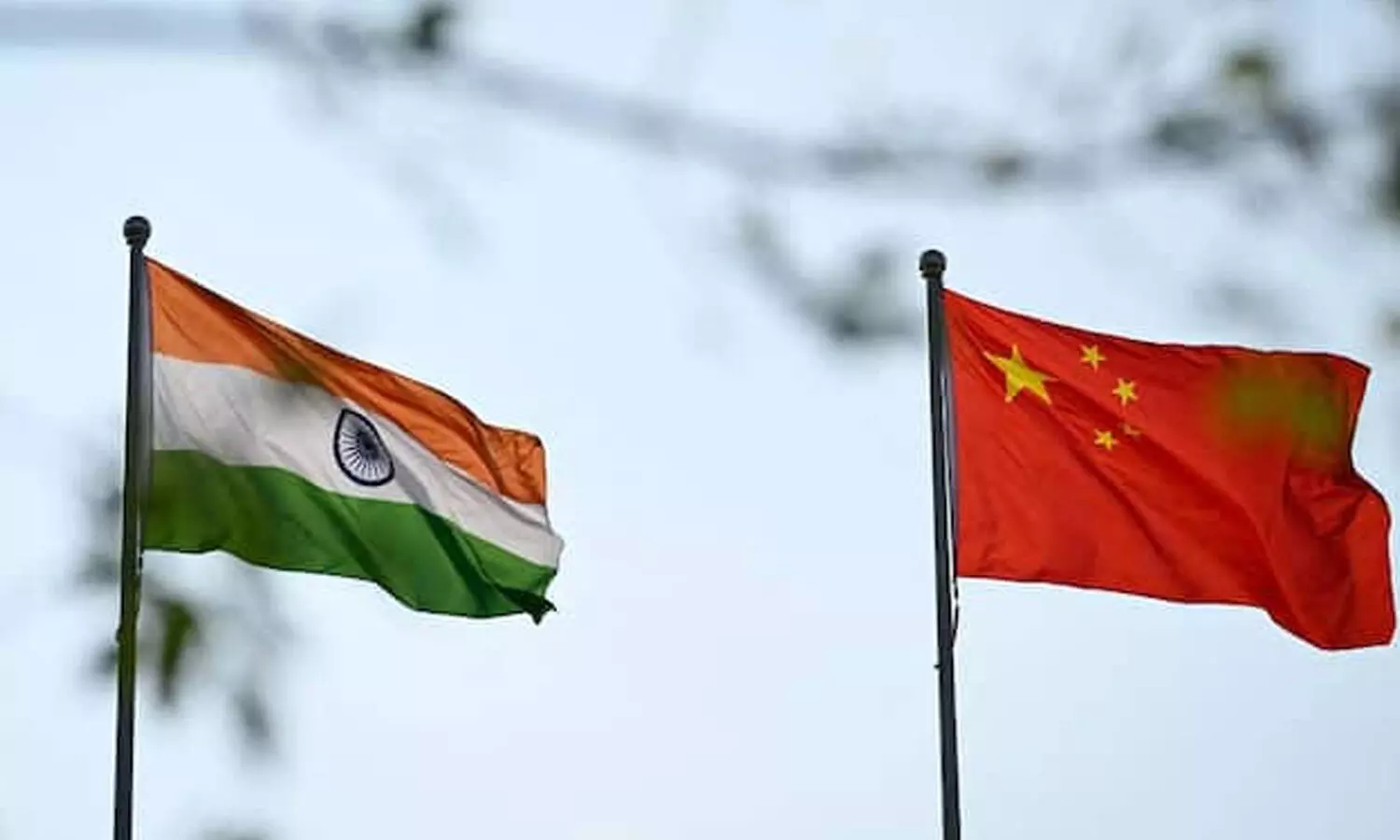
India’s China challenge: Immediate modernisation and cutting red tape
Continuing border face-offs in Arunachal Pradesh expose the need for transparent communication, faster defence procurement, indigenous technology and a credible strategy combining military preparedness with diplomacy.
The reported face-offs between Indian and Chinese troops at several locations in Arunachal Pradesh have renewed questions about India’s border security and military preparedness. More significantly, remarks by Indo-Tibetan Border Police (ITBP) Director General Shatrujeet Kapur have drawn attention to the changing nature of warfare and the urgent need to modernise India’s defence capabilities.
Speaking at the ITBP’s annual Himveer Samman Samaroh in Alwar, Kapur said confrontations had occurred at several locations in Arunachal Pradesh in recent days and remained unresolved. He also highlighted the need to modernise weapons, expand drone capabilities and prepare for emerging forms of warfare.
These remarks should not be reduced to political controversy. They should prompt a serious assessment of India’s preparedness, the efficiency of its defence establishment and its ability to respond to an increasingly technologically advanced adversary.
Reports of face-offs near Taksing in Arunachal Pradesh’s Upper Subansiri district emerged in late July. India and China have long faced disagreements over patrolling and territorial claims along the Line of Actual Control (LAC). Beijing claims Arunachal Pradesh, a position firmly rejected by New Delhi, which maintains that the state is an integral part of India. Kapur’s remarks are significant because they indicate that confrontations at multiple locations may remain unresolved despite diplomatic and military engagement. However, the precise circumstances at each location and the status of the latest encounters have not been fully disclosed. Reports also differ on whether Kapur explicitly identified Chinese troops in his remarks.
The government must balance operational confidentiality with the public’s legitimate interest in understanding the border situation. Sensitive military details cannot always be made public, but citizens deserve a clear account of the steps being taken to protect the country’s territorial integrity.
The Opposition has questioned the government’s handling of the situation, including reports of possible restrictions on access to certain patrolling points. These claims require official clarification rather than political speculation. Equally, the government should not dismiss legitimate questions merely because they come from political opponents.
Diplomatic engagement remains essential to prevent local confrontations from escalating into a wider conflict. But dialogue cannot substitute for military preparedness. India must negotiate from a position of strength, backed by capable forces, reliable intelligence and modern equipment.
The drone revolution
Kapur’s observations about outdated weapons and the growing importance of drones deserve particular attention. According to reports, he said some weapons used by the ITBP were about 50 years old and needed modernisation. He also emphasised the importance of drones, anti-drone systems and underground shelters in contemporary warfare.
The Russia–Ukraine war has demonstrated how relatively inexpensive drones can challenge much more powerful military forces. They are increasingly used for surveillance, target identification and attacks on expensive military equipment. Their ability to provide battlefield intelligence and operate at comparatively low cost has changed the calculations of modern warfare. India must draw the right lessons from these developments.
The ITBP’s reported investment in drones, expansion of its Shaurya commandos and emphasis on counter-drone systems indicate an awareness of these changing requirements. The challenge is to translate announcements and budget allocations into operational capabilities through timely procurement, training and deployment.
India also needs to invest in technologies suited to its own geographical and strategic requirements, particularly in high-altitude border areas.
Red tape is the bane
India’s challenge is not simply a shortage of resources. It is also the inefficient use of available resources and the delays that obstruct the development and deployment of indigenous defence technologies.
China’s military strength is supported by its vast manufacturing base, substantial research capabilities and ability to scale up production. India cannot close this gap overnight, nor can it be expected to match China in every area immediately. But it can improve its position by strengthening domestic research, accelerating innovation and making defence procurement more efficient. One persistent weakness is the delay in moving indigenous defence systems from development and testing to approval and deployment. Technologies can remain in trials for years, while the operational needs of the armed forces continue to evolve. By the time clearances arrive, some systems risk becoming outdated. Such delays damage more than individual projects. They weaken the wider ecosystem of research institutions, manufacturers, engineers, skilled workers and private companies. When indigenous systems fail to receive timely orders, firms may struggle to sustain production, retain expertise or invest in the next generation of technology. Meanwhile, imported equipment may be purchased to meet immediate requirements. Defence self-reliance cannot be achieved through slogans alone. It requires sustained investment in research and development, transparent procurement procedures, clear testing timelines and predictable orders for successful domestic technologies. Accountability must be extended to officials and institutions responsible for avoidable delays.
The growing participation of private companies in India’s defence and space sectors offers opportunities for innovation. Their expertise must be combined with the experience of public research institutions and the operational requirements of the armed forces. Procurement rules should ensure quality and accountability without allowing bureaucratic procedures to become an obstacle to urgent modernisation.
India has made progress in developing drone technologies, with private-sector companies contributing to the effort. The priority now is to accelerate testing, improve integration with military operations and ensure that promising domestic systems reach the forces in time to make a difference.
Strategy must combine strength with diplomacy
India’s response to China cannot be confined to the purchase of weapons or the expansion of military deployments. It requires a comprehensive strategy that combines technological capability, industrial strength, infrastructure development, intelligence, military training and sustained diplomacy.
Border-management mechanisms and diplomatic channels are necessary to manage differences and prevent escalation. At the same time, India must ensure that negotiations do not compromise its security interests or weaken its ability to respond to emerging threats.The government should provide responsible and consistent updates on the border situation, explain the progress of negotiations where possible and demonstrate that the concerns raised by security officials are being addressed. The Opposition, in turn, must scrutinise government policy responsibly, distinguishing verified facts from unsubstantiated claims.
National security should not become a contest in political messaging. Nor should appeals to national unity be used to shield defence policy from scrutiny. A strong democracy must be able to examine its security preparedness honestly without undermining the morale of its armed forces.
Kapur’s remarks should therefore be understood as a reminder of the work that remains to be done. India need not replicate every Chinese military capability. It needs to develop a strategy suited to its own resources and circumstances; modernise outdated equipment; strengthen indigenous research and remove administrative obstacles that delay essential technologies. India’s security will be determined not by the strength of its rhetoric, but by the readiness of its forces, the quality of its technology and the effectiveness of its institutions. The China challenge demands realism, urgency and sustained investment. Above all, it demands a defence establishment capable of turning knowledge into technology, technology into capability and capability into credible national security.
Cyclone Arnab devastates AP coast
MPTC, ZPTC polls rescheduled to Nov 5
PM Asks AP CS to Expedite Land Acquisition of Errupalem-Amravati-Namburu Railway Line
Internet, mobile networks hit slow lane
IMD Warns of Flash Flood Risk in 13 AP Districts
El Niño Threat: Telangana CM Orders Treated Water Use to Conserve Drinking Water


