The rise and fall of El Mencho

Part of El Mencho’s success in the drug trade had to do with his ability to strategize market and consumer changes. Initially, the CJNG produced methamphetamine, but then he moved to heroin production when the consumer demand changed. In a series of highly coordinated tactics to prevent El Mencho’s arrest, the CJNG blocked several highways and roads by setting at least 37 vehicles on fire. The purpose was to place them as blockades and give him ample time to escape
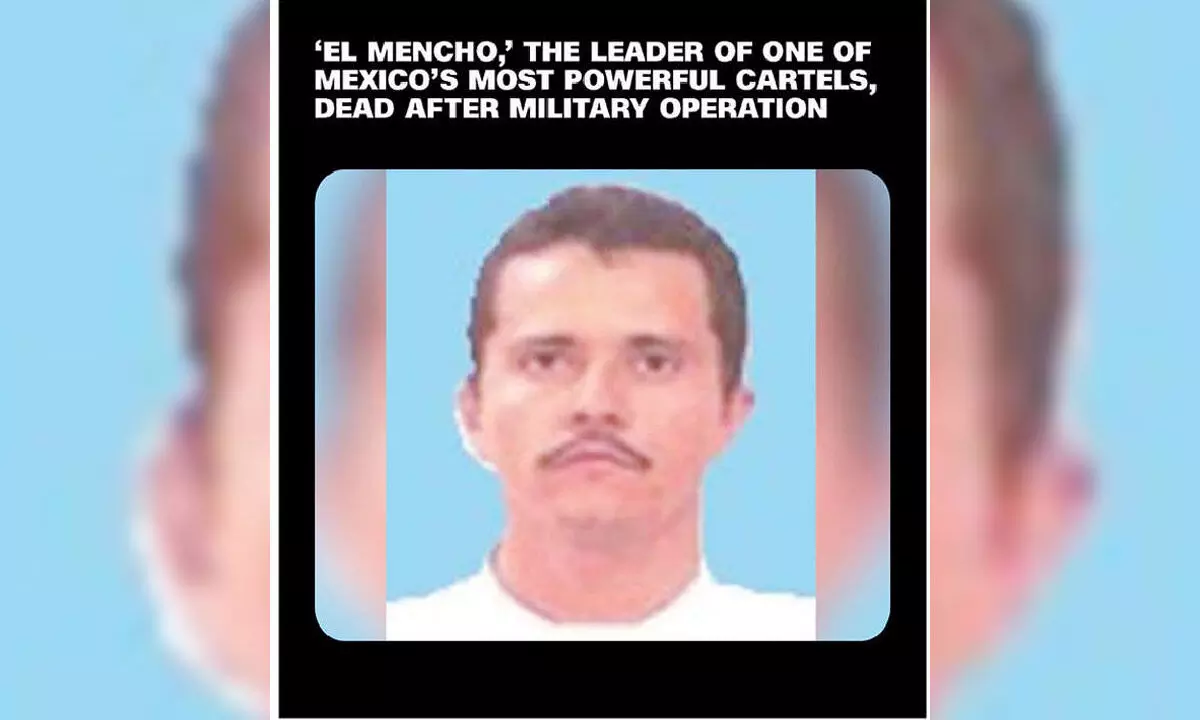
NemesioOseguera Cervantes, known as “El Mencho”, died on Sunday while being taken to the capital Mexico City, after being seriously injured in clashes between his supporters and the Mexican army. Four CJNG members were killed in the town of Tapalpa, the central-western Jalisco state. Three army personnel were also injured. The US had given Mexico tactical Intelligence that assisted the operation.
Over the past year, Claudia Sheinbaum Pardo, President of Mexico has come under intense pressure from US President Donald Trump, who threatened military intervention and higher import tariffs if Mexico fails to demonstrate concrete gains in curbing drug trafficking. However, Sheinbaum has rejected the notion of US strikes in Mexico, characterizing them as a violation of Mexico’s sovereignty and territorial integrity.
According to its 2023 Annual Threat Assessment, the US intelligence community cited Mexico-based Transnational Criminal Organizations (TCOs) as the dominant producers and suppliers of various illicit drugs destined for the domestic U.S. market. Mexican TCOs, particularly the Sinaloa Cartel and the Jalisco Nueva Generacion (CJNG) remain the most predominant and sophisticated groups overseeing the transportation and distribution routes from Mexico to the United States.
Both groups have consolidated control over drug corridors from Mexico and are heavily involved in trafficking of fentanyl, methamphetamine, cocaine, heroin, and marijuana. Both have a history of establishing drug trafficking hubs, strong criminal partnerships, and using violence and corruption to gain control over the territory where they operate.
The Sinaloa and Jalisco Cartels pose the greatest criminal drug threat the United States has ever faced. These ruthless, violent, criminal organizations have associates, facilitators, and brokers in all 50 states in the United States, as well as in more than 100 countries around the world. The Sinaloa Cartel, the Jalisco Cartel, and their affiliates control most of the fentanyl global supply chain, from manufacture to distribution.
The Jalisco Cartel maintains illicit drug distribution hubs in Los Angeles, Seattle, Charlotte, Chicago, and Atlanta. Internationally, the Jalisco Cartel has a presence and influence through associates, facilitators, and brokers on every continent, except Antarctica.
In Milenio Cartel, El Mencho started as a member of the assassin squad that protected the drug lord Armando Valencia Cornelio (“El Maradona”). On 12 August 2003, his boss was arrested by Mexican authorities. Around the same time, a rival criminal group known as Los Zetas, with the backing of the Gulf Cartel, carried out an armed offensive against the Milenio Cartel in Michoacán. The attack forced the Valencia family to exile in Jalisco.
El Mencho relocated to the state capital, Guadalajara, with his father-in-law José Luis González Valencia (alias “El Quini”) and Román Caballero Valencia. In Jalisco, El Mencho and the Milenio Cartel formed an alliance with the Sinaloa Cartel subgroup headed by Ignacio “Nacho” Coronel, a high-ranking drug lord and ally of Joaquín “El Chapo” Guzmán. Under Coronel, El Mencho and his group managed the Sinaloa Cartel’s drug operations, finances, and murder activities in the states of Colima and Jalisco.
The Milenio Cartel split into two. One side was known as La Resistencia (The Resistance), the other was Los Mata Zetas (The Zeta Killers), headed by El Mencho. La Resistencia accused Los Mata Zetas of turning in Óscar Orlando to the authorities. A war ensued, and the two groups fought for the drug smuggling turf in Jalisco.
As leader of the CJNG, El Mencho consolidated his position and strengthened his organization through territorial expansion and established himself as one of Mexico’s most-wanted criminals. His rise to fame was due to several factors, including the aggressive and sensationalist displays of public violence by CJNG. The direct attacks of the CJNG against Mexico’s security forces earned El Mencho a reputation among authorities as “principal enemy” of the state and as a dangerous criminal. In addition, the fall of Mexico’s former top crime bosses cleared the way for El Mencho to gain visibility and status.
He consolidated his operations in Jalisco and its adjacent states by fighting off incursions from criminal groups like Los Zetas and the Knights Templar Cartel. According to government sources, he was responsible for overseeing the CJNG’s entire drug trafficking operations in the states of Jalisco, Colima, and Guanajuato, where he created a bastion for methamphetamine production and trade.
Between 2014 and 2016, the only region in the country where the CJNG lost its territorial presence was in Mexico City. Internationally, the CJNG reportedly has ties with criminal groups in the U.S., the rest of Latin America, Europe, Asia, and Africa. On an international scale, CJNG is mainly focused on trafficking cocaine and methamphetamine.
The government estimated that El Mencho’s group has about $50 billion in total assets. Part of El Mencho’s success in the drug trade had to do with his ability to strategize market and consumer changes. Initially, the CJNG produced methamphetamine, but then he moved to heroin production when the consumer demand changed.
In a series of highly coordinated tactics to prevent El Mencho’s arrest, the CJNG blocked several highways and roads across the Guadalajara Metropolitan Area by setting at least 37 vehicles on fire. The purpose was to place them as blockades to impede the security forces from traveling across Jalisco’s capital and giving El Mencho ample time to escape. The blockades were placed in strategic routes to prevent police reinforcements from coming in or leaving Guadalajara. After the attacks were over, the government confirmed that El Mencho was in the area and had evaded capture. The US government announced US$ 10 million as reward to capture El Mencho, which was increased to US$ 15 million.
Sheinbaum has pursued a direct approach to combating organized crime by increasing cooperation with the US security agencies. In a major operation launched by the Mexican Army the most wanted man and the leader of the feared Jalisco New Generation (CJNG) drug cartel have been killed during a security operation to arrest him, the Defence Ministry has said.
(The writer is a former DG of DRI and NCB)