New seaweed-based tablet to transform menstrual cups into health tracking tools
Share :
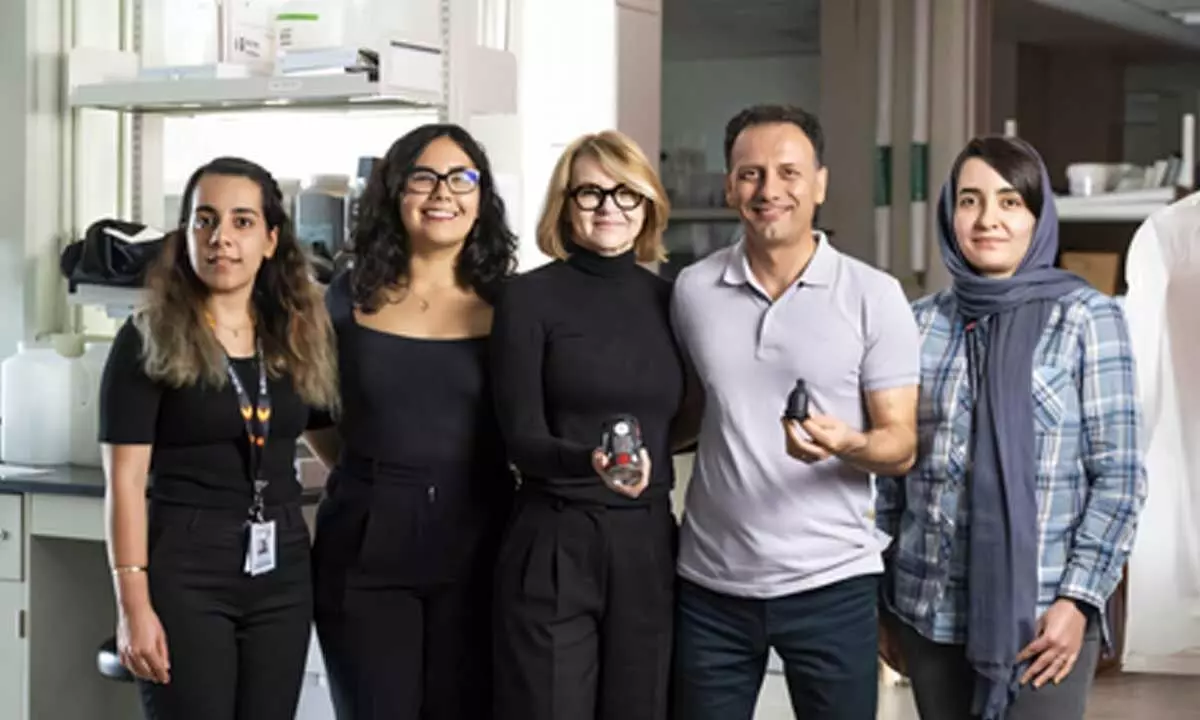
New Delhi: In a breakthrough, Canadian researchers have enhanced the existing menstrual cup into a safer, easier, and more environmentally sustainable tool, using seaweed, to track women’s health.
The new menstrual cup can be leveraged to detect infections, monitor reproductive health, and improve diagnostics for conditions, such as endometriosis and urinary tract infections, said researchers at McMaster University in Ontario.
The new component, described in a paper published in the journal ACS Applied Materials and Interfaces, is a flushable tablet made from highly absorbent seaweed-based material.
It's designed to hold menstrual blood and minimise spills during removal -- a common barrier to wider adoption of menstrual cups.
"This project opened my eyes to how urgently innovation is needed in menstrual care," said Zeinab Hosseinidoust, Associate Professor of biomedical and chemical engineering from the varsity.
"There's been little movement in the conversation around menstrual care. Some of that is due to stigma and some is lack of interest, but cups have the potential to make a serious difference in the lives of women around the world," Hosseinidoust added.
Beyond convenience and safety, the technology has the potential to significantly reduce the environmental impact of disposable menstrual products and improve access to menstrual care in lower-income communities.
Each cup is designed to last for several years, offering a cost-effective and sustainable solution for users who may not have reliable access to tampons or pads.
Though menstrual cups have long been available, their uptake has been limited due to usability challenges. These new cups address those concerns while opening the door to future health-monitoring capabilities.
The team envisions future versions of the menstrual products equipped with sensors to detect early signs of infections and blood-borne illnesses -- using menstrual blood as a rich source of biological information.
"This could be a new form of wearable technology that could be even more valuable than a smartwatch," said associate professor of mechanical and bioengineering Tohid Didar, who co-led the research.