Union Budget 2026 Live Updates: FM Nirmala Sitharaman presents budget in Lok Sabha

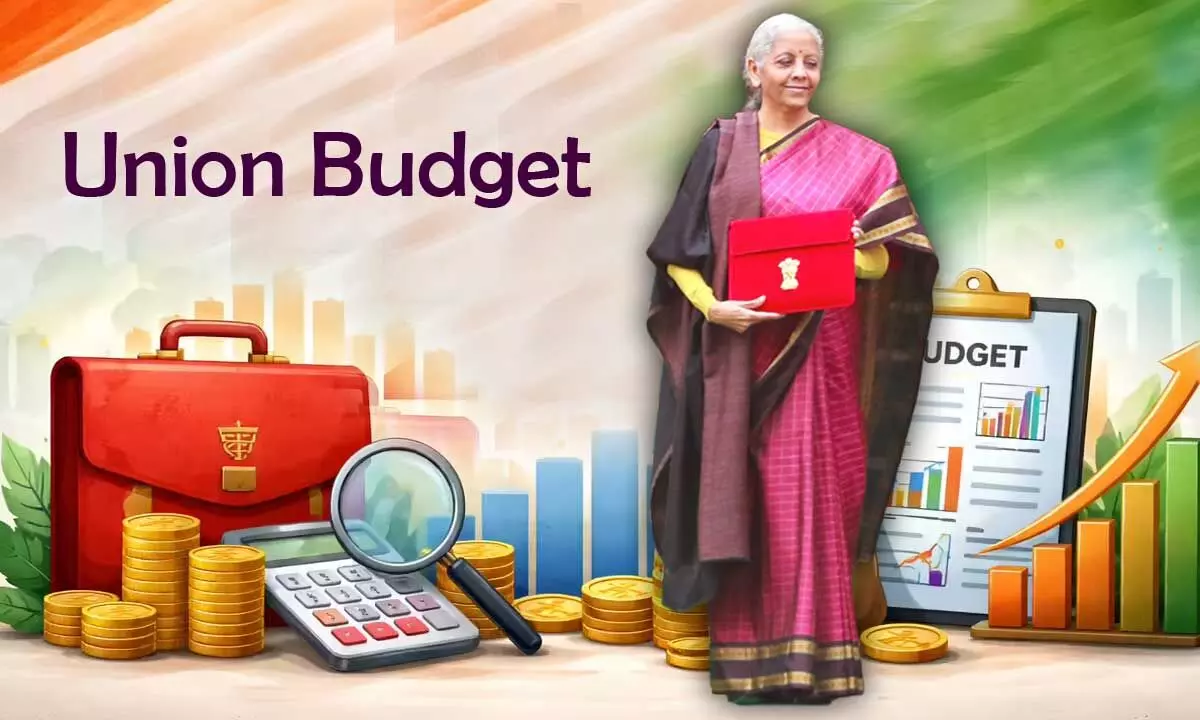
The central government is set to present budget in Parliament on Sunday, February 1, with high expectations from citizens, businesses and policy experts. With the economy navigating global uncertainties and domestic growth priorities, stakeholders are keenly watching for announcements on tax relief, policy clarity and measures aimed at boosting consumption, investment and employment.
The Budget is expected to outline the government’s fiscal roadmap for the coming year, balancing welfare commitments with capital expenditure and long-term reforms. From middle-class taxpayers hoping for relief to industry leaders seeking incentives and economists assessing macroeconomic signals, the annual exercise remains a key moment for economic direction-setting.
Union Finance Minister Nirmala Sitharaman will present the Budget at 11 am, marking her ninth consecutive Budget speech — a record first for any Indian finance minister. The milestone underscores continuity in fiscal leadership as the government lays out its vision for the year ahead.
Live Updates
 1 Feb 2026 5:18 PM IST
Translating education into employability and enterprise
The Budget was a turning point in shifting focus from education access to workforce outcomes in an AI-shaped services economy.
Ankit Aggarwal, Founder & CEO, Unstop
“The proposal to create a high-powered Education to Employment and Enterprise Committee is a timely acknowledgement that India’s growth will be driven by its talent and services sector. The real challenge today is translating learning into employable and enterprise-ready skills.
The emphasis on large-scale AI missions and emerging technology capacity building for 25 crore Indians signals a move from intent to infrastructure. This Budget lays the foundation for a workforce that is continuously adaptable in an AI-led economy.”
- 1 Feb 2026 5:16 PM IST
AI-led skilling for a technology-driven economy
Underscores the urgency of reorienting India’s skilling ecosystem toward adaptability and AI-driven learning.
Prof. Saurabh Mittal, Chair Executive, FORE School of Management, New Delhi
“The Budget reiterates the need for India’s skilling ecosystem to align with a technology-driven economy. With AI increasingly shaping business and governance, future-ready skills such as digital literacy, analytical thinking, and adaptability are essential.
The education system must move from rigid curricula to dynamic, skills-oriented models. AI-powered learning platforms can enable customised skill development and better industry alignment, making AI-led skilling central to achieving the Viksit Bharat vision.”
- 1 Feb 2026 5:15 PM IST
Education as a bridge between creativity, industry and access
The Budget’s integrated vision of education—where infrastructure, creativity, and employability converge to prepare learners for a global economy.
Dr. Lokanath Mishra, Professor (Accounts & Finance), Institute of Management, JK Lakshmipat University
“The Union Budget 2026 envisions a future-ready education ecosystem that bridges creativity, industry and access. Recognising the rapid expansion of the Indian design industry, the government proposes a new National Institute of Design in East India to nurture design talent and regional opportunity.
Support for five university townships developed with states will create integrated academic zones aligned with industrial growth. With girls’ hostels in every district, expanded labs in thousands of schools, and innovation-oriented institutes across sectors, the Budget reinforces the idea that education should unlock both potential and employment.”
- 1 Feb 2026 5:11 PM IST
Edtech leaders view Budget 2026 as positive news for India’s youth.
Prateek Shukla, Co-Founder & CEO, Masai
The reduction in TCS on education and medical costs will make quality education more accessible for families. The strong focus on AI, emerging technologies, and industry-led research aligns well with today’s rapidly evolving job market.
Initiatives like ISM 2.0 and structured skilling programs highlight the Budget’s commitment not just to infrastructure, but to developing capable, future-ready talent for long-term growth.
- 1 Feb 2026 5:10 PM IST
Education Linked to Employability
Higher education providers welcome the Budget’s focus on skills and employability.
Ranjita Raman, CEO, Jaro Education
This Budget makes a strong push towards building a future-ready workforce aligned with Viksit Bharat 2047. Initiatives such as university townships near industrial corridors and the Education to Employment Committee reflect a practical approach to bridging learning and employability.
The reduction in TCS on education expenses will further encourage participation in higher education and upskilling.
- 1 Feb 2026 5:08 PM IST
Strengthening India’s Financial Ecosystem
Fintech and finance leaders highlight the Budget’s ecosystem-wide approach.
Rajeev Tiwari, Founder & CFO, STEMROBO
Budget 2026 reinforces the importance of a technology-enabled financial ecosystem. Continued focus on digital public infrastructure, policy predictability, and capital formation strengthens financial inclusion and innovation.
These measures enable businesses to design more accessible and efficient solutions while supporting long-term economic resilience.
- 1 Feb 2026 5:05 PM IST
Creativity and AI in School Education
School education providers welcome the push for creativity and AI-enabled learning.
Vinod Sharma, Chief Operating Officer, Ryan Edunation
The Union Budget 2026–27 demonstrates a strong commitment to an inclusive and future-ready education ecosystem. Content Creation Labs in 15,000 schools and AI-enabled learning will help nurture creativity, digital confidence, and personalised education.
Reduced TCS on education expenses further reinforces the Budget’s learner-centric approach.
- 1 Feb 2026 5:03 PM IST
Union Budget 2026: AI, Manufacturing and Digital Infrastructure
Technology leaders see Budget 2026 as a decisive step towards AI-led growth.
Jaspreet Bindra, Co-Founder & CEO, AI&Beyond
The Budget’s emphasis on semiconductors, rare earths, advanced manufacturing, and AI talent development reflects a long-term vision to position India as a global technology hub.
Investments in data centres, AI labs in schools, technology fellowships, and workforce impact assessments show a holistic approach—combining infrastructure with human capital to drive inclusive and sustainable growth.
- 1 Feb 2026 5:01 PM IST
Union Budget 2026–27 lays strong foundation for Vikshit Bharat: Lalit Beriwala
Welcoming the Union Budget 2026–27, . Lalit Beriwala, Managing Director of Shyam Steel Group, described it as a progressive and growth-oriented budget that will significantly boost India’s infrastructure and industrial sectors.
Reacting to the Budget presented by Finance Minister Nirmala Sitharaman, Beriwala said it strengthens the vision of Prime Minister Narendra Modi to build a “Vikshit Bharat” by 2047. He appreciated the government for presenting a forward-looking Budget for the ninth consecutive year, aimed at creating a more connected, technologically advanced and inclusive India.
- 1 Feb 2026 4:59 PM IST
The Union Budget 2026 continues the strong focus on infrastructure-led growth, with a record INR 12.2 lakh crore capital expenditure and sustained emphasis on urban development, connectivity, and city-led growth.
Measures such as the Infrastructure Risk Guarantee Fund, expansion of transport corridors, and support for city economic regions are positive for real estate demand over the medium term. The Government’s commitment to fiscal discipline and long-term growth creates a stable macroeconomic foundation, strengthening confidence across sectors and supporting sustained economic expansion - Mr Gaurav Pandey, Co-Chairman, FICCI Committee on Urban Development and Real Estate & Managing Director and CEO, Godrej Properties