Stampede at Chinnaswamy Stadium: A Grim Reminder That Public Spaces Cannot Be Private Fiefdoms

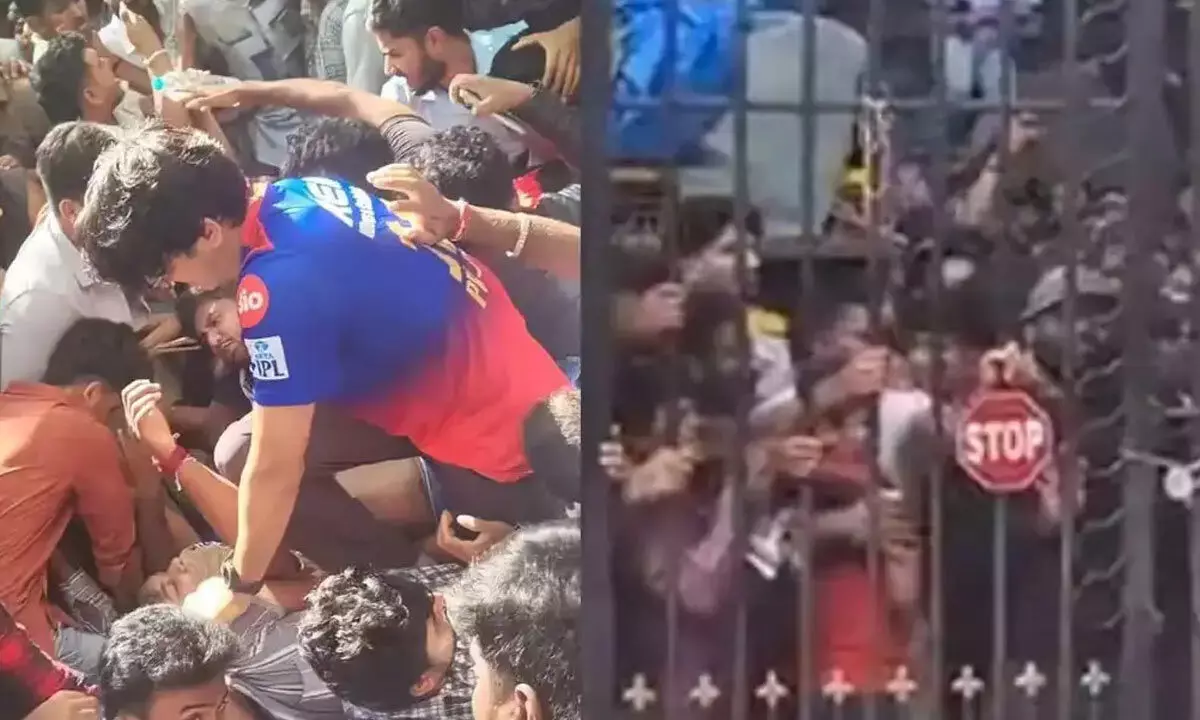
Bengaluru: What began as a city-wide celebration turned into a tragic episode on Wednesday, as a deadly stampede outside Bengaluru’s M Chinnaswamy Stadium left 11 people dead and more than 20 injured. The victims—men, women, even minors—were not unruly mobs or gate-crashers. They were cricket fans, some of whom had waited for hours in the sweltering heat to catch a glimpse of their heroes—members of the Royal Challengers Bengaluru (RCB) team that had just won its maiden IPL title.
And yet, when the moment came, the stadium gates remained shut.
This one decision—shutting the outer gates and reopening them at the last minute—has now emerged as the single most consequential mistake of the day. Over 600 fans surged in when the gates were finally opened, triggering the stampede. In hindsight, it was a catastrophic lapse in crowd management. But the deeper, systemic question is this: Why does the Karnataka State Cricket Association (KSCA) treat Chinnaswamy Stadium—a public facility built on public land—as its private estate?
A Pattern of Exclusion
The Chinnaswamy Stadium sits on land leased by the Government of Karnataka and lies in the heart of the city's central business district. Yet, for most citizens, even walking past its gates has become a lesson in futility. The stadium is often shut off with little explanation. Whether it's a non-match day, an off-season, or just a quiet afternoon, citizens trying to enter the premises—even for a stroll or a photograph—are routinely denied access by private security guards. There are no public boards stating why entry is restricted. No one answers questions.
In fact, Wednesday's tragedy was the logical culmination of this exclusionary mindset. KSCA had every reason to anticipate a historic turnout. This was RCB's first-ever IPL trophy. Fans had poured in from across the city and beyond. Roads were choked, metro trains overflowed, and every inch around Cubbon Park and MG Road teemed with energy. Still, the stadium gates remained shut for hours, with no one from KSCA stepping forward to manage the mounting chaos.
Who Owns the Stadium?
This brings us to an uncomfortable but necessary question: Whose property is M Chinnaswamy Stadium? Is it the private turf of KSCA members, office-bearers, and their associates? Or does it belong to the people of Karnataka—cricket fans whose money, passion, and loyalty fuel the very institution that now keeps them out?
The KSCA cannot have it both ways. It cannot claim tax benefits, subsidies, and government assistance on the one hand, while operating with the opacity and arrogance of a gated elite club on the other. And certainly not when public safety is compromised as a direct consequence of their choices.
Accountability Cannot Wait
Chief Minister Siddaramaiah has rightly ordered a magisterial inquiry into the stampede. But any investigation that stops at lower-level security lapses or crowd mismanagement will be missing the point. The root cause is a culture of insularity and disregard for the public that has become entrenched in the KSCA’s functioning.
The stadium's gates may have opened too late on Wednesday. But the gates of transparency, accountability, and public engagement must open now.
The president, secretary, and members of KSCA owe the city and its citizens an explanation, not just for what happened on Wednesday, but for the larger question of why a public space has been turned into a fortress. A fortress that, on this dark day, failed the very people it was built to serve.