Private unaided institutions: Govt forms expert panel to revise fee parameters

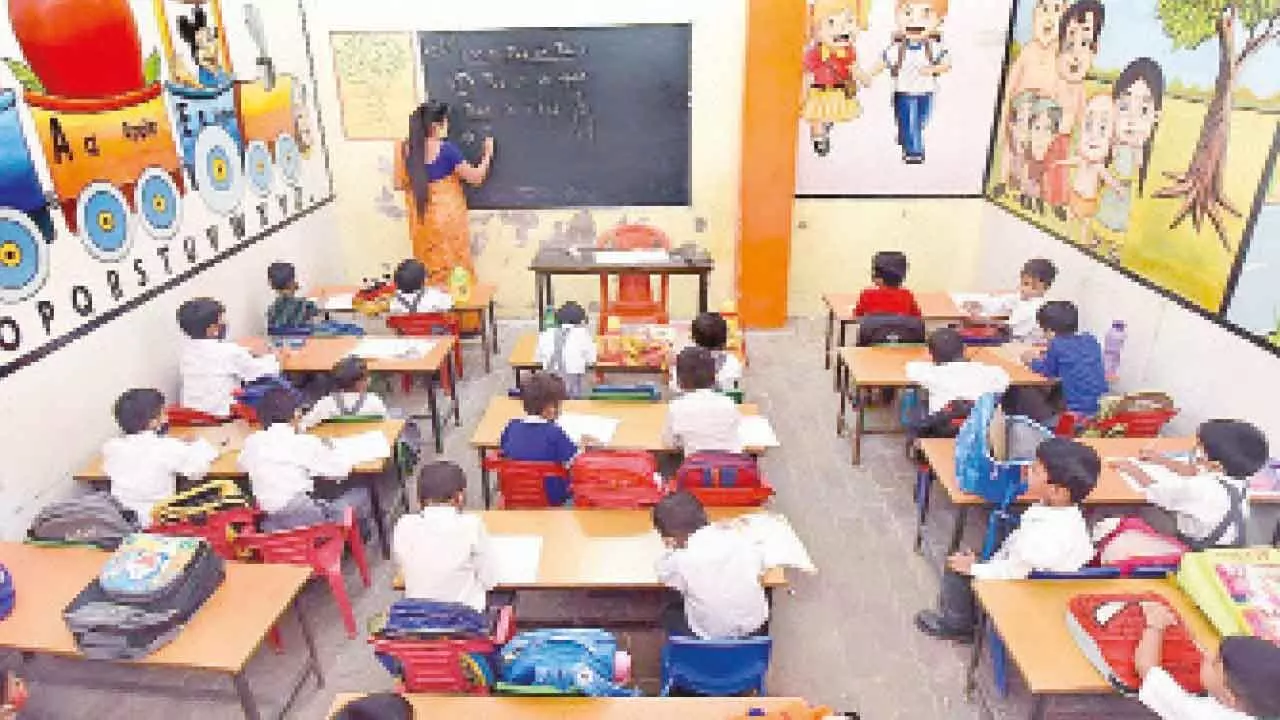
Hyderabad: The State government on Friday took significant steps to restructure the fee fixation framework for private unaided professional institutions, thereby addressing parents’ concerns over ‘arbitrary and unwarranted hikes in fees periodically’ and institutions’ claims that they would ‘become unviable’ if they are forced to keep fees low while providing facilities far beyond benchmarks.
Issuing a government order on Friday, it constituted a Committee of Officers to recommend revised parameters for the upcoming academic period.
This decision follows the submission of fee proposals by various private colleges, which were found to be inconsistent with the guidelines issued by the Supreme Court and the High Court, as well as existing norms set by the Telangana Admissions and Fee Regulatory Committee (TAFRC).
Recognizing the need for regulatory clarity and fairness, the Higher Education Department issued an official order to form a nine-member committee consisting of senior academicians, administrators, and subject experts. The committee is tasked with reviewing national best practices in fee determination, studying relevant legal precedents, and identifying cost-sensitive indicators that ensure affordability without compromising educational quality.
The committee will be chaired by Prof. G. Balakista Reddy, Chairman of the Telangana State Council of Higher Education (TGCHE), with Prof. Sriram Venkatesh, Secretary of TGCHE, serving as Member Secretary. Key members include
A. Sridevasena, Commissioner of Technical Education, and N. Kshitija, Commissioner/Director of the Scheduled Castes Development Department.
Other members of the panel are M. Venkateshwar Rao from the State Audit Department, S. Devender Reddy from the Directorate of Town and Country Planning, Prof. K. Venkateswara Rao, Registrar of JNTU Hyderabad, and Prof. A. Krishnaiah, Dean of the Faculty of Engineering at Osmania University.
The Chairperson has the authority to nominate up to two additional subject experts as needed.
The committee will examine fee fixation methodologies used across different states, considering factors such as institutional infrastructure, faculty remuneration, laboratory and library standards, and cost of living variations.
Additionally, the review will include judicial insights from past judgments that have influenced fee structure regulations nationally.
This initiative aims to strike a balance between the sustainability of private institutions and the students' right to affordable education. Consultations with stakeholders, including students, parents, and institutional representatives, will be conducted to gather diverse perspectives.
A senior official from the Education Department noted that this committee represents the assurance of the State government to transparent governance and educational equity.
"We are creating a path toward structured reforms in fee regulation. The recommendations will help streamline the process and safeguard the interests of students while respecting institutional autonomy," the official stated.
Further, the recommendations made by the committee will empower the TAFRC to formulate fee guidelines that are lawful, justifiable, and aligned with the socio-economic conditions of Telangana. The government’s proactive approach reaffirms its dedication to ensuring equitable access to quality professional education and maintaining regulatory accountability in the private education sector, it noted.