




- YSRCP seeks strong security for civic polls in Tirupati
- TTD officials inspect water reservoirs in Tirumala
- Tirupati gears up for Mayor election counting with tight security
- Over 1,500 police personnel to be deployed for poll security in Chittoor district
- TDP internal rifts may blunt NDA edge in Nellore local body polls
- Tirupati dist administration ready for local body elections
- Door-to-door campaign receives immense response: Kalyani
- Alliance mayoral candidate unveils a nine-point manifesto
Cyclone wreaks havoc across EG region
In Short
Thousands of electricity poles, transformers and overhead wires were damaged, making restoration a challenging task for the Energy Department

Share :
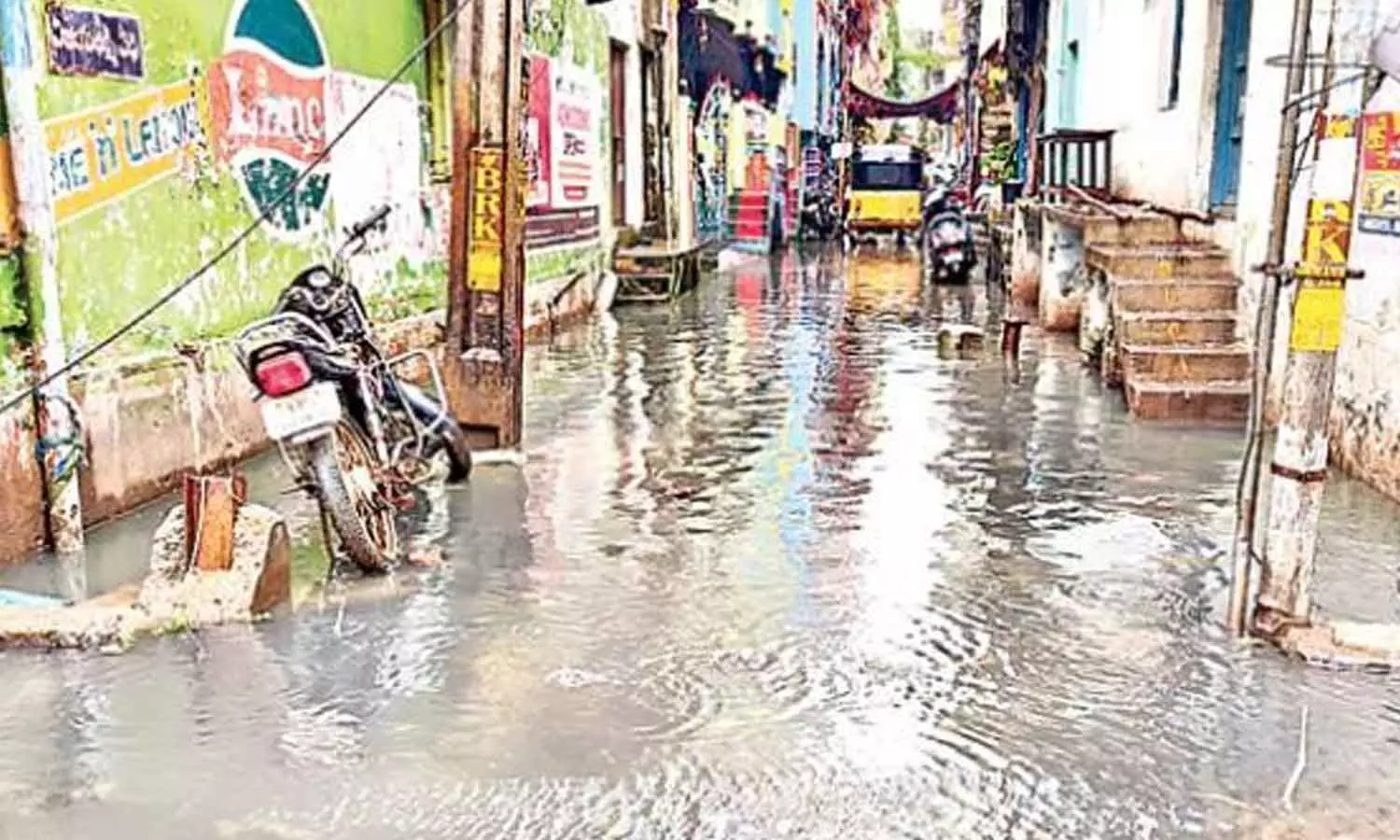
Streets inundated in the Alcot Gardens area of Rajamahendravaram
Rajamahendravaram: Cyclone Arnab wreaked havoc across the erstwhile East Godavari district, causing extensive damage to crops, roads, buildings, power infrastructure and residential areas, and bringing normal life to a near standstill. Thousands of trees and electricity poles were uprooted, paddy fields were submerged, houses were damaged and several public facilities were affected by the storm and heavy rain.
The worst affected were paddy farmers, whose crops were submerged just 10 to 15 days before harvest. Standing crops that had been expected to provide returns within a fortnight were flattened by strong winds and inundated by rainwater, leaving farmers worried about heavy financial losses. Banana plantations in Peravali and Tuni also suffered extensive damage.
Power supply remained disrupted across large parts of the region even on Thursday night. Thousands of electricity poles, transformers and overhead wires were damaged, making restoration a challenging task for the Energy Department. Officials and field staff have been working round the clock for the past two days to replace damaged equipment and restore supply.
Several areas continued to face drinking water shortages, while mobile phone connectivity, communication networks and internet services were partially affected.
The impact of the cyclone was visible in Rajamahendravaram and several surrounding towns and villages. Large trees and hoardings fell at different locations in the city, including a huge tree inside the premises of the Head Post Office.
A large hoarding collapsed in Kovvur, while trees were uprooted at Nallakulavaripalem. In Khandavalli village of Peravali mandal, electricity wires snapped, creating additional difficulties for residents. Traffic was disrupted at several places by fallen trees. A massive tree blocked the road at Kalavacharla, bringing traffic to a halt.
Another tree fell across the road leading to Adikavi Nannaya University, cutting off access to several villages. Trees also obstructed traffic on the Mandapeta bypass road, while a large number of trees fell along the Vemagiri road in Kadiam mandal.
In Edida village, a tree fell on a tiled-roof house, causing damage. Municipal and other government personnel worked on a war footing to remove fallen trees, clear roads and restore vehicular movement. Electricity department staff simultaneously took up repairs to damaged power lines and infrastructure.
Several parts of Rajamahendravaram were inundated, including Pushkar Ghat, Railway Station Road, RT Complex Road, the Hitech bus stand, Kambala Cheruvu, Alcot Gardens and Innispeta.
Water also entered some government offices in the Kotipalli bus stand area, affecting routine activities. Bus stations in Ravulapalem, Samalkot, Nidadavole, Amalapuram and Kakinada were flooded, with accumulated rainwater turning their premises into pools.
Bus services from all depots remained suspended throughout Wednesday. Limited services resumed on Thursday, depending on road conditions and the prevailing situation. The cyclone also caused considerable damage to fishing infrastructure along the coast.
Several fishing boats were damaged at Odalarevu, while some boats at Antarvedi were buried in accumulated sea sand. The Uppada road in Kakinada district suffered extensive damage due to the force of the sea waves, further affecting coastal movement and access.
With roads blocked, power supply disrupted and communication services affected in several places, residents faced difficulties in accessing essential services. Restoration teams continued clearing roads, repairing electricity infrastructure and assessing damage to public and private property.
The extensive damage to agriculture, transport, power supply and coastal infrastructure has raised concerns over the scale of losses across the erstwhile East Godavari region.
Farmers and residents are now looking towards the authorities for speedy restoration of essential services and timely assistance to rebuild their livelihoods.
Naidu puts preliminary cyclone loss at Rs 4,600 cr
Double Trouble: Fresh system in Bay of Bengal threatens AP with heavy rain
Cabinet nod for Rs 3,125-cr payout to farmers today
Post devastation by Arnab: Vizag limps back to normal in 48 hours!
5.42 lakh farmers hit, losses put at Rs 177 cr
Hyderabad staring at summer water crisis


