US Intelligence Chief Flags Rising Extremism in Bangladesh

US Intelligence Chief Flags Rising Extremism in Bangladesh
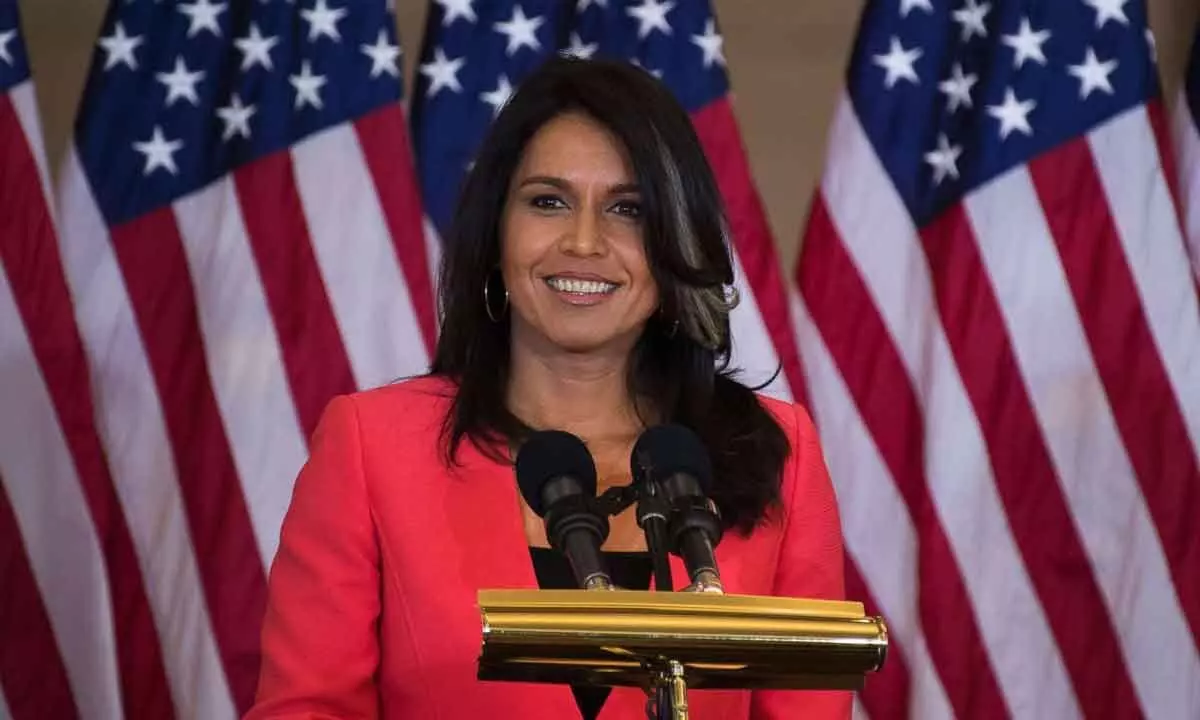
US Intelligence Chief Tulsi Gabbard warns of rising extremism in Bangladesh, highlighting religious persecution and ISI’s growing influence.
The United States has expressed serious concerns over the ongoing political unrest in Bangladesh, particularly regarding the persecution of religious minorities and the rise of extremist elements. U.S. Director of National Intelligence Tulsi Gabbard underscored the issue in an exclusive interview with NDTV World on Monday, emphasizing Washington’s focus on countering Islamic extremism.
Gabbard stated that the U.S. government remains troubled by violence targeting Hindus, Buddhists, and Christians in Bangladesh. She reiterated that the Trump administration views Islamist terrorism as a global threat and is committed to dismantling extremist networks.
Amid the growing crisis, diplomatic discussions between the U.S. and Bangladesh’s interim government have commenced. Gabbard confirmed that initial talks are underway between President Donald Trump’s newly appointed Cabinet and Bangladeshi officials, addressing security concerns and religious persecution.
“The persecution and violence against religious minorities in Bangladesh remain a significant issue for the U.S. government. The Trump administration is closely monitoring the situation,” Gabbard said, referencing Bangladesh’s increasing instability.
Highlighting the ideological objectives of extremist groups, Gabbard spoke about their broader ambitions of establishing an Islamic Caliphate. She asserted that terrorist organizations worldwide operate with a common goal—enforcing an extremist interpretation of governance.
“The threat of Islamist terrorism extends beyond national borders. The ideology driving these groups aims to establish an Islamic Caliphate, suppressing those who do not conform,” she explained. She further stressed the Trump administration’s determination to combat radical extremism.
The increasing collaboration between Bangladesh and Pakistan’s intelligence agency, Inter-Services Intelligence (ISI), has raised additional security concerns. Reports indicate that ISI has expanded its operations near India’s border regions, prompting strategic discussions in both Washington and New Delhi.
Indian Army Chief General Upendra Dwivedi previously voiced concerns about ISI’s activities in Bangladesh, particularly around the Siliguri corridor, a vital geographic region. Speaking to ANI, General Dwivedi warned against the potential use of Bangladeshi territory for anti-India operations.
“We cannot allow external elements to use Bangladeshi soil for activities that threaten India’s security,” he stated. Indian authorities continue to monitor developments closely.
During a bilateral meeting in Washington last month, President Trump and Indian Prime Minister Narendra Modi addressed the Bangladesh crisis. Trump deferred to Modi’s leadership on the matter, stating that India is well-positioned to handle regional security challenges.
“This is something Prime Minister Modi has been focused on for a long time. I have been following the situation, and I will leave Bangladesh to the Prime Minister,” Trump said during a joint press conference.