Congress Calls for GST 2.0, Urges Comprehensive Reform Over Rate Cuts

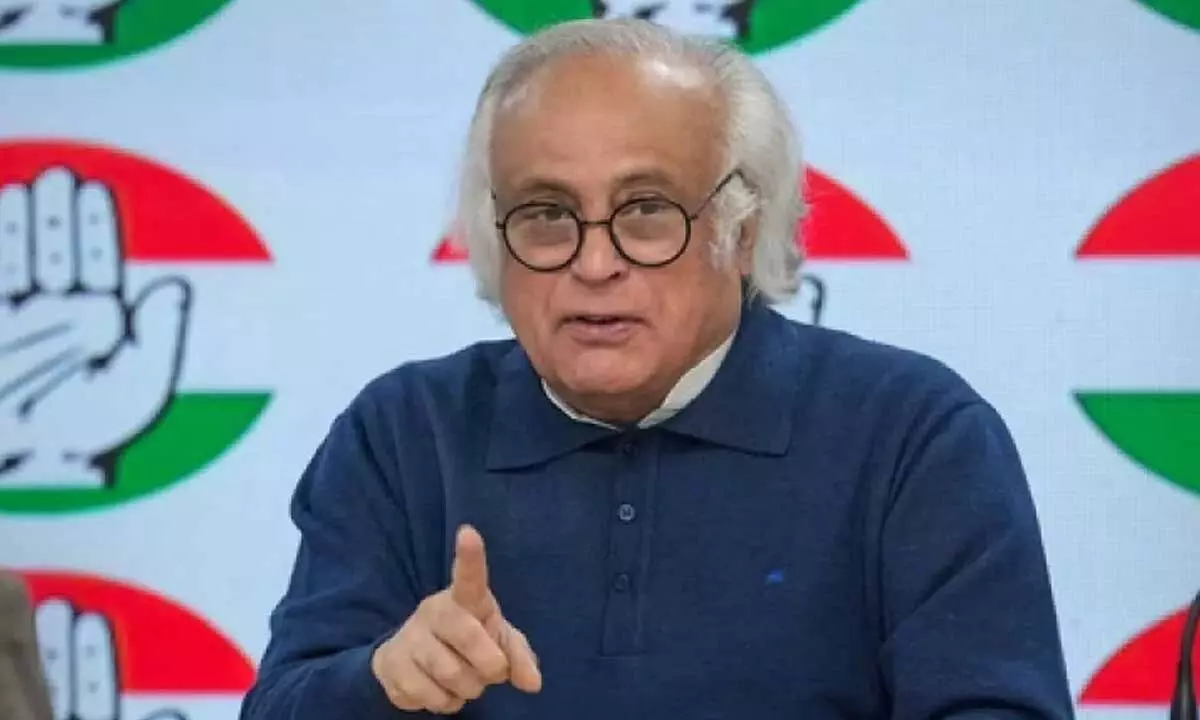
Statement Issued by Shri Jairam Ramesh, MP, General Secretary (Communications), AICC
New Delhi: The Finance Minister’s recent announcement regarding a reduction in GST rates has sparked fresh political debate, with the Indian National Congress (INC) asserting that a mere rate cut is insufficient. In an official statement, Jairam Ramesh, MP, and General Secretary (Communications), AICC, emphasized the need for a comprehensive restructuring of the GST system, rather than piecemeal adjustments that fail to address fundamental issues.
Congress criticized the current GST structure as overly complex and burdensome, citing examples such as three different tax rates on popcorn and differential taxation on cream buns versus regular buns. The party argued that these inconsistencies highlight the need for a radically simplified GST 2.0 rather than what it termed “window-dressing” reforms.
The Congress party insisted that the first priority of GST 2.0 should be the simplification of tax slabs. According to former Chief Economic Advisor Arvind Subramanian, the GST regime currently includes nearly 100 different tax rates, including cesses. This complexity, the party argued, places a significant compliance burden on businesses while also enabling large-scale tax evasion.
Congress cited alarming figures, revealing that GST evasion surged to ₹2.01 lakh crore, nearly double the ₹1.01 lakh crore reported in FY23. Furthermore, investigations have uncovered 18,000 fraudulent entities, with many more likely operating undetected. The party attributed this surge in tax evasion to a lack of genuine intent by the government to enforce a truly "Good and Simple Tax."
The Congress party also pointed to a slowdown in net GST collections, attributing this to an abnormal rise in refunds. In December 2024, net GST collections, after adjusting for refunds, recorded a modest 3.3% growth, while refunds surged by 45.3%.
While acknowledging that some refunds are legitimate, Congress expressed concerns that a substantial portion is fraudulent. The party highlighted Input Tax Credit (ITC) fraud as a major loophole, citing ₹35,132 crore worth of fraudulent ITC claims, with a recovery rate of just 12%. Congress attributed this to weak supply chain tracking, unchecked online registrations, and inadequate validation mechanisms, allowing fraudulent entities to claim tax credits without actual transactions.
Congress further called for reducing GST rates on essential services, particularly in the education sector. The party criticized the imposition of GST on school uniforms, textbooks, stationery, and university affiliation fees, as well as the 18% GST on open-distance learning courses. It argued that these high tax rates make education more expensive and reflect a shift in government taxation policies from direct taxes to regressive indirect taxes like GST.
Jairam Ramesh emphasized that 2024 presents the right moment for GST 2.0, as the GST compensation cess is expected to meet revenue targets later this financial year. This provides the Finance Ministry with the necessary fiscal cushion to introduce a simplified and business-friendly GST regime.
Congress reaffirmed its vision for GST 2.0, as outlined in its Nyay Patra for the 2024 Lok Sabha Elections, advocating for a transparent, equitable, and growth-oriented taxation system. The party placed the responsibility on the Union Government, urging them to seize this opportunity for historic reform."The ball is now in the Union government’s court—will they take decisive action or let this opportunity slip away?" Congress questioned.