Countdown begins to end Naxalism by March 2026

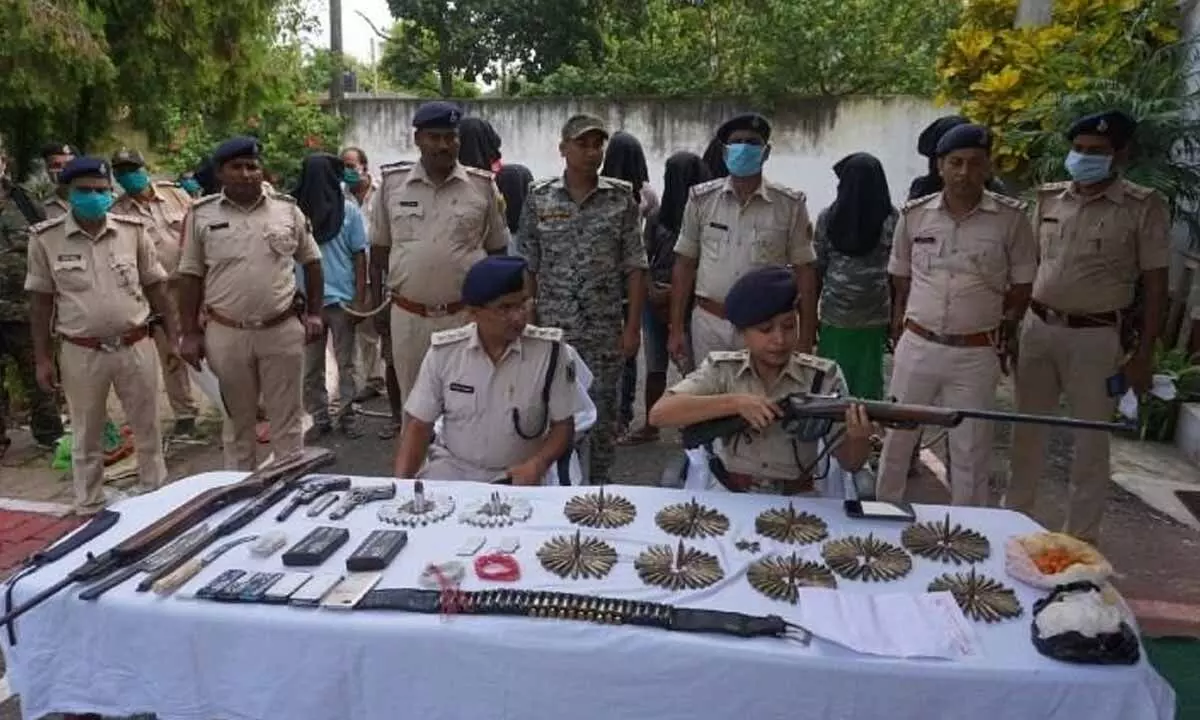
The countdown has officially begun for Centre’s target to eliminate Maoist insurgency, with just 365 days to go before Union Home Minister Amit Shah’s deadline ends.
New Delhi: The countdown has officially begun for Centre’s target to eliminate Maoist insurgency, with just 365 days to go before Union Home Minister Amit Shah’s deadline ends.
Since January 2024, authorities have successfully eliminated 310 Maoists, leaving approximately “400 regular armed cadres” in the Bastar division, said Bastar IG P Sundarraj asserting that they are on mission to eliminate Naxalites by March 2026, the target set by the Centre. From 2021, a total of 385 Maoists have been killed, indicating that the majority of these losses occurred within the past year. Furthermore, the Maoist central committee has been significantly weakened, now comprising only 12-14 active commanders, according to Sundarraj.
These statistics bolster the confidence of security agencies, who are optimistic about fulfilling Amit Shah’s commitment to eliminate Naxalism by March 2026.
The IG noted that only around 1,200 Maoists remain in the Bastar division, stating, “The opportunity exists for them to abandon violence and surrender, or they may choose to confront security forces in a final showdown.” With 385 Naxalites taken down since 2021, the remaining force in Bastar consists of roughly 400 regular armed cadres, while an additional 700-800 individuals are part of the militia, providing support, or are affiliated with cultural organizations like Chetna Natya Manch and Dandakaranya Adivasi Kisan Majdoor Sangh (DAKMS). The central committee continues to shrink in size.
Sundarraj emphasised that the primary focus and concern lie with the uniformed members, predominantly found in PLGA formations and the senior ranks of Battalion 1. This battalion is led by the notorious Maoist commander Madhavi Hidma, whose territory is now heavily monitored by security forces, with improvements in basic infrastructure such as roads, water, and electricity being facilitated by the establishment of police camps.
In recent years, many central committee members have either succumbed to age-related health issues or been apprehended, leading to a natural decline in their ranks, as noted by police officials.