




- Trump targets Canadian goods in US contracts amid trade deal row
- No deal unless Lebanese army strengthens control, says Israeli army chief
- Western troops in Ukraine would mean direct war: Russian FM
- BJP to launch 'Seva Sankalp Abhiyan' today to mark PM Modi's 25 years of public service
- PM Modi to inaugurate 5th edition of SEMICON India 2026 today
- Deepti Naval meets Ashwini Bhave at her California home during US tour, says ‘creating memories again’
- Vadnagar-Varanasi bike yatra to be held today to mark PM Modi's birthday; HM Shah to flag off rally
- Ponguleti questions Harish over registration of assigned lands
India Held Military Advantage As Pakistan Sought US Intervention
In Short
Analysis reveals India maintained strategic superiority during recent conflict, with Pakistan urgently seeking US diplomatic intervention following precision strikes on Nur Khan air base while India remained positioned for further escalation.

Share :
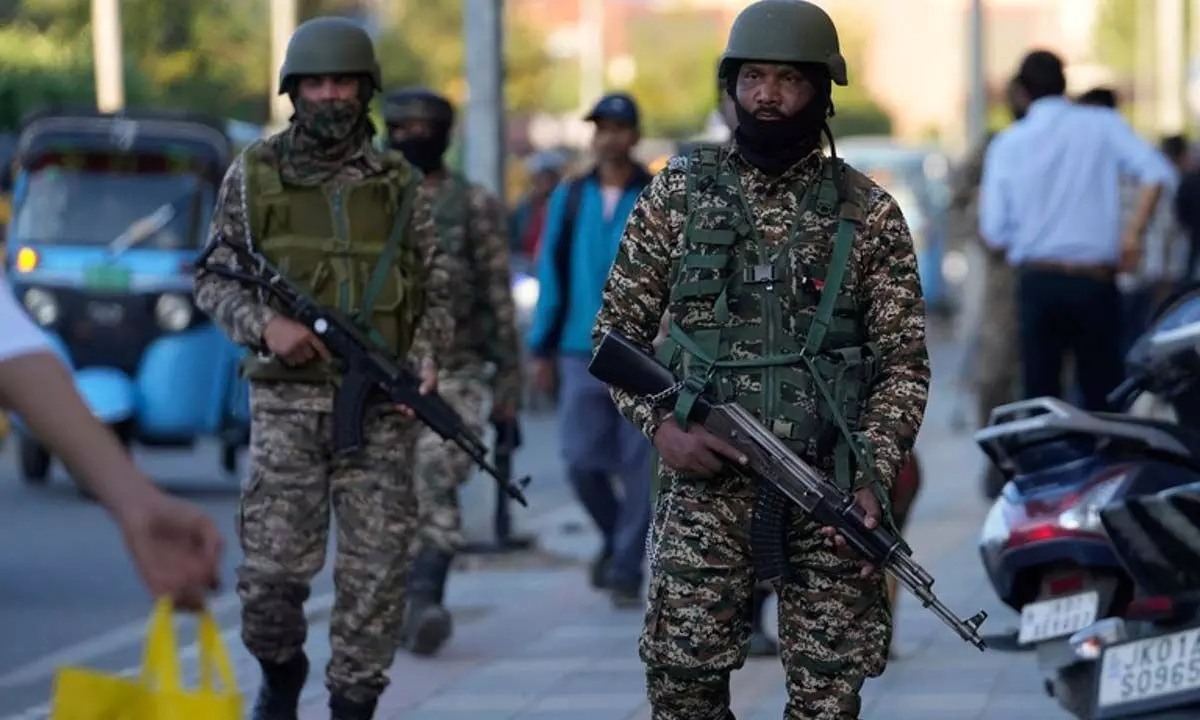
Despite Western media attempts to frame India and Pakistan as military equals, the reality was starkly different during recent hostilities. Pakistan desperately sought American diplomatic intervention after India's precision missile strikes on Nur Khan air base near Rawalpindi on May 10, with simultaneous preparations for an Indian Navy assault on Karachi's naval facilities.
The Modi government's decision to halt military operations following the Rawalpindi strike reflected strategic calculation rather than external pressure—India simply recognized that Pakistan posed no comparable military threat.
Pakistan's military vulnerability became evident when US Secretary of State Marco Rubio made urgent attempts to contact Indian External Affairs Minister S. Jaishankar and National Security Advisor Ajit Doval on the morning of May 10. Meanwhile, Pakistan's Director General of Military Operations (DGMO), Kashif Abdullah, reached out to his Indian counterpart at 10:38 a.m., claiming intelligence about an imminent BrahMos missile strike on Karachi's naval port. Though the Pakistani DGMO attempted to issue threats of retaliation, Indian officials remained resolute and fully prepared for continued operations.
Sources indicate that when Secretary Rubio communicated Pakistan's willingness to accept a ceasefire, Jaishankar diplomatically but firmly insisted that such proposals must be channeled through military leadership, as India's armed forces were directing operations. India deliberately ignored outreach from Pakistan's Foreign Minister and Islamabad's traditional allies urging de-escalation.
While French state media attempted to downplay the effectiveness of their own Rafale fighters used by the Indian Air Force and other Western sources portrayed Chinese weapons systems as superior, India's military platforms performed exceptionally well. Indian aircraft, missiles, loitering munitions, and drones decisively overwhelmed Pakistan's defenses. Following the May 10 strikes, India maintained the capability to target any location within Pakistan, as Chinese-supplied Pakistani air defense systems had been neutralized through destruction or electronic warfare.
India's decision to conclude hostilities was based on strategic assessment—primary mission objectives had been accomplished within 25 minutes on May 7, and continued engagement would only enable Pakistan to portray itself as a victim to Western powers and China. The fundamental reality remains that India and Pakistan operate at different military capabilities, and New Delhi saw no strategic value in prolonging conflict after effectively neutralizing Pakistan's response capabilities.
Given the involvement of Chinese and Turkish personnel in supporting Pakistan's aerial warfare strategy, India is expected to take countermeasures against all parties who supported terrorist elements following the Pahalgam attack. The Modi government is now prioritizing stand-off weapons systems, recognizing that conventional land warfare is increasingly obsolete. With 31 American-made Predator armed drones scheduled for induction by 2028, India is also accelerating development of high-altitude armed drones and low-cost swarm drones similar to the Turkish models Pakistan deployed along the border.
While Pakistan will soon face consequences from India's suspension of the Indus Waters Treaty, Operation Sindoor has reinforced a critical lesson for New Delhi: India must remain self-reliant in developing comprehensive military capabilities to counter regional adversaries—both in its immediate neighborhood and beyond.
Will make Tirumala, Tirupati world-class spiritual centres
Naidu to join Seva Sankalp Abhiyan in Varanasi today
AP clears Rs 5,912-crore urban projects to be funded by ULBs
Modi gave wings to the great Indian dream
People to engage in a month-long intense cleanliness campaign
Ex-mayor’s brother held for plotting crime


