Mumbai Paralyzed As Monsoon Fury Triggers Maximum Weather Alert And Educational Institution Closures

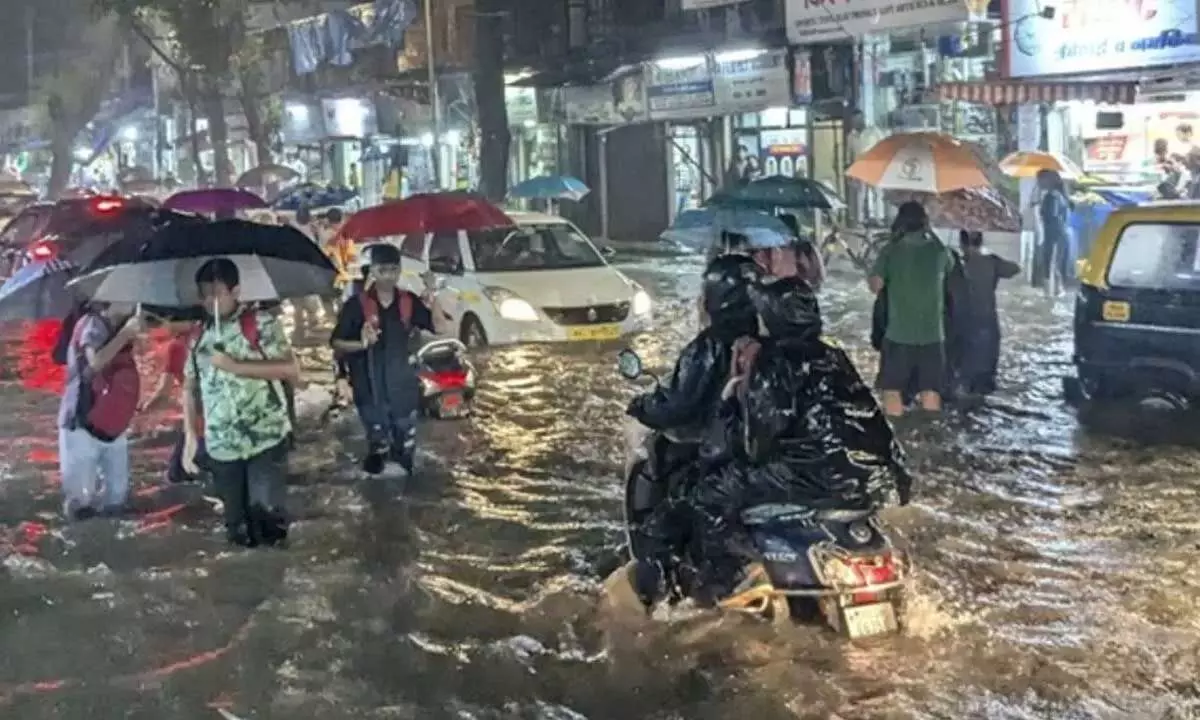
Mumbai faces third day of relentless monsoon downpours as authorities declare highest weather warning. Educational institutions shut down while rescue operations underway for stranded students and commuters across the financial capital.
Maharashtra's commercial hub remains under siege from nature's fury as the India Meteorological Department maintains its most severe weather warning for Mumbai and neighboring regions. The financial capital is experiencing its third consecutive day of torrential monsoon rains, forcing authorities to suspend academic activities at all educational institutions and launch emergency response measures across the metropolitan area.
The meteorological agency has extended its critical alert status to encompass Thane and Raigad districts alongside Mumbai, with forecasters predicting sustained heavy to exceptionally heavy precipitation through Tuesday. Ratnagiri district faces similar extreme weather conditions, while Sindhudurg operates under an elevated orange-level warning for the next 48 hours.
Ground conditions across Mumbai present a challenging scenario as persistent rainfall since Saturday has transformed streets into rivers and low-lying areas into temporary lakes. The intensity escalated significantly from 9 AM Monday morning, with meteorological stations recording dramatic precipitation increases across all three zones of the metropolis.
Rainfall measurements reveal the scale of the weather event, with the island city documenting 37 millimeters within a single hour starting at 9 AM, while eastern suburbs registered 39 millimeters and western areas recorded 29 millimeters during the same period. Chembur emerged as the most affected location, receiving 65 millimeters in just one hour, followed closely by Shivaji Nagar with 50 millimeters.
The 24-hour rainfall statistics ending at 8 AM Monday paint a comprehensive picture of the deluge's impact. The central island city accumulated an average of 54.58 millimeters, eastern suburban areas received 72.61 millimeters, and western suburbs recorded 65.86 millimeters. Multiple neighborhoods reported precipitation totals surpassing the 100-millimeter threshold during this timeframe.
Transportation infrastructure faces severe disruption as the city's railway network, commonly referred to as Mumbai's circulatory system, operates with delays ranging from 15 to 20 minutes. Despite these challenges, suburban train services continue functioning, though commuters report significant inconvenience due to reduced schedules and overcrowding.
Road transportation presents even greater challenges, with numerous arterial routes experiencing complete submersion. Critical locations including the Andheri Subway and Lokhandwala Complex display substantial water accumulation, effectively halting vehicular movement and forcing pedestrians to wade through knee-deep water. Motorists describe severely compromised visibility conditions and extremely slow-moving traffic throughout the affected areas.
Emergency response teams have mobilized across the city, with notable rescue operations involving schoolchildren whose transportation became stranded in floodwaters. Law enforcement agencies acted decisively to extract students trapped in waterlogged school buses, particularly in the Matunga area where flooding reached dangerous levels.
The Brihanmumbai Municipal Corporation's suburban guardian minister personally oversaw flood response coordination from the BMC control room, ensuring real-time monitoring of the crisis and deployment of resources to critical areas. Educational authorities responded swiftly by announcing complete closure of schools and colleges scheduled to commence afternoon sessions.
Beyond Mumbai's boundaries, the weather system affects broader Maharashtra regions, with Kolhapur dams releasing excess water due to heavy rainfall accumulation. Residents living along riverbanks in these areas have received high-alert warnings as water levels continue rising.
The Brihanmumbai Electric Supply and Transport undertaking reports that bus services maintain regular routes without diversions, though operating speeds remain significantly reduced due to waterlogged roads and reduced visibility conditions.
Weather experts indicate that this intense monsoon activity represents part of a larger meteorological pattern affecting the western coastal regions, with similar conditions expected to persist through the immediate forecast period. Citizens are advised to avoid non-essential travel, stay informed through official channels, and exercise extreme caution when navigating flooded areas.