No SC status for converts

Rules apex court, says it’s reserved only for Hindus, Buddhists & Sikhs
A converted Christian cannot claim SC status and cannot invoke the SC/ST Prevention of Atrocities Act
New Delhi: TheSupreme Court on Tuesday upheld the Andhra Pradesh High Court's order, which held that once an individual converts to Christianity and actively professes and practices the same, he cannot be regarded as a member of the Scheduled Caste community.
The Apex court held that no person who professes a religion other than Hinduism, Sikhism or Buddhism can be regarded as a member of a Scheduled Caste. Conversion to any other religion results in the immediate and complete loss of Scheduled Caste status, the court said.
The court noted that the Constitution (Scheduled Caste) Order, 1950, made this clear, and the bar under this Order was absolute. Conversion to any religion not specified in Clause 3 of the 1950 order results in immediate loss of Schedule caste status, regardless of birth, the court clarified.
"No statutory benefit, protection or reservation or entitlement under the Constitution or enactment of Parliament or state legislature can be claimed by or extended to any person who, by operation of clause 3, is not deemed to be a member of the Scheduled Caste. This bar is absolute and admits no exception. A person can't simultaneously profess and practice a religion other than the one specified in clause 3 and claim membership of the Scheduled caste," the court held.
This order was passed in the context of a person, who had converted to Christianity and acted as a Pastor, but had filed a case under the Scheduled Caste, Scheduled Tribe (Prevention of Atrocities) Act against certain persons who had allegedly subjected him to assault. He claimed protection under the SC&ST Act, which was challenged by the accused persons as bad in law since the pastor had converted and was actively professing Christianity.
By an order dated April 30, 2025, the Andhra Pradesh High Court held that the caste system is alien to Christianity and is consequently barred from invoking the provisions of the Scheduled Caste, Scheduled Tribe (Prevention of Atrocities) Act. Justice Harinath N of the High Court had quashed charges filed by a complainant who had converted to Christianity and had invoked the SC & ST Act. Against this, the pastor filed a special leave petition.
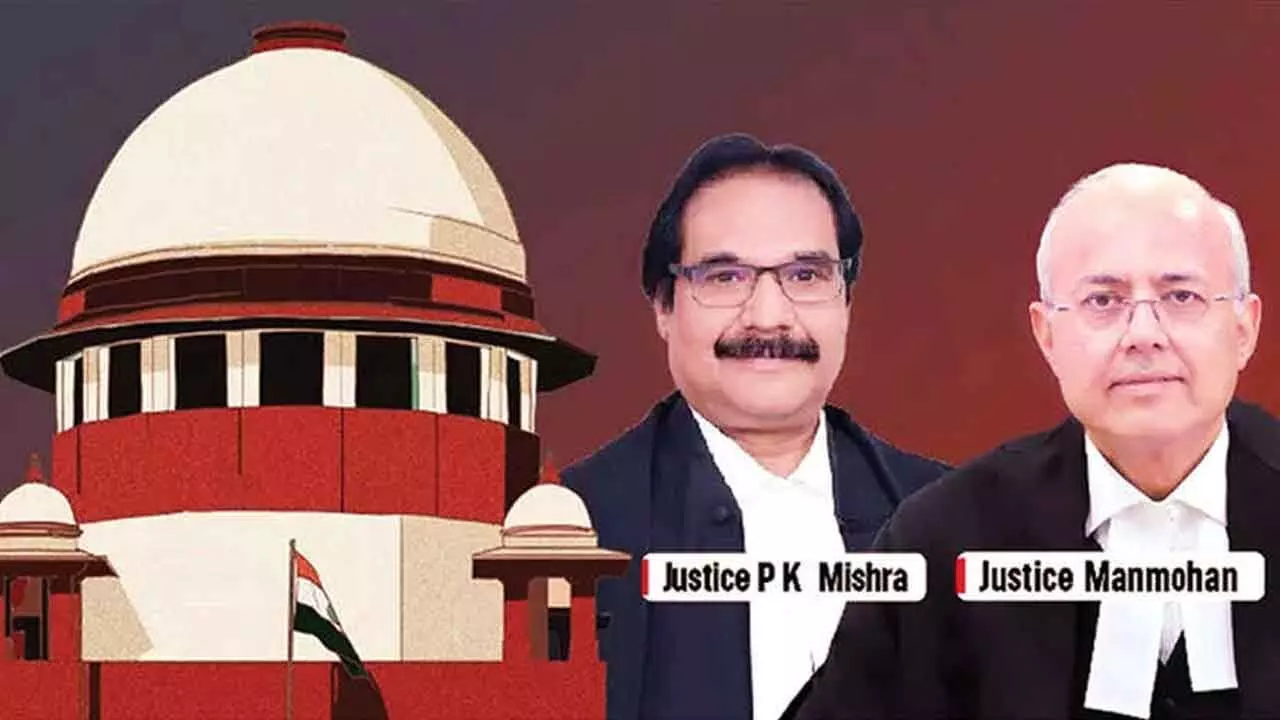
At the Supreme Court, the bench comprising Justice Prashant Kumar Mishra and Justice Manmohan held: “In the present case, it is not the case of the petitioner that he re-converted from Christianity to his original religion or has been accepted back in the folds of the Madiga community. On the contrary, the evidence establishes that the appellant continued to profess Christianity and has been functioning as a pastor for more than a decade, conducting regular Sunday prayers at the houses of the village.
It is also admitted that at the time of the alleged incident, he was conducting prayer meetings at the house. These concurrent facts leave no room for doubt that he continued to remain a Christian on the date of the occurrence.” The Constitution (Scheduled Castes) Order 1950, issued by the President as per Article 341, says as follows: 1 This Order may be called the Constitution (Scheduled Castes) Order, 1950.
2 Subject to the provisions of this Order, the castes, races or tribes or parts of, or groups within, castes or tribes specified in Parts to [XXV] of the Schedule to this Order shall, in relation to the States to which those Parts respectively relate, be deemed to be Scheduled Castes so far as regards member thereof resident in the localities specified in relation to them in those Parts of that Schedule.
3 Notwithstanding anything contained in paragraph 2, no person who professes a religion different from the Hindu, the Sikh or the Buddhist religion shall be deemed to be a member of a Scheduled Caste.