Saini launches ‘Viksit Krishi Sankalp Abhiyan’

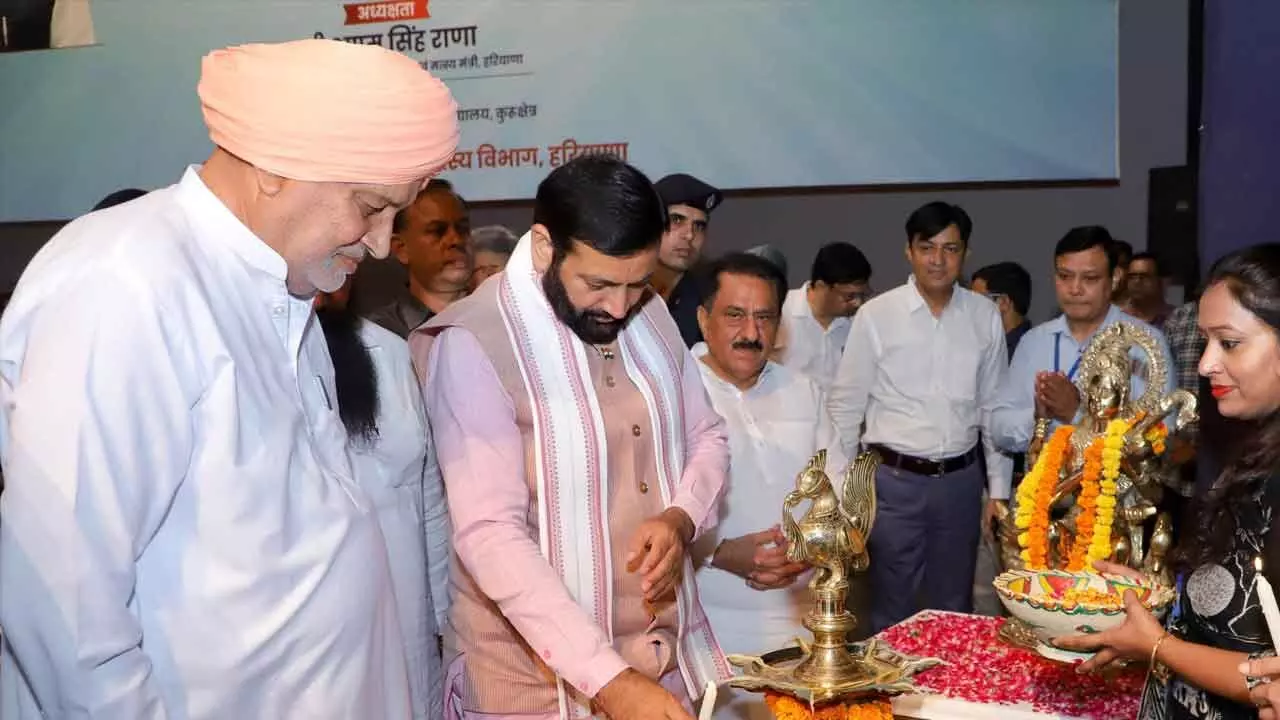
Chandigarh: As part of the nationwide Viksit Krishi Sankalp Abhiyan, Haryana Chief Minister Nayab Singh Saini launched the state-level campaign from the holy land of Kurukshetra on Thursday. The objective of the campaign is to improve the agricultural sector by connecting farmers with new technologies, schemes, and innovations. It aims to educate farmers on scientific techniques for Kharif crops, highlight the importance of soil health cards, and provide access to government schemes and policies. Through direct interaction with farmers, feedback will be gathered to guide future agricultural research. This campaign, running across the state until June 12, is a testament to the government’s commitment to empowering farmers.
Addressing farmers from across the state, Saini said that India has achieved self-reliance in food grain production due to the hard work and dedication of its farmers.
The Chief Minister said that Prime MinisterNarendra Modi considers farmers the backbone of his vision for a Viksit Bharat. A developed, strong, and prosperous India is only possible when our farmers are self-reliant, he said.
He informed that under this mega campaign, more than 2,000 teams of agricultural scientists and officers have been formed across the country. These teams will visit villages and directly interact with around 1.5 crore farmers – making it the largest outreach programme in the history of Indian agriculture. During the campaign, farmers will receive advice based on local climate, soil, and crop conditions.
The Chief Minister said that Haryana is an agriculture-dominated state, but faces challenges such as climate change, water scarcity, declining soil fertility, and changing market demands. The Viksit Krishi Sankalp Abhiyan will empower farmers to address these issues. It will act as a bridge from lab to land, bringing agricultural research directly to the farmers’ fields. Scientists, officers, and progressive farmers will work together to cover 1,380 villages and 109 blocks across the state.