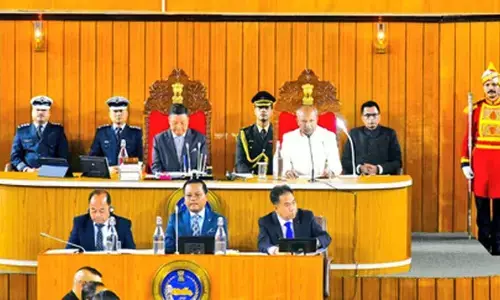
Tripura CM champions victim-centric justice at criminal law workshop


Manik Saha to be new Tripura CM
Dipika Reang Agartala: TripuraChief Minister Professor (Dr.) Manik Saha inaugurated a pivotal workshop on July 20 at Pragya Bhavan, Agartala, aimed at strengthening the state’s criminal justice framework, under India’s newly enacted laws. Addressing senior police and civil officials, Dr. Saha emphasized the transformative nature of the reforms, stating, “These laws are time-sensitive, digitally enabled, and victim-oriented.” He underscored provisions such as mandatory medical reporting within seven days, rapid forensic deployment, and enhanced prosecutorial discretion as key drivers of faster and fairer justice delivery.
The workshop, themed “Investigation and Trial Process under the New Criminal Laws and NDPS Act,” brought together top officials including Chief Secretary J.K. Sinha, Home Secretary Abhishek Singh, and Director General of Police Anurag. Proceedings commenced with the ceremonial lamp-lighting symbolizing the formal launch of the day’s agenda.
DGP Anurag highlighted the urgency of timely investigations, noting that under the new laws, probes must conclude within 90 days and trials within a year. He highlighted digital innovations such as the e-register system, which enables citizens to file complaints and access FIRs remotely, thereby enhancing transparency and public engagement.
Chief Secretary J.K. Sinha reiterated the administration’s commitment to law and order, declaring, “We are committed to working eight times harder to make Tripura safer and more developed.” He called for a unified approach to combat criminal forces and drive sustainable progress.
The NDPS Act received special attention due to Tripura’s border sensitivity. Officials emphasized the importance of collaboration among agencies, ongoing training, and the utilization of modern tools to effectively combat narcotics-related crimes.
Senior state government officials and experts participated in the workshop, discussing the three cornerstone laws replacing colonial-era statutes, enacted into Bharatiya Nyaya Sanhita (BNS) – replacing the Indian Penal Code; Bharatiya Nagarik Suraksha Sanhita (BNSS) – replacing the Code of Criminal Procedure; and Bharatiya Sakshya Adhiniyam (BSA) – replacing the Indian Evidence Act.
Officials expressed optimism that, through robust training, increased awareness, and technological integration, Tripura is set to lead in providing a justice system that is swift, equitable, and focused on citizens’ needs.